Archive | April 2017

The Dos and Don’ts to Dialogue Tags

Jean M. Cogdell's avatarJean's Writing

I’m thrilled to welcome Ryan Lanz as a guest blogger today.

Sit back read and enjoy.

The Dos and Don’ts to Dialogue Tags by Ryan Lanz

Writers use dialogue tags constantly. In fact, we use them so often that readers all but gloss over them. They should be invisible. However, there are ways to misuse them and make them stand out.

In an effort to avoid that, let’s take a closer look at dialogue tags. Toward the end of “Tag travesties” is something I sorely wish someone had told me before I started writing.

Why do we use dialogue tags?

The simple answer is that we use them to indicate who’s speaking. In visual media, such as movies or television, the viewer can easily tell who’s talking by lip movement and camera angles. When reading a book, obviously that’s not an option.

Tag travesties

There are certainly ways to misuse…

View original post 760 more words

Emotional Beats: Analogies, Metaphors and Similes, Part 2

Nicholas C. Rossis's avatarNicholas C. Rossis

Back in September, I published Emotional Beats: How to Easily Convert your Writing into Palpable Feelings. As promised, I will be posting the book on my blog. So, here is the next installment, starting Part 3 of the book: Other Beats. As this is a rather long section, I’ve broken it into two posts.

Analogies, Metaphors, and Similes (Part 2)

Emotional Beats | From the blog of Nicholas C. Rossis, author of science fiction, the Pearseus epic fantasy series and children's books Read for free with KU

A good analogy is harder to find than… erm… well, it’s pretty hard. Unless you have these to help:

  • Ideas bounced inside his head like tiny rubber balls.
  • He chewed on some idea or other, gnawing away as if they there were seeds or pulp.
  • He hemmed and hawed, shuffled his feet like a petulant schoolboy who doesn’t want to confess a wrong deed.
  • He sifted words like sand, trying to lessen a blow he never meant to administer.
  • She could see the string dangling from…

View original post 1,024 more words

This entry was posted on April 7, 2017. 2 Comments

Antagonists Are People Too (Usually)

Writing your first novel-Some things you should know's avatarWriting your first novel-Things you should know

untitledI have spent the last month looking at the characters in my novel. How do they relate? Are they effectively carrying out the roles intended for them? Are they unique and easily identified, or do they all present the same?
My main focus for this particular blog is antagonists. I have two in my novel. One is amnesia, and the other is a young woman determined to marry the man of her dreams, even if he belongs to someone else. She uses his amnesia to her advantage, manipulating and deceiving him.

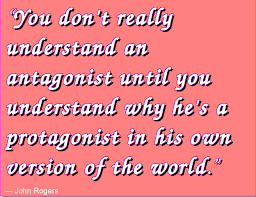
When you are creating an antagonists, you must remember they are people too. Help your reader to empathize with them and understand why they act like they do. Even bad people have weaknesses and can show love towards others. They are more than just a device to move your plot in a certain direction. Flesh them out!

Get into your antagonists head. Help people to see…

View original post 226 more words

This entry was posted on April 6, 2017. 2 Comments

Don’t Quit Your Blog! Just Tweak it.

jacquelineobyikocha's avatara cooking pot and twisted tales

Is Your Blog in A Rut? Don’t Your Quit Blog.

Blog, Successful Blog, Don't Quit Blog, Blogging, Methodical Approach, Social media, Statistics

No one told you that it would be a slow climb of grits, cramped fingers and the snail pace attention from your expected dream audience.

No one told you that finding fame or making money from blogging is not easy pickings and that there are many days the thrill would fizzle out faster than the time it took the ink of your words to dry.

No one told you when you started blogging, all awash with excitement and so much to say, that time might come when you find yourself writing terse sentences such as:

Sorry I haven’t posted for AGES, guys.

Don’t know what to say….blah, blah.

If you are contemplating tossing in your paddle and jumping out of the choppy waters of your blogging boat; I would say, halt!

As a matter of fact, according to online research

View original post 304 more words

Why You Should Be Reading Flash Fiction

theryanlanz's avatarRyan Lanz

by Kyle Massa

Just like the name implies, flash fiction is short enough to read in an instant. But if you’re not reading it, here’s why you should be.

Opinions vary on how long a flash fiction piece should be. Some markets say 300 words max, some say 500, others say 1,000. Whatever the case may be, flash fiction has to be really short—which is not to say incomplete. Rather, many flash pieces still have the elements of traditional literature (character, plot, conflict, setting), only they’re condensed. Think of them like shorter short stories.

View original post 331 more words