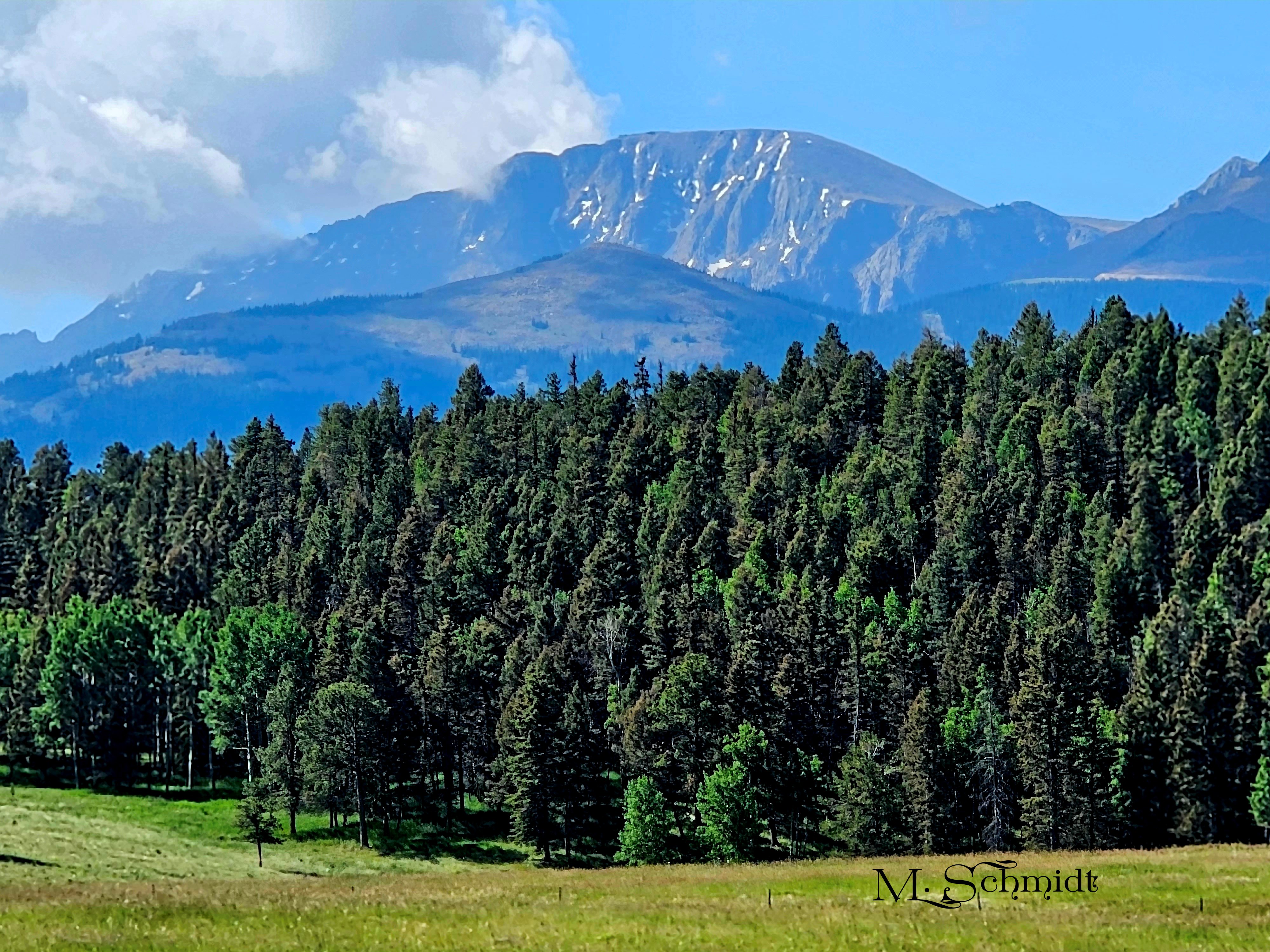
View of Pikes Peak from 67 highway.
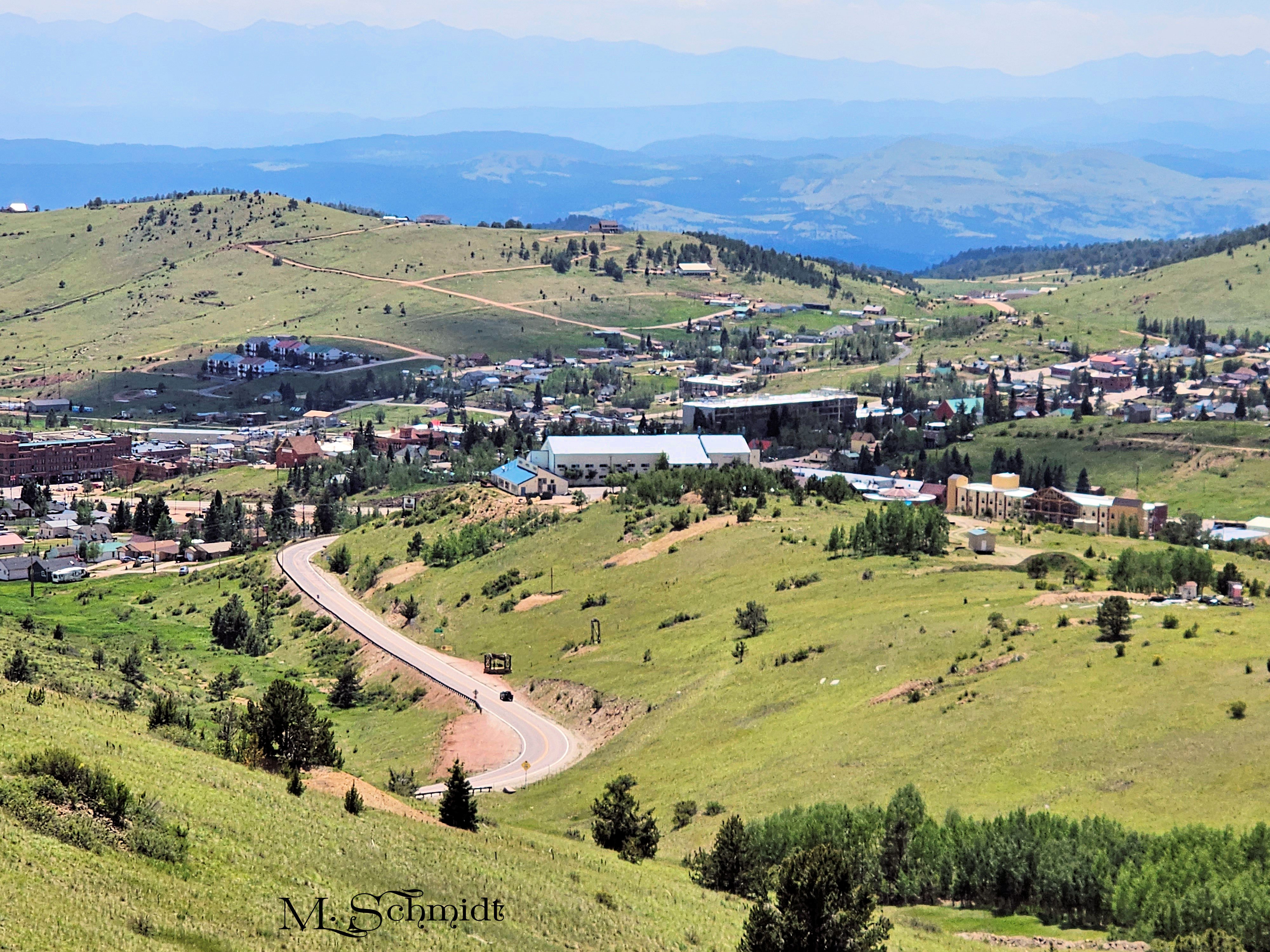
View of Cripple Creek, Colorado at 9494 feet.
For many years, Cripple Creek’s high valley, at an elevation of 9,494 feet (2,894 m), was considered no more important than a cattle pasture. Many prospectors avoided the area after the Mount Pisgah hoax, a mini gold rush caused by salting (adding gold to worthless rock).[8]
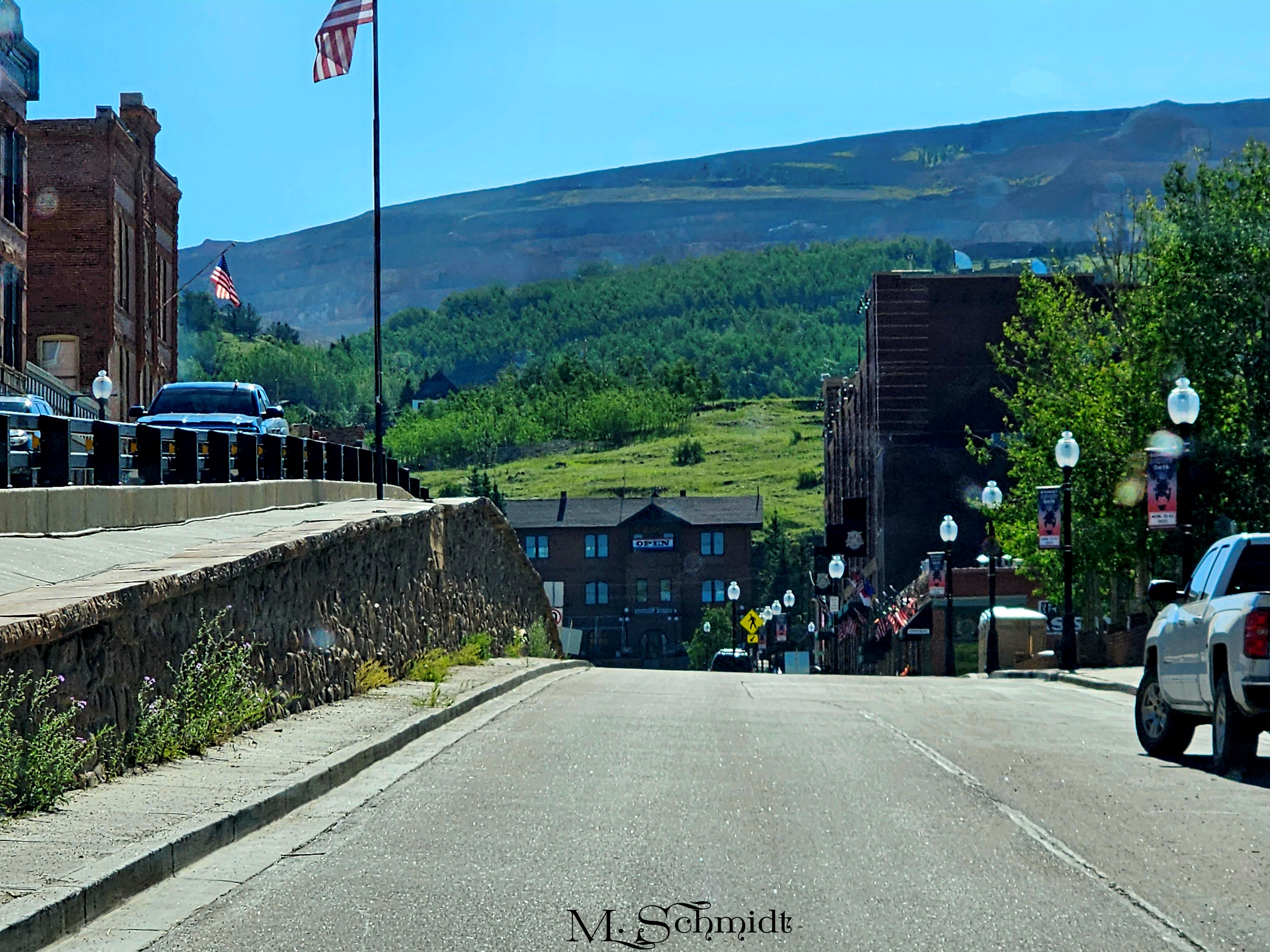
On 20 October 1890, Robert Miller “Bob” Womack discovered a rich ore and the last great Colorado gold rush began. By July 1891, a post office was established. By November, hundreds of prospectors were camping in the area. Rather than investing in mines, Denver realtors Horace Bennett and Julius Myers sought wealth by platting 80 acres of land for a townsite which they named Fremont. The town consisted of 30 platted blocks containing 766 lots. Each lot sold for $25 and $50 for corner lots. Within a year, the lots value increased and sold for at least $250 each. Months later, investors from Colorado Springs platted 140 acres near Fremont and called their town Hayden Placer. Bennett and Myers filed another plat near the Broken Box Ranch and named it Cripple Creek. The towns’ combined population total 600-800 people by the end of 1891. By 1892, the Cripple Creek Mining District name had caught on and in June 1892, the post office assigned the Cripple Creek name to Fremont, Hayden Placer, and Cripple Creek and all the settlements became known as one. From 1892, Bennett and Myers oversaw the Fremont Electric Light and Power Company. The district’s first telephone was established in 1893. Thousands of prospectors flocked to the district, and before long Winfield Scott Stratton located the famous Independence lode, one of the largest gold strikes in history. In three years, the population increased from five hundred to ten thousand. The Palace Hotel and the Windsor Hotel were so full that chairs were rented out to be slept on for $1 a night. Although $500 million worth of gold ore was dug from Cripple Creek and more than 30 millionaires were produced since its mining heyday, Womack was not among them. Having sold his claim for $500 and a case of whiskey, he died penniless on 10 August 1909.[9] By 1892, Cripple Creek was home to 5,000 people with another 5,000 in the nearby towns of Victor, Elton, Goldfield, Independence, Alton, and Strong. As people arrived, the marshal greeted them and confiscated their firearms, which were then sold in Denver to pay for the salary of the teachers of Cripple Creek.
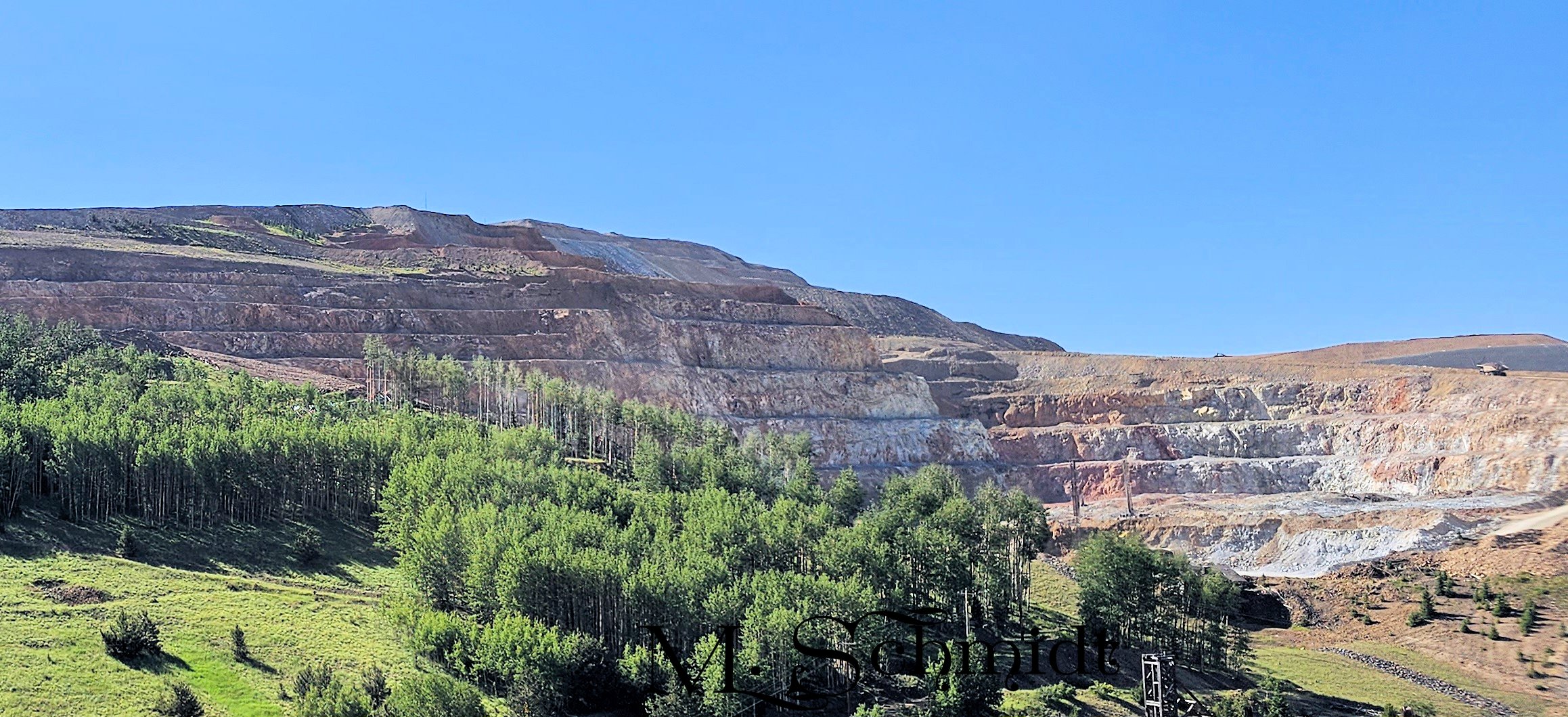
This is a typical scene not only near Cripple Creek but all over Colorado. Colorado moves mountains! Literally. Strip mining for gold has long been done, at least back to 1992 when I saw strip mining in action. Not sure how I feel about it.

Mike and Mary at Double Eagle casino in Cripple Creek!
 When Angels Fly