Welcome to Dravenridge, a bustling small town nestled in the shadows of the Adirondack Mountains in Upstate New York. Dr. Kyle Weber has moved there to escape his past and heal his ailing marriage. But there is darkness in Dravenridge fueled by the desires and needs of its benefactor, Aurora Draven, a powerful immortal whose taste for blood is insatiable. Kyle learns of this hunger through a terrifying ritual that makes him a lifelong member of her Town Council. Neither knows of the savage serial killer who preys upon the town’s residents until it is too late. The Dravenridge Covenant is a fast-paced thrill-fest filled with memorable characters. It is guaranteed to keep you turning pages far into the night.
Harrington has written a book full of thrills and danger mixed with love and vampires, add to that more money than anyone on Earth, plus a few well placed narrative about the towns benefactor, an inch or so of reality and full on gallons of vampirism, and that barely sums up this novel. Don’t take it wrong, please. A lot of good happens and deep love, but with deep love comes equal pain. It is visceral and intense.
“The Viola Factor” takes place at a time when the country faced division and growth after the American Civil War. Viola Knapp Ruffner (1812-1903) struggled with what was just and fair, becoming a little-known confidant for a young black scholar from Virginia. But Viola was much more than a teacher; she was a mother, wife, game-changer, and friend. With her mother’s dying wish, a young woman alone, she left her New England roots. This is a story of trauma and love in the South while battling for justice and the rightful education of the enslaved and once enslaved. African American leader Booker T. Washington (1856-1915) called her his friend and model for life.
The Viola Factor is in many ways a journey of life done in baby steps, tentatively stumbling, until a galloping stride is achieved. Viola Knapp wears different shoes on different days. Heavy, mud-trekking boots to allow for aggressive steps, and daintier shoes for more rhythmic and assertive ones. She was a diligent daughter, an outspoken protector, and a progressive teacher.
Like many women in her situation, alone at seventeen, Viola must realize her own principles to fulfill her future goals. With every stride, Viola Knapp Ruffner marches around surprises, over potholes, and dodges folly after folly on her journey to be fulfilled. After ambling in one direction, plodding along in another, and wandering to find herself, a sudden halt pushes her forward until a factor of fate places her in the path of a newly freed slave with a desire to read and penchant to lead. After years of post-traumatic stress and mental uncoupling, she finds herself a woman who followed her mother’s dying wish to fight for what is fair and just.
Sheridan Brown holds advanced degrees in school leadership and is a certified teacher, principal, and educational leader. The arts have always been a central force in her life, since performing in piano recitals, school band, plays, and singing in choirs her whole life.
Ms. Brown was born in Tennessee and raised in small towns of southwest Virginia. She practiced her profession in Virginia, Massachusetts, and Florida. Upon retirement, she began volunteering, painting, writing, researching, and traveling with her husband, attorney John Crawford. She has one son, Tony Hume. She is GiGi to Aiden and Lucy. She has returned to the Blue Ridge to live and explore.
Rollin Ridge, a mercurial figure in this tribal tale, makes a fateful decision in 1850, leaving his family behind to escape the gallows after avenging his father and grandfather’s brutal assassinations. With sin and grief packed in his saddlebags, he and his brothers head west in pursuit of California gold, embarking on a journey marked by hardship and revelation. Through letters sent home, Rollin uncovers the unrelenting legacy of his father’s sins, an emotional odyssey that delves deep into his Cherokee history.
The narrative’s frame transports readers to the years 1827-1835, where Rollin’s parents, Cherokee John Ridge and his white wife, Sarah, stumble upon a web of illicit slave running, horse theft, and whiskey dealings across Cherokee territory. Driven by a desire to end these inhumane crimes and defy the powerful pressures of Georgia and President Andrew Jackson, John Ridge takes a bold step by running for the position of Principal Chief, challenging the incumbent, Chief John Ross. The Ridges face a heart-wrenching decision: to stand against discrimination, resist the forces of land greed, and remain on their people’s ancestral land, or to sign a treaty that would uproot an entire nation, along with their family.
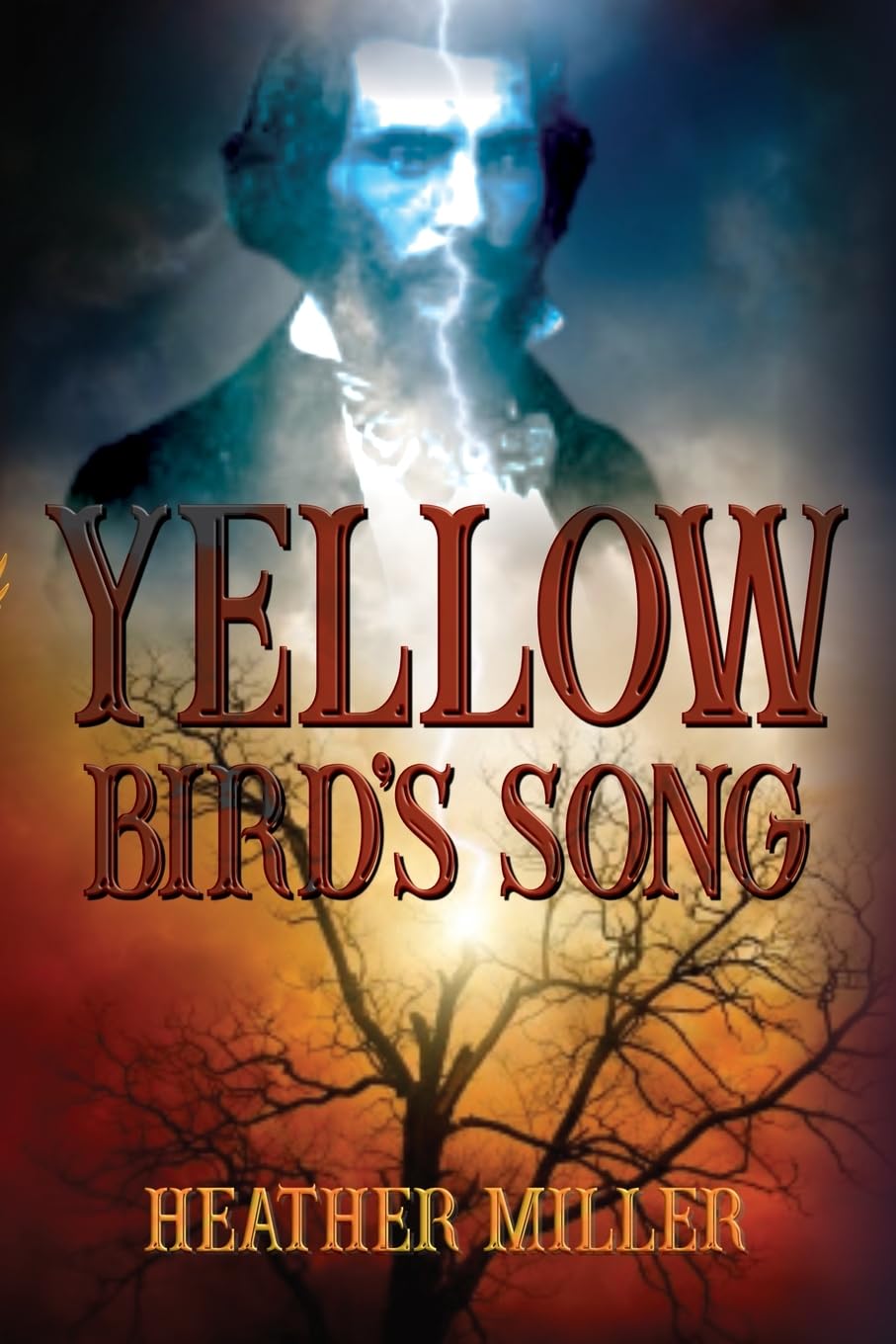
Heather Miller, Author
Yellow Bird’s Song, Excerpt 3
John Rollin Ridge, West Dessert, Utah, 1851
Instead of other travelers along this desert route, we’d found wagon carcasses, adding ours to the lot. Whether human corpses decayed inside, I couldn’t say. I didn’t stop to find out, ridding myself of guilt for not burying the dead. My body couldn’t have done it properly with so little water, not without following directly behind them.
As the afternoon waned, we dismounted and walked beside our thirsty animals. In the desert, a man’s horse becomes too weak to carry him. So, he travels on foot, closer to the dust, breathing and clogging his mind with villainous grains. Packs double their weight with worry, heavier with one last blanket of self-preservation. Yet, parched though he may be, his mind sings songs, like uprooted choruses from a withered elder, telling his trials to impatient warriors who already know the legend’s end.
Expanses of grass shrunk into patches, peeking through worn spots in the desert, like leg hair peeking through worn and holey farmhand pants. We found the pooled water brackish, the color of tea from iodine, salt mixing with sparse rainwater. It wasn’t potable for man or beast. With each disappointment from the lack of soluble water, our progress trickled, nearly stopping entirely.
The sway of horses and pack mules found their rhythm, sluggish though it was. Heat rippled across the sand to just repel back to us from wide mountain berths. Thorny bushes turned pale, a shade lighter than the sand at our feet, desperate for water deep in their roots. Snakes could not reach it and fled, finding no shade.
We pressed forward into the sun, past the mountains near Salt Lake. Each pull at the rim of our hats remained where it was stretched. Bandanas covered our mouths, eyes asquint, leaving each of us absent identity.
Aeneas coughed, attempting to break his silence, rallying saliva enough to articulate some question or another. One which I’d likely have no answer to. He said, “How are we gonna feed the horses, Rollin?”
I was right.
Wacooli answered behind me. “Anee, we’ll have to search for grass on foot and bring it to ‘em.”
From my brother’s response to Wacooli’s lack of enthusiasm, I knew Aeneas stewed in his thoughts. His concern for our animals was more about him than the beasts.
Aeneas said, “You know what I’m hungry for? Grandma’s fried bread, Mama’s glazed chicken, Honey’s pole beans boiled with fatback, and strawberry pie.”
“Damn it, Aeneas! Doesn’t do us any good thinking about it.” I took the fatal risk of putting my thoughts to voice while lingering in Aeneas’ conjured savory tastes. I bit my tongue and swallowed twice. “Aeneas, do you remember Papa asking Mama to take all the seeds out of his strawberries?”
“Nope. Too little. You can hold Papa in your thoughts better than me, Rollin. You’ve got more stock.”
When I didn’t answer right away, he asked, “What did Papa say?”
“Said they got stuck in his teeth, and she needed to remove them.”
“Did she throw something at him?” Aeneas smiled briefly and tried a laugh, but his throat was too dry to form the sound.
“No. She kissed him, as I remember it.”
The memory was as sweet as the fruit. Our lives were so predictable then, freedom through synchronicity. Running Waters will always be home, not the cabin in the West at Honey Creek, or Mama’s dogtrot in Fayetteville, but our home, Running Waters, in Cherokee Nation East, settled among valley lands in the foothills of the Appalachians.
My parent’s extensive farm stretched into the valley on a high hill, crowned with a fine grove of oak and hickory, with a large clear spring at its foot. The orchard was on the left, wheat and cornfields to the right, pastures of cows, goats on one side near the house, and sheep grazing on the other.3 Behind the house, the running spring gave our home its name. After Grandfather’s New Echota Treaty in 1835, we, too, would run over rock, slip on moss, and fall downhill with only brief plains to pool.
The ground whitened under our horse hooves, salted sand gathering in random odd-shaped lines. Only God could articulate their rhyme and reason. Boot tracks marked our path northwest. Each saunter brought another thought: some forward, most backward. Where we’d been, what we’d lost. My thoughts rambled without any respite.
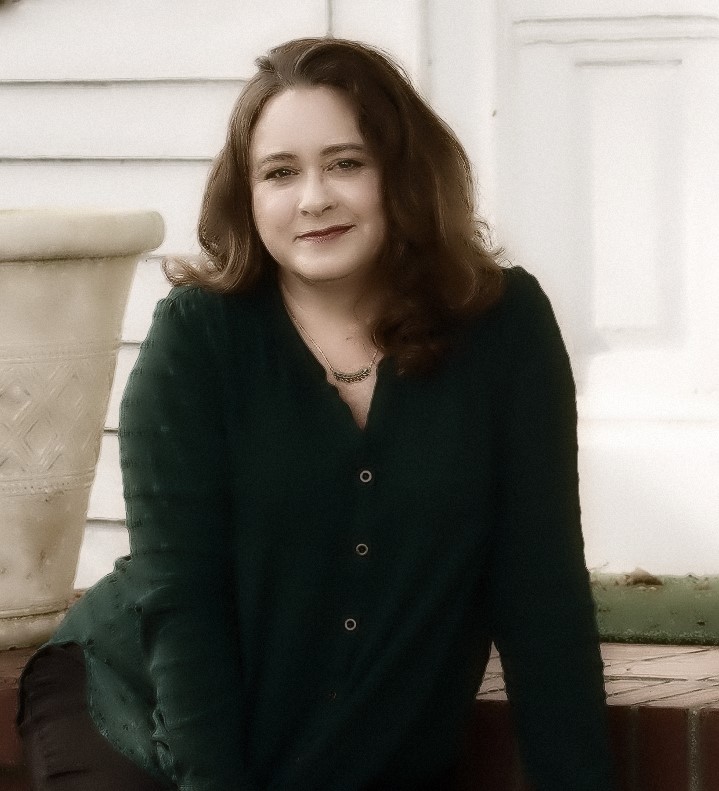
As a veteran English teacher and college professor, Heather has spent nearly thirty years teaching her students the author’s craft. Now, with empty nest time on her hands, she’s writing herself, transcribing lost voices in American’s history.
Visions of her Cherokeegrandmother, Cordie, flashed through Mary’s mind as her mother, Marguerite, informed her that her stepfathershot himself and was in the hospital. Oh no!
No! This can’t be! Not after the joking around at my home last night. NO!!!!Did she use me last night? She’d never use her scapegoat child. No, she couldn’t! Even Marguerite wouldn’t sink that low! Or would she? Marguerite had always been abusive and vile to most people,and especially to her children and husbands, but would she shoot Harold?
Yet, here I was, and I had to tell the police that, yes, my mother was at my home all evening and into the night. How despicable that my mother connived her way into using me as her alibi.
Find Me in the Stars: a Cévenoles Sagas novel – Book Two of the Huguenot Trilogy
Jules Larimore
Blurb:
“Larimore’s ability to engulf a reader into a tale… is brilliantly done.”
5-star Highly Recommended Award of Excellence ~ Historical Fiction Company
Separated by miles, connected by the stars, two healers forge their destinies in a quest for a brighter tomorrow.
Inspired by a true story, this refugee’s tale of sacrifice, separation, and abiding love unfolds in the Cévennes Mountains of Languedoc, France, 1697. A sweeping adventure during the time of Louis XIV’s oppressive rule and persecutions, this compelling narrative follows the intertwined destinies of two remarkable protagonists, Amelia Auvrey, a mystic holy-woman healer, and Jehan BonDurant, an apothecary from a noble Huguenot family, in a riveting tale of enduring love, faith, and the search for light in the darkest of times.
Amelia and Jehan are fierce champions of tolerance and compassion in their cherished Cévenole homeland, a region plagued by renewed persecution of Huguenots. The escalated danger forces their paths to diverge, each embarking on their own dangerous journey toward survival and freedom. The Knights Hospitaller provide protection and refuge for Amelia and her ailing sage-femme grandmother, even as they come under suspicion of practicing witchcraft. And, to avoid entanglement in a brewing rebellion, Jehan joins a troupe of refugees who flee to the Swiss Cantons seeking sanctuary—a journey that challenges his faith and perseverance. Jehan arrives to find things are not as he expected; the Swiss have their own form of intolerance, and soon immigrants are no longer welcome. The utopian Eden he seeks remains elusive until he learns of a resettlement project in the New World.
During their time apart, Amelia and Jehan rely on a network of booksellers to smuggle secret letters to each other—until the letters mysteriously cease, casting doubt on their future together. Jehan is unclear if Amelia will commit to joining him, or if she will hold fast to her vow of celibacy and remain in the Cévennes. Seemingly ill-fated from the start, their love is tested to its limits as they are forced to navigate a world where uncertainty and fear threaten to eclipse their unwavering bond.
As a stand-alone sequel to the award-winning The Muse of Freedom, a bestseller in Renaissance Fiction, Find Me in the Stars is based on true events in the life of Jean Pierre Bondurant dit Cougoussac–an unforgettable adventure where love and light endure against all odds.
Jules Larimore is the author of emotive, literary-leaning historical fiction with a dose of magic, myth, and romance to bring to life hopeful human stories and inspire positive change. She is a member of France’s Splendid Centuries authors’ collaborative, a board member of the Historical Novel Society of Southern California, and lives primarily in Ojai with time spent around the U.S. and Europe gathering a rich repository of historical research in a continued search for authenticity.
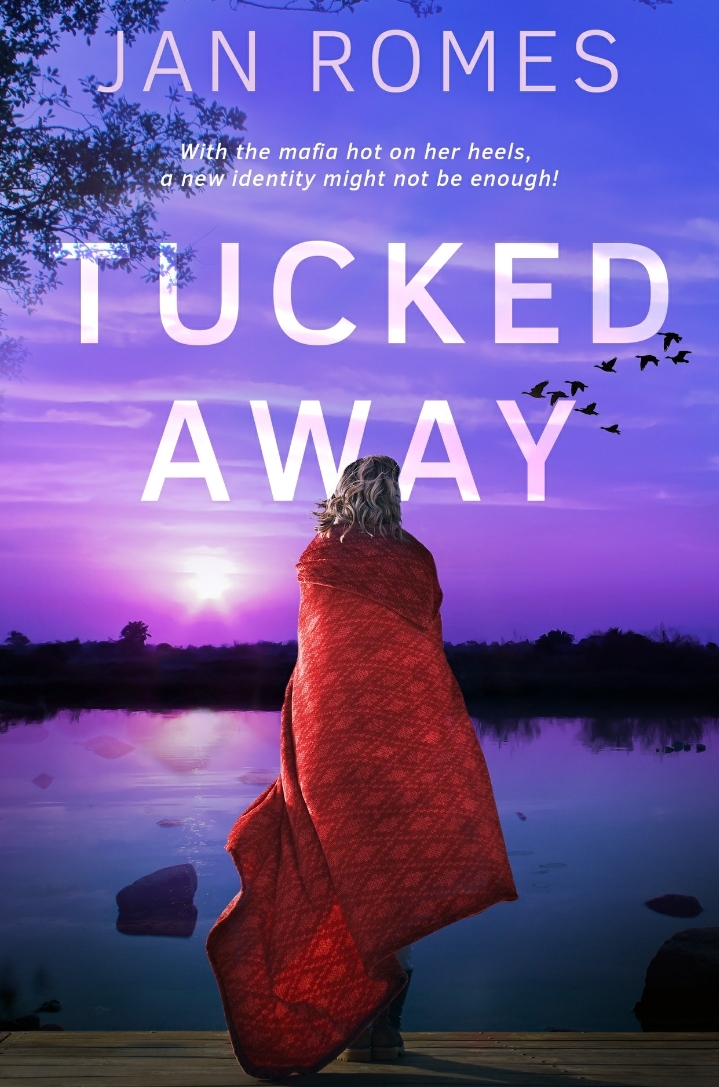
Secrets have cloaked Renee Dutten’s entire existence. Placed in the New York foster care system as an infant, she was moved from family to family until high school graduation. With a bright future as a hairstylist in a posh salon, fate steps in and pulls the rug out from under her again. An eyewitness to a mob hit, the Federal government becomes her guardian. From foster care to witness protection, with only a semblance of normalcy in between, she now has a higher degree of madness with a new identity as Chloe Barnard, a new address in Ohio, and nothing familiar to cling to. The Feds tuck her away in a campground for the summer, with orders for her to maintain a low profile. Chloe’s attempt to be reclusive falls apart right away when she meets Aidan Gerrod. The attraction is strong and her willpower is weak. Wanting him with every speck of her being puts them both in jeopardy and becomes Chloe’s biggest struggle yet.
Former Air Force Master Sergeant and ex-Intel government contractor, Aidan Gerrod is unhappy that physical injuries sidelined his military career and a short romance with his Intel boss cost him that job too. Thinking a campground is the perfect location to commune with nature, find serenity and regain his balance until he figures out where to go next, he gets just the opposite. His gorgeous neighbor grabs his attention and stirs a lot of drama.
When trouble from their pasts comes knocking, will Chloe and Aidan face it together? Or will they be forced to go their separate ways to stay alive?
My Review:
Great paceReviewed in the United States on April 14, 2024
I found this novel to have a great pace and interesting ideas involved with witness protection programs. Add in the mob who don’t care who they take out, and one hunky guy living next door, and end up with a great premise for this story.
During her first teaching year away from her Halifax home—in Endor, an Inuit community on the far northern coast of Labrador—Anna Caine falls deeply in love with the raw beauty of the land, the warmth and acceptance of its people, and with Joshua Kalluk, an Inuk carpenter engaged to another. But when the pull of their brief affair proves insufficient to win Joshua from his betrothed, Anna leaves Endor abruptly and returns home, carrying Joshua’s child and ending her own engagement.
As the years pass, Anna and Joshua share parenting responsibilities for their son but little else. Joshua had moved on with his wife and their growing family, while Anna found herself adrift, longing for what she had lost and struggling to come to terms with her choices, fighting to maintain an independence that always left her unfulfilled. It isn’t until she retires, amidst a terrifying global pandemic, and is called upon to act as a medical escort for Joshua during his cancer treatments, and eventually to accompany him on his final journey home, that she is forced to confront both the past and her own lingering feelings of love, shame, and regret.
The Ice Widow – A Story of Love and Redemption is a beautiful and heart-wrenching work of literary fiction that delves into themes of honour, compassion, and inter-cultural empathy. Life can be both beautiful and tragic but is a journey to be honoured both in spite of its struggles and because of them—a journey in which redemption is always possible.
This book has all the feels and then some. Anna Caine seeks love and passion, never finding true love. Relationships are never what one perceives from the outside or within. The author draws upon her own life, living and working in Canadian Indigenous communities. With that wealth comes forth this book expertly woven and truly one for the heart. Then COVID hit and Anna returns home striving for love and redemption that eludes her every step she takes. Can Anna even forgive herself? What becomes of Anna and her supporting characters? Weaving the challenges between Indigenous and Non-Indigenous individuals, the challenges are tough. Every emotion is felt by the characters, many brought tears to my eyes. In the end, Anna decides what love it and the reader must find out if or how redemption can be obtained.
This was quite intricate in writing to create this one. If detailed and specific, no matter how long the prompt is, you can do this, too. One doesn’t learn overnight, but one can learn! I can help those who wish to try this kind of thing.
Life on Molly is a travel and lifestyle blog. I am a normal girl with many passions. I am an explorer of new places, a learner of new languages, creator of my ambitions, blogger, and a good pal. This blog is my little corner of the world where I am able to share my adventures with you and inspire you to live a life full of purpose.









 When Angels Fly