Book Title: The Agincourt King
Series: The Plantagenet Legacy
Author: Mercedes Rochelle
Publication Date: April 8, 2024
Publisher: Sergeant Press
Pages: 260 pages
Genre: Historical Fiction
Twitter Handle: @authorRochelle @cathiedunn
Instagram Handle: @thecoffeepotbookclub
Hashtags: #TheAgincourtKing #HenryV #Agincourt, #HistoricalFiction #Plantagenet #BlogTour #TheCoffeePotBookClub
Tour Schedule Page: https://thecoffeepotbookclub.blogspot.com/2024/05/blog-tour-the-agincourt-king-by-mercedes-rochelle.html
Book Title and Author Name:
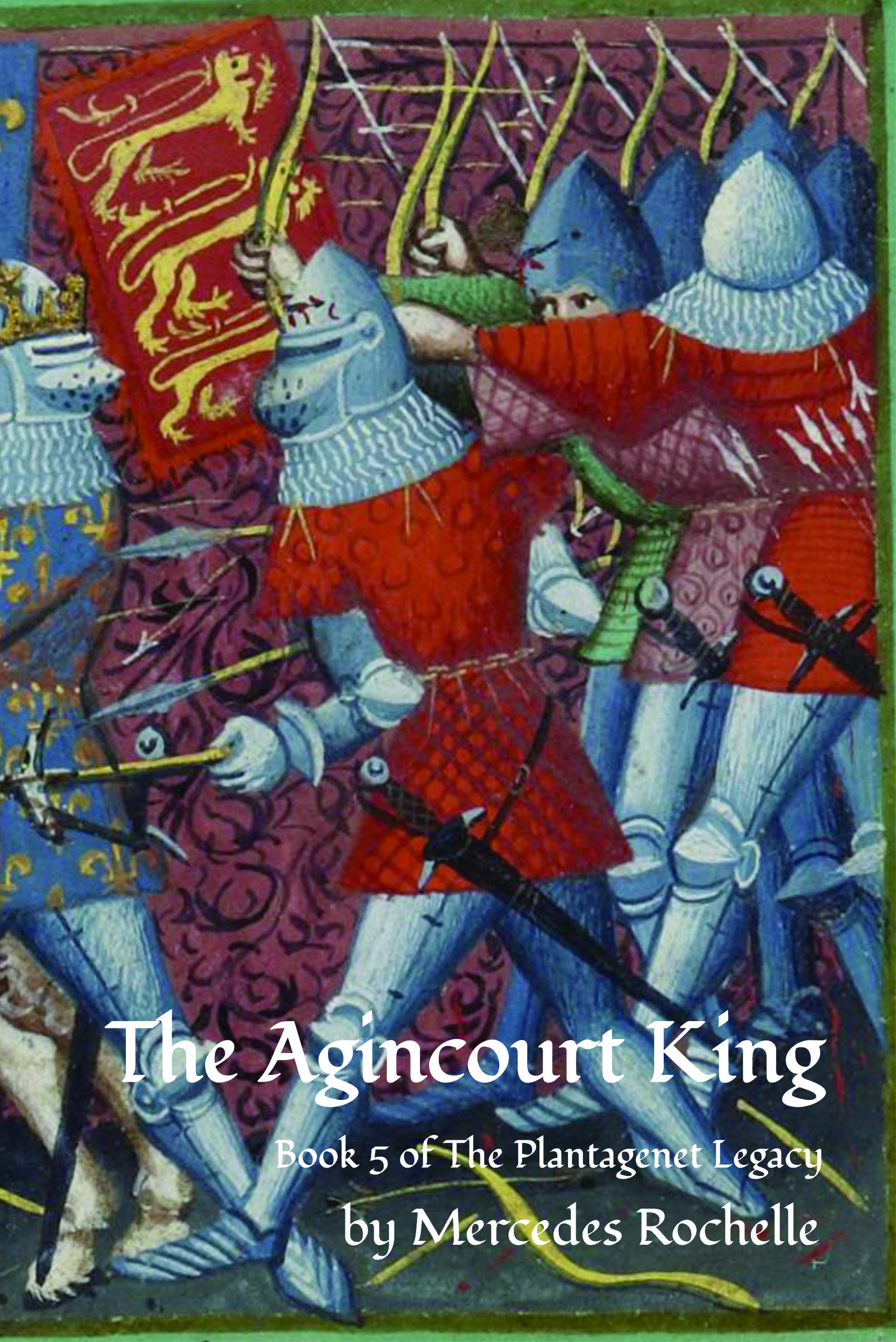
The Agincourt King
By Mercedes Rochelle
Blurb:
From the day he was crowned, Henry V was determined to prove the legitimacy of his house. His father’s usurpation weighed heavily on his mind. Only a grand gesture would capture the respect of his own countrymen and the rest of Europe. He would follow in his great-grandfather Edward III’s footsteps, and recover lost territory in France.
Better yet, why not go for the crown? Poor, deranged Charles VI couldn’t manage his own barons. The civil war between the Burgundians and Armagnacs was more of a threat to his country than the English, even after Henry laid siege to Harfleur. But once Harfleur had fallen, the French came to their senses and determined to block his path to Calais and destroy him.
By the time the English reached Agincourt, they were starving, exhausted, and easy pickings. Or so the French thought. Little did they reckon on Henry’s leadership and the stout-hearted English archers who proved, once again, that numbers didn’t matter when God was on their side.
THE AGINCOURT KING BLOG POST
HENRY V AND HIS BROTHERS
Henry V was fortunate in that he had three brothers to assist him—especially considering he spent most of his reign in France. His relationship with his next brother Thomas, Duke of Clarence, was a bit rocky. Thomas was their father’s favorite. He was handsome, robust, bold to the point of recklessness, and to all appearances, he looked like a king. Many thought Prince Hal looked like he should have gone into the priesthood.
So while their father was alive, the stress between Prince Hal and Thomas was undeniable. Hal diligently performed his duties as commander during the Welsh rebellion. Thomas, on the other hand, was made Lieutenant in Ireland but shirked his responsibilities and came back home, putting his second in command in charge. King Henry preferred Thomas at home, so he didn’t object. That drove Hal crazy and he complained about it whenever possible. Toward the end of Henry IV’s reign, when Hal fell into disgrace, Thomas did all he could to stir up trouble against his brother. He was the one sent to France with an army while Hal sought to clear his name with his father.
All that changed in March, 1413, when the 45 year-old Henry IV died, a broken man. Hal was more than ready to mount the throne as Henry V, and he knew he had to put his personal feelings aside. After all, Thomas was his heir. However, it’s also true that when Henry made his will in 1415 and 1417, Thomas was not mentioned as a beneficiary. Nonetheless, on campaign, Thomas was given positions of responsibility. The soldiers loved him. He could be counted on in the field, though when we take a closer look, we see that Henry seems to have wanted to keep him under his direct control. For instance, rarely was Thomas given the opportunity to be regent in the king’s absence (like his other two brothers).
At Harfleur, Thomas, now Duke of Clarence led a contingent to the other side of the town from the king; he distinguished himself at the siege to Henry’s satisfaction. In fact, when it came to the time for Harfleur to surrender, they sent representatives to Clarence rather than Henry, hoping to get better treatment. Afterwards, however, when deciding whether to return to England or continue overland to Calais, he argued so aggressively against Henry that the king sent him home. It was said that Clarence was incapacitated by dysentery, but many historians think this was a cover for him to save face, since he went to Calais instead of England. Obviously, he wasn’t at Agincourt!
In 1421, Thomas was finally given sole command in France; this was the year Henry went back to England with his new bride. Finally, Thomas would have the chance to make a name for himself! Unfortunately, at Baugé, he imprudently led an undermanned attack against a Franco-Scottish army, not bothering to wait for his archers. The battle was a crushing defeat that ended in his own death—and advertised to the French that the English were not unbeatable. Henry cut short his progress in England and returned to France so he could reverse the damage done. Did he mourn his brother? There doesn’t seem to be much evidence of this.
John, the next in line, has come down to us as very capable, solid, steadfast, a good warrior and a great leader. After the 1408 Percy rebellion, John was sent north to serve as the Warden of the East Marches of Scotland, an eleven-year stint as gave him solid training to take over as regent when Henry went on his Agincourt campaign. On Henry V’s ascension, John was created Duke of Bedford, the name he has been known to posterity. In late 1416, John was put in command of a fleet to take provisions to Harfleur, already under siege by a combined Franco-Genoese navy. Attacking the besiegers, Bedford fought for seven hours against the formidable Genoese carracks which towered over the English ships. Ultimately, the English were victorious and decisively lifted the siege, and the conflict, known as the Battle of the Seine, once again demonstrated their vaunted invincibility.
Humphrey, the youngest brother, was made Duke of Gloucester at Henry’s coronation. He was the only one of Henry IV’s sons that wasn’t given a position of responsibility in his youth. Humphrey was a great collector of books (his collection formed the core of the Oxford University library) and quite the intellectual. Henry took him under his wing, slowly giving him more and more responsibility. He was eager to prove himself and showed quite a knack for managing the artillery, so Henry gave him plenty of opportunity to hone his skills. He was seriously injured at the Battle of Agincourt, but the king straddled his prone body and defended him until he was dragged to safety. This was to be the only pitched battle Humphrey ever fought in, but he otherwise proved himself a clever and able commander during the subsequent sieges while the king strived to conquer Normandy. On Henry’s last campaign, Bedford fought in France and Gloucester served as regent in England, so he must have demonstrated enough competence to be trusted.
When Henry died in 1422, he appointed Bedford as regent of France and also of England—when he was present. He outranked his younger brother. He served in France until he died in 1435, and did a very good job of holding onto Henry VI’s patrimony. He won a major victory at the Battle of Verneuil against a Franco-Scottish force in 1424, which many historians feel was on a par with Agincourt.
Gloucester’s role was more ambiguous. On Henry V’s death, he was assigned as protector of the baby Henry VI, but the child’s upbringing and education were given to Thomas Beaufort, Duke of Exeter (and Henry’s half-uncle). Henry apparently also wanted Humphrey to be Regent, though the wording of his last wishes was open to interpretation. Gloucester insisted that he should be Regent by right of his birth. However, the lords in Parliament had other ideas and he had to be satisfied with Protector and Defender of the realm and head of the Council. By now, Humphrey had begun to demonstrate unsettling tendencies toward self-aggrandisement which would later prove his downfall. He constantly clashed with his uncle, Bishop Henry Beaufort, one of the leading members of the Council, and this antagonism caused major problems during the long minority of Henry VI. I’ll be working on that in future books!
Buy Links:
This title is available to read on #KindleUnlimited.
Universal Buy Link: https://books2read.com/u/mq70Ze
Author Bio:
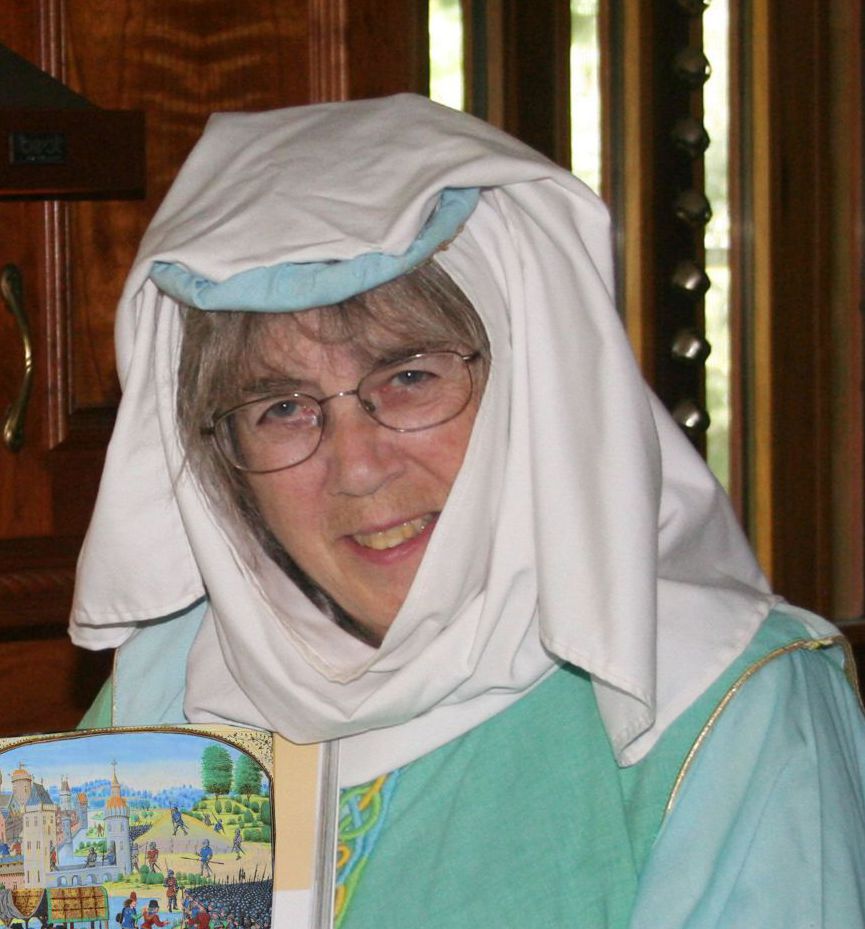
Mercedes Rochelle is an ardent lover of medieval history, and has channeled this interest into fiction writing. Her first four books cover eleventh-century Britain and events surrounding the Norman Conquest of England. The next series is called “The Plantagenet Legacy” and begins with the reign of Richard II.
She also writes a blog: www.HistoricalBritainBlog.com to explore the history behind the story. Born in St. Louis, MO, she received by BA in Literature at the Univ. of Missouri St.Louis in 1979 then moved to New York in 1982 while in her mid-20s to “see the world”. The search hasn’t ended!
Today she lives in Sergeantsville, NJ with her husband in a log home they had built themselves.
Author Links:
Website: https://mercedesrochelle.com/
Blog: https://historicalbritainblog.com/
Twitter / X: https://x.com/authorrochelle
Facebook: https://www.facebook.com/mercedesrochelle.net
Book Bub: https://www.bookbub.com/authors/mercedes-rochelle
Amazon Author Page: https://www.amazon.com/stores/Mercedes-Rochelle/author/B001KMG5P6 Goodreads: https://www.goodreads.com/author/show/1696491.Mercedes_Rochelle












 When Angels Fly