Please welcome Sarah Tanburn to my blog. Hello Sarah, I’m glad you made it here this morning. Shall we have a chat?
Please introduce yourself to those reading this blog post.
Hi Mary, and thanks for having me here. I am a writer, reader, sailor, hiker and cat-servant living in South Wales, UK. I write essays, review books, memoirs and occasional poems. Fiction is my main love though: I write historical fiction, especially maritime based, fantasy and science fiction and some literary stuff too.
In my 50s, I went back to university and last year graduated with a PhD in Creative Writing from Swansea. For that I wrote a duology of novels, of which more in a moment. At the same time, I wrote the series of fantasy novellas now out in a collection called Children of the Land.
Has writing always been part of your life and when did you “know” that it was time to start writing your first book? (If you are here as an invite to promo your small business, then please write your own questions and provide relevant photos and links, thank you.)
Yes – and no! As a child and young adult, I wrote a lot. The autobiography of my pet. The story of Boff. A screenplay for Prisoner of Zenda. Then, like so many people, life got in the way. I wrote lots of journalism and public policy material but not creative work.
In 2003 I took redundancy, sold my house and moved aboard my own yacht to go off sailing. Free of the career shackles, I started creative work again. That turned into a novel which I worked on in bursts for a long time. It won’t be published, but I learnt a lot writing it.
When I started the PhD I knew that it would be a novel. It ended up being two, telling the story of William Brown, a Black woman who served as sailor and spy in Nelson’s Navy. I am now querying the first, entitled Born of Courage.
Children of the Land was a surprise gift along the way. The first novella I wrote in that world was Hawks of Dust and Wine, which came to me in one long burst. The story came second in the Rheidol Prize, an important Welsh literary prize, which was great. I then started thinking of other tales set in the same world.
How difficult was it writing your first book?
Children of the Land, my first published book, was a joy to write in many ways. My complicated, somewhat dystopian future Wales brings with it some important disciplines. For my characters, it is difficult to travel out of Wales and electronic communication is monitored. But compared to the rest of a very unstable world (climate change, geopolitics) it is safe and tolerant. People are not rich, but they are not starving either.
Each story picks up on some imagined creature of the land, a mythological character or fabled part of Welsh history. Some, like the water monsters of The Flow, have their roots in our tales, but others are my invention. I wanted strong women, real challenges and a bit of fun along the way.
The hardest part was probably ensuring the elements of the Welsh language, such as blessings or place names, were right. Fortunately, I have lovely friends who are fluent in Cymraeg and generous with their time and skills.
Have you ever wanted to give up and what stopped you?
I think we all want to give up at times. We fall out of love with a project, or it just doesn’t seem to want to make sense. Our words stop working. Maybe our shoulders hurt and our waistline out of control.
The stories and the characters and the sheer joy of creation always bring me back. I will be standing the shower and realise that this is why that outfit matters, or that of course Charlie would run into the battle – or whatever it might be. And then I am back, making stuff up.
That’s what I keep writing despite rejections and disappointments. The stories won’t let me stop.
Who is the most supportive of you and your dream to be a writer?
I must name two people. One is my wife, Sandra, who is endlessly supportive and engaged. She welcomes my creativity but also my efforts to be more strategic about networking and marketing. The other is Jon, my supervisor for my PhD, who has been a fantastic mentor, generous with his time and insights.
Anything specific you want to tell your readers?
I hope they enjoy the unsettling, immersive world of Children of the Land. I ask some dark questions about where trends in our society are going, and how they might play out in a small country which is not rich, but which has a strong sense of social justice. At the same time, I had some imaginative fun with the spirits of place and what might happen if the moles decide to take over.
I should add this is undoubtedly an adult book, despite the title. The children of the land are born when the landscape itself starts taking a hand in what happens next; they are not always kind.
What is the best advice given to you (book or otherwise), and by whom?
Gosh! Pick one? As a writer (rather than a human being) I immensely admire Ernest Hemingway. In his Paris Review interview, he says two great things. One is to leave out what you know: ‘I have seen the marlin mate,’ he tells us, ’so I left that out.’ The other is always to stop for the day when you know what the next sentence will be. Both of those work for me.
(If readers would like more about icebergs, Eisenhower and greening, there is an excellent article in the New Yorker at https://bit.ly/4ix0s4H by John McPhee)
What is your target audience and what aspect of your writing do you feel targets that audience?
Fans of Angela Carter, Ursula Le Guin and Neal Stephenson will all find elements to enjoy in Children of the Land. There are monsters, certainly, some in human form. There is heroism and strange happenings. Technology matters in isolationist Cymru, whether energy is generated, we communicate beyond our borders or move from place to place. These are fantasies, certainly, but feedback suggests they appeal beyond the bounds of genre.
The intellectual roots of Children of the Land included my ambition to explore the tales of future Wales. Many writers look back at our history, whether at dragons, or glorious resistance or King Coal. I wanted to take those elements of myth and modernity and ask where they might lead us. These tales should therefore appeal to readers of political fiction, exploring possibility.
Did the cover evolve the same way, or did you work with someone to make it come together for you?
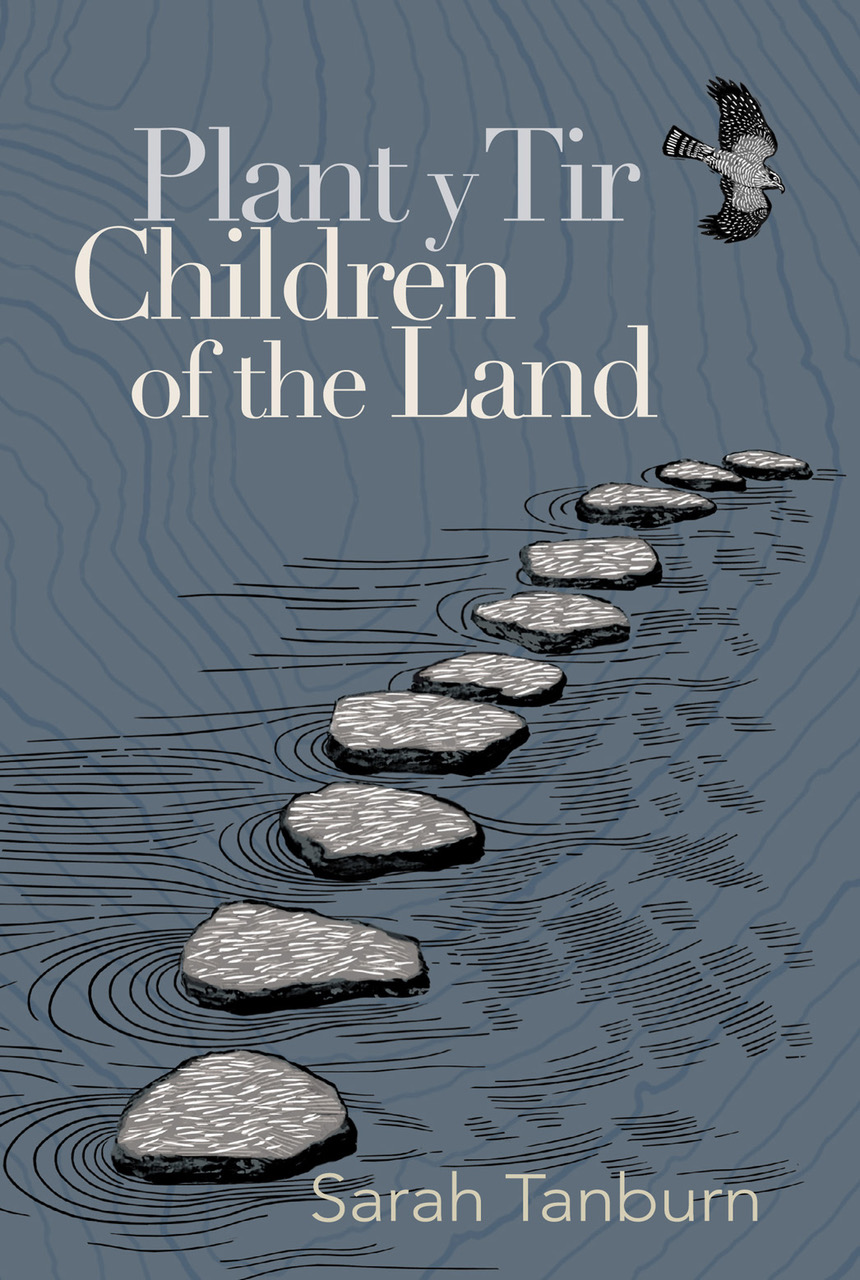
I worked with a book designer. He created the cover and an icon for each of the five novellas. He saw the stories as a pathway for the imagination, so took the stepping-stones that feature in some of the stories as the central motif.
I used each of those motifs to make postcards, with a pull quote from the relevant novella. These have been invaluable publicity and I have used them widely on social media.
What are you working on now? Can we get a peek, an excerpt?
There’s always more than one project on the go. I am (at the time of this interview), working on a novel, Wildwood, a standalone story set in the same world as Children of the Land, about rewilding the temperate rainforest. It is a love story between Gwen, perfumier and mother, and Hwni, spy and healer for the forest of the Upper Tywi Valley. At one point Gwen and her father are summoned to the capital, Aberytstwyth, and Hwni is looking after Gwen’s baby daughter Fidán. She takes the child into the woods.
The next morning dawned bright and dry and silent. No news came from Gwen in Aber’ so Hwni put Fidán back in the papoose and set off into the hills. She walked up the path Gwen had taken with Dafydd ap Morgan and Rhys ap Owain. Men bearing the names of their fathers. Humans love asserting family ties: maybe Fidán would help her understand. All the while she chatted to the baby, describing the plants along the way. The worts and the polypods, the lichens, lolling hart’s tongue everywhere beneath ivy-berries and the shaped lobes of oak leaves. At the orange fungus Morgan had attacked, she stopped and laid a finger on the stumps left behind, which were sprouting again. On the other side of the path the two pieces Gwen had placed were thriving, and she stroked them gently. ‘There’s a blessing for them, Fidán cariad,’ she said and continued upwards, still reciting the litany of the forest.
Any last words before we wrap things up?
I am very grateful for this chance to talk about my writing. There is always a great deal to learn from such clever questions, and from other writers who talk to you. I want to add that I write in lots of genres and forms: that may not be always the most commercial approach, but it allows me to tell tales of strong women and big themes the way I choose. I urge writers and readers to go beyond their usual comfort zone and find something new.
Bio
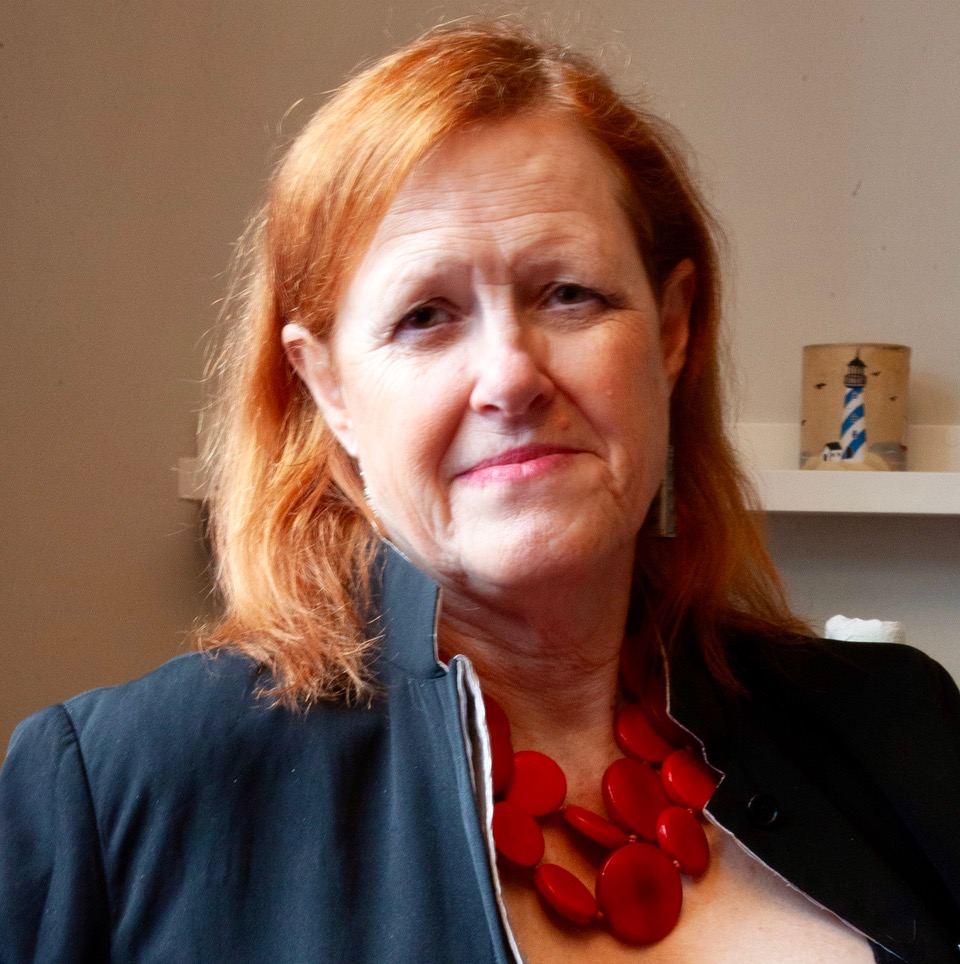
Sarah Tanburn is a writer living in South Wales after living afloat for a decade. The hidden stories of women at sea under sail fascinate her, and her work recovers their voices and agency in complicated worlds. She is also enmeshed in environmental concerns and passionate about a future, safer world. Her short stories, essays, memoirs and reviews have appeared online and in print across various outlets, for instance www.nation.cymru, Superlatives and [wherever] magazines, Ink, Sweat & Tears and the Iron Press anthology Aliens.
Social Media
Website: www.ladyturtlepress.cymru
Amazon: https://amzn.eu/d/7wnB8Cb
Twitter: @workthewind
Bluesky: @sarahtanburnwriter.bsky.social
Linked In: www.linkedin.com/in/sarah-tanburn-0a10a13
Hashtags: #Fantasy #WelshFantasy #HistoricalFiction #WomenInHistory
 When Angels Fly