Archive | June 2025

New Review!

Book Link

Reviewed by Pikasho Deka for Readers’ Favorite

Join a little pig on his space adventures in this colorful picture book by Mary L. Schmidt. Horace in Space follows the story of a pig named Horace. All Horace wants is to travel to the International Space Station (ISS) one day. The ISS is a space station where astronauts from different countries work and conduct scientific research while it orbits around the planet. When Horace gets the opportunity to fly to the ISS on a spacecraft, he is more than excited and starts packing his suitcase with his favorite snacks. But he wasn’t allowed to take his suitcase or his snacks to the ISS. After arriving at the ISS, Horace takes a spacewalk, eats berries, apples, and nuts, takes pictures of Earth, and has a great adventure.

Horace in Space is a captivating adventure story for early readers. Kids will not only be entertained by this fun-filled picture book but also embark on a thrilling journey to discover a few fascinating facts about space, the ISS, gravity, and more. Using eye-catching illustrations and engaging prose, author Mary L. Schmidt crafts an exhilarating tale that is bound to spark young readers’ imaginations and spark their curiosity about all things space-related. It’s a short book but entertaining from start to finish. The main character, Horace, is a fun-loving little pig with a passion for space travel and a dream of becoming an astronaut. Children are going to love his easygoing personality and cheer for him as he achieves his dreams. As far as picture books go, this one is a brilliant choice for kids!

This entry was posted on June 14, 2025. 2 Comments

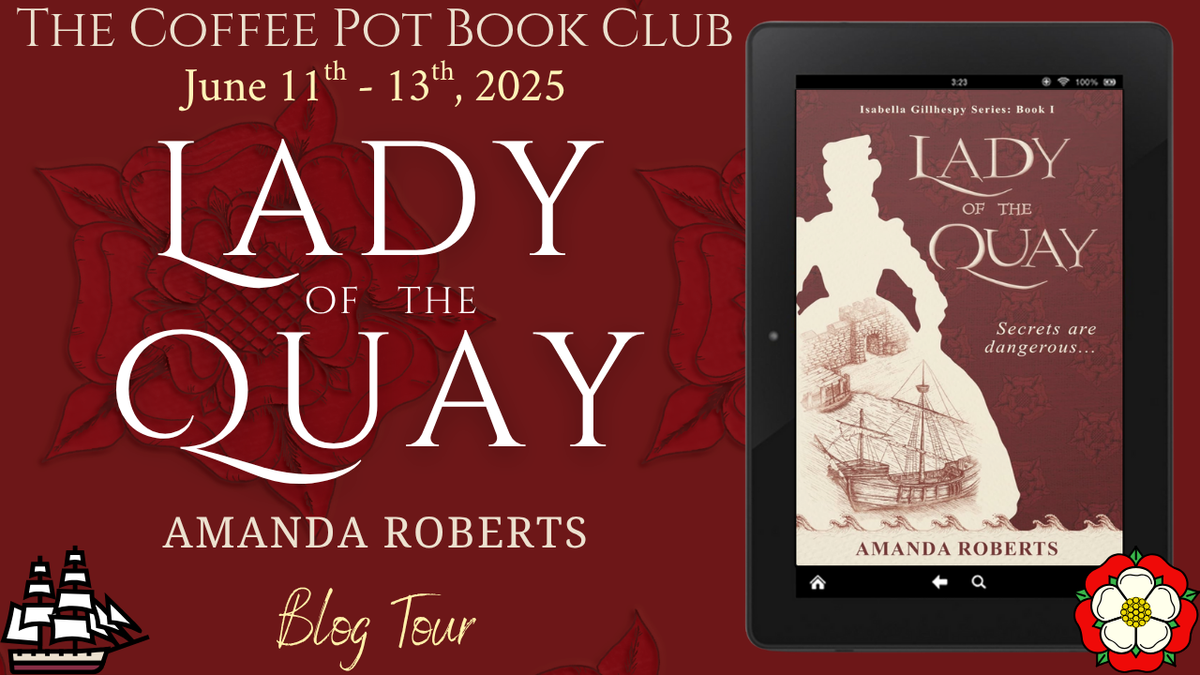
Lady of the Quay

Book Title: Lady of the Quay

Series: Isabella Gillhespy Series, Book #1

Author: Amanda Roberts

Publication Date: May 9th, 2025

Publisher: Hickory Press

Pages: 256

Genre: Historical Mystery / Suspense

Any Triggers: n/a

Twitter Handle: @cathiedunn @marylschmidt

Instagram Handle: @amanda_roberts_author @thecoffeepotbookclub

Hashtags: #LadyoftheQuay #Tudors #HistoricalFiction #HistoricalMystery #BlogTour #TheCoffeePotBookClub

Tour Schedule Page: https://thecoffeepotbookclub.blogspot.com/2025/05/blog-tour-lady-of-the-quay-by-amanda-roberts.html

Book Title and Author Name:

Lady of the Quay

(Isabella Gillhespy Series Book 1)

Amanda Roberts

Blurb:

Knowing she is innocent is easy … proving it is hard

1560, Berwick-upon-Tweed, northern England

Following the unexpected death of her father, a series of startling discoveries about the business she inherits forces Isabella Gillhespy to re-evaluate everything she understands about her past and expects from her future.

Facing financial ruin, let down by people on whom she thought she could rely, and suspected of crimes that threaten her freedom, Isabella struggles to prove her innocence.

But the stakes are even higher than she realises. In a town where tension between England and her Scottish neighbours is never far from the surface, it isn’t long before developments attract the interest of the highest authority in the land, Sir William Cecil, and soon Isabella is fighting, not just for her freedom, but her life. She must use her wits and trust her own instincts to survive.

Lady of the Quay introduces an enticing new heroine who refuses to be beaten, even as it becomes clear that her life will never be the same again.

From the author of the award-winning ‘The Woman in the Painting’.

Lady of the Quay

Snippet 4:

‘You knew my father well. What did you know of his dealings with Mr Young?’ I twisted my head from the glass so I could watch Will’s reaction. He looked at me with a quizzical expression.

‘They were associates, rivals even. Both burgesses. Common interests. What’s this about? You know this as well as I do. Beyond that though, your father did not confide in me. Why would he?’

Will leaned towards me. In the confined space of the window seat we were almost touching. His proximity was intoxicating; his musky smell mingling with the crisp freshness of the outdoor air that clung to his hair and his skin. I stood up and moved towards the warmth of the fire. At once, the freshness was replaced with the bitter tang of smoke. When I turned to face him he was still sitting in the window seat, watching me. He appeared thoughtful, and his shoulders were hunched.

‘What is it Izzy? Let me help you.’

‘You can help me by telling me what you know.’

Buy Link:

Universal Buy Link: https://books2read.com/u/317rQa

This title is available to read on #KindleUnlimited.

Author Bio:

Amanda Roberts has worked as an Editor in business-to-business magazines for over 30 years, specialising in out-of-home coffee, vending and foodservice/catering, including Editor of the global gastronomy title: ‘Revue internationale de la Chaîne des Rôtisseurs’.

She currently freelances, editing UK-based healthcare titles – HEFMA Pulse, Hospital Food + Service and Hospital Caterer. She is a member of the Society of Authors, the Historical Novel Society and West Oxfordshire Writers. She also volunteers for Tea Books (part of Age UK) to run a book club/reading group for elderly people in the community.

Author Links:

Website: https://amandarobertsauthor.co.uk/

Facebook: https://www.facebook.com/profile.php?id=100095191090333

Instagram: https://www.instagram.com/amanda_roberts_author/

Book Bub: https://www.bookbub.com/books/lady-of-the-quay-isabella-gillhespy-series-book-1-by-amanda-roberts

Amazon Author Page: https://www.amazon.com/stores/Amanda-Roberts/author/B0FC2L3CWF

Goodreads: https://www.goodreads.com/book/show/231816264-lady-of-the-quay

This entry was posted on June 13, 2025. 4 Comments

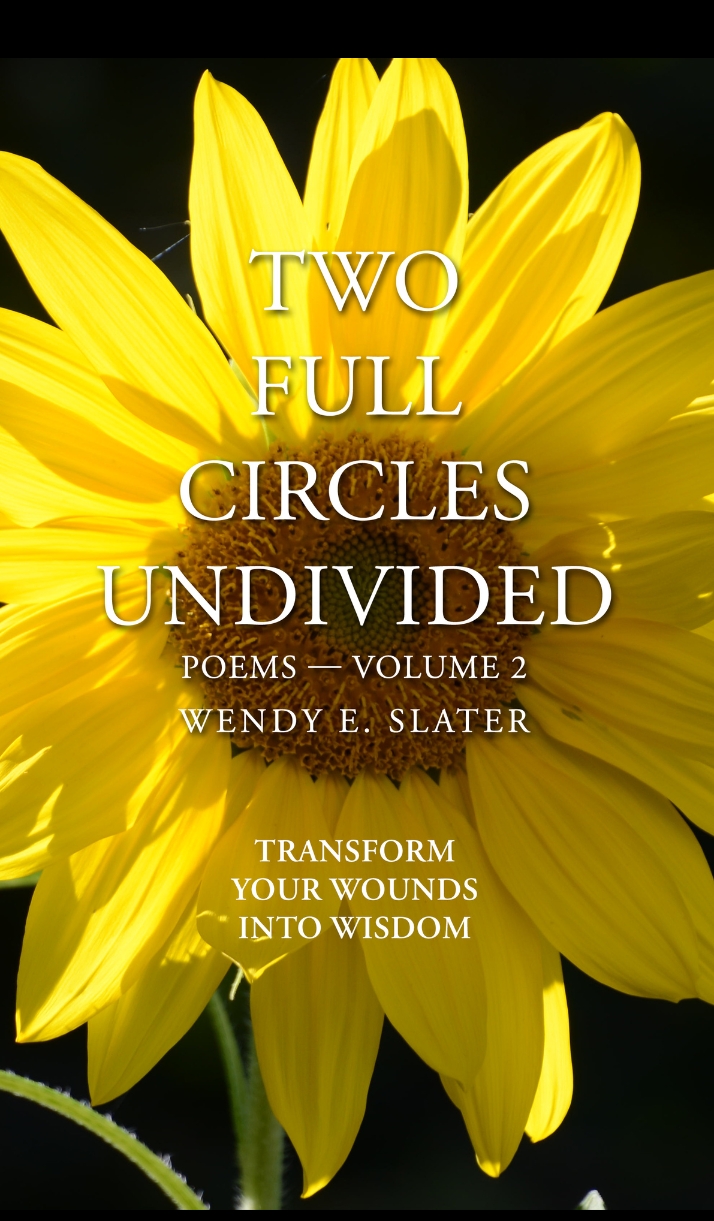
Two Full Circles Undivided

Book Link

From Amazon:

Slater’s modern & timeless mystical poetry is written as a guided healing journey for the body, mind, heart & soul.

“This is profound poetry for the mind, body, spirit & soul.” – Reader Review

“TWO FULL CIRCLES UNDIVIDED is not just a collection of poetry. Each poem is interwoven with the other poems, creating a profound tapestry of healing in the reader.” – Reader Review

“It is a love story, a journey through the deepest forests and the wildest, most sun-dazzled oceans of heart and soul. Thank you, Wendy E. Slater, for this book’s profound healing journey. Slater, I believe, is the poet of our time.” – Reader Review

SLATER’S POEMS ARE A SHARING OF WORDS THAT GUIDE THE READER INTO THE TRANSFORMATION OF UNIVERSAL AND INDIVIDUAL WOUNDS INTO WISDOM.

Slater’s modern mystical poetry is a guiding beacon that ignites a wisdom-filled path to awaken, mend, tune, and align your soul and heart healing. Slater’s words transform wounds and scars into wisdom as she guides the reader from the shadows of the Self into light.

Wendy E. Slater’s modern mystical poetry will take you on a journey of the soul to inspire, mend, comfort, and ignite your self-discovery, self-realization, and transformation.

TWO FULL CIRCLES UNDIVIDED is a self-help book written as a book of transformational poetry.

My Review:

Mary Schmidt

5.0 out of 5 stars Beautiful

Reviewed in the United States on June 9, 2025

Format: KindleVerified Purchase

This book of poetry is absolutely beautiful and beyond… the first poem touched my heart deeply as it reminded me of my children in heaven. I had tears and the words moved me. Not long after a poem with tree branches struck me deeply. I knew the best was yet to come. The heart yearns for what it wants, and then two become one in a dance as ancient as time. The sensuality of the poems with eloquent words of love, and more. Honestly, as a woman, the poetry alone could bring a woman to climax. I’ve never written that about any book! Until now…I can only imagine what the words do to a man. I’ve never read poetry in this style before, but I’m happy I did.

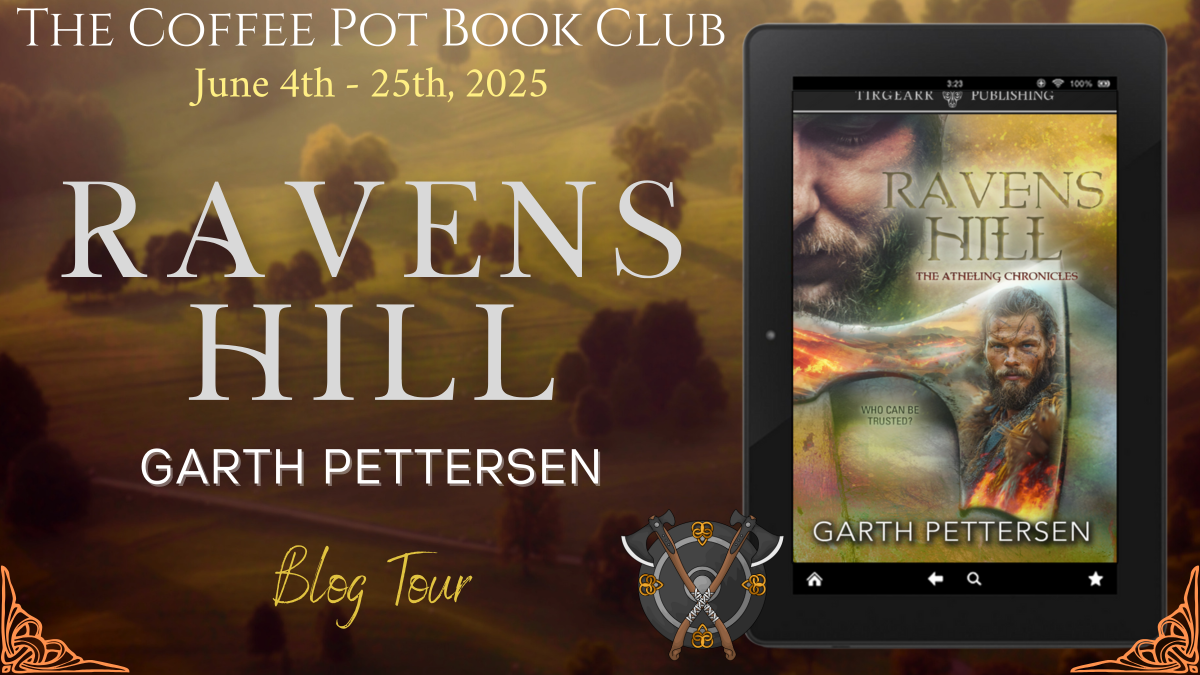
Ravens Hill

Book Title: Ravens Hill      

Series: The Atheling Chronicles, Book #5

Author: Garth Pettersen

Publication Date: April 15, 2025

Publisher: Tirgearr Publishing

Pages: 308

Genre: historical mystery, historical fiction

Any Triggers: some graphic violence, discussion of molestation

Twitter Handles: @garpet011 @cathiedunn @MaryLSchmidt

Instagram Handle: @thecoffeepotbookclub

Hashtags: #VikingFiction #HistoricalMysteries #HistoricalFiction #BlogTour #TheCoffeePotBookClub

Tour Schedule Page: https://thecoffeepotbookclub.blogspot.com/2025/05/blog-tour-ravens-hill-by-garth-pettersen.html

Book Title and Author Name:

Ravens Hill

The Atheling Chronicles, Book #5

by Garth Pettersen

Blurb:

When Harald, the second son of King Cnute, returns from fighting the king’s enemies in Northern Wales, he expects his life to return to normal⸺farming in the Midlands, overseeing his few tenants, evening walks with his beloved Selia⸺an idyllic life, far from the power-mongering of King Cnute’s court. But the king has other plans for Harald and his wife—he grants them a large landholding, a gift they cannot refuse.

On arriving at their new holding, Ravens Hill, Harald and Selia receive a tepid welcome⸺from belligerent housecarls, a conniving steward, an uncompromising abbess, bitter at not adding their estate to her abbey lands, a priest with roaming hands, and a grieving daughter of the previous landholder, who has entered the nunnery.

Harald and Selia wish to improve the lot of their tenant farmers but they face obstacles at every turn, and Harald’s generosity is seen as weakness. They also learn the lands come with an unexpected millstone—an unsolved murder.

And then the trouble begins.

[Fans of Bernard Cornwell will love Ravens Hill—part of the award-winning Atheling Chronicles series.]

When Angels Fly Guest Post:

Breaking Medieval Stereotypes

by Garth Pettersen

I recall when I was a kid, being thrilled by a movie called The Vikings. It starred Kirk Douglas and Tony Curtis, big stars at the time. Rewatching the film as an adult, with my own boys, I questioned the climax, where the Vikings storm an English castle, and I questioned the appearance of a villain knight (the Black Knight—scary with his visor down). Though the producers had obviously done extensive research into clothing, longships, villages, etc., they had crammed all things medieval into this movie. The ninth century historical figure, Ragnar Lothbrok is a character in the film. So, into this ninth century world, castles and knights are inserted, even though they were foreign to England. But as we say, “that’s Hollywood.”

Castles were built in England after the Norman Conquest in 1066, over 200 years after Lothbrok. During the Anglo-Saxon era, those of high rank built halls, sometimes called longhouses, out of wood and wattle-and-daub, and thatch for the roofs. The Church, wanting to symbolize permanence, built with stone. Knights came later, with the feudal system, which again was brought to England by the good old Normans. In the Anglo-Saxon period, you had thegns, who were high-status retainers of the king or a nobleman (perhaps an ealdorman or high-reeve). The Vikings (Norse, Danes) had chieftains called jarls. With the merging of the Anglo-Saxon and Danish-Norse cultures, jarls and ealdormen became eorls (earls). So, no knights. And no English princes and princesses. If you were the son of a king, you were an atheling, someone “throne-worthy”; if you were the daughter of a king, you were a cynebearn, a king’s kid (that doesn’t inspire many little girls, does it?)

When I began writing my historical fiction series, The Atheling Chronicles, I made the honest mistake of seeing the Middle Ages too broadly. In the first book, some of the settings are not historically accurate. The more deeply I researched, I realized the Medieval Period (5th to late15th century—from the fall of the Roman Empire to the Renaissance) is divided into the Early, High, and Late Middle Ages.

During the Early Middle Ages (500-1000 CE), we have the migration of people following Rome’s collapse, e.g. Germanic peoples into Britain, the formation of new kingdoms, and the expansion of the Christian Church in northern Europe.

During the High Middle Ages (1000 to 1250 CE), population increased, agricultural methods improved, and the feudal system flourished, increasing the production of trade goods and giving kings a tighter military machine to use at will. Christianity battled with Islam over truth and territory.

The Late Middle Ages (1250-1500 CE), came with famine, plague, civil unrest, and war between states. Of course, great strides were made in art, architecture, and philosophy.

Getting back to Breaking Medieval Stereotypes, how does a writer break up the fairy tale stereotypes of princes, princesses, court jesters, and knights? Well, just as we learn to avoid using clichés, stale tropes, and stock characters, we have to get clear on what is true and what is false and what is generally assumed. What to do? Three things. Research. Research. Research. I read everything about my time period, take notes, keep binders full of articles, and constantly seek answers to my questions. If I need to describe the English landscape my main character, Harald, is viewing as he rides along, it helps if I know the population of that century. I can then visualize how much woodland still exists. King Cnute gives Harald and his wife, Selia, a large landholding. I need to know the system of landholding and tenancy and how a king would do that (by a “charter” witnessed by court officials).

So, extensive research is the biggy. The next thing I do, is use vocabulary and expressions that reflect not only the times, but the attitudes and beliefs of the characters. I started off using corny expressions such as “methinks,” “dastard,” and “by God’s bones.” I think a breakthrough for me was reading a book called Holy Sh*t: A Brief History of Swearing, by Melissa Mohr. It showed me what was profane at different times in history. In the Middle Ages, folk had little privacy, so body parts and bodily functions were not considered dirty or shocking. Flatulence was still funny, but not embarrassing. If you know people’s attitudes and beliefs, you know what motivates them and what they will say.

Then I began to look at Old English. At first, I tried not to use vocabulary that came from French and other languages, though that was not always possible (did you know that Churchill’s “blood, sweat, and tears” speech used mostly Anglo-Saxon nouns and verbs? —they punch rather than caress). What began to work for me was to pepper my novels with Old English words (I use an online Old English translator and sources such as The Word Hord by Hana Videen), while shaping the context to explain them. I found this highly effective with nouns and verbs. Making love is swiving or sarding. Your armed guards are housecarls. They call Harald, Brego, which means chieftain or lord. I avoid calling the king “sire,” again because it gives rise to old stereotypes. The king is addressed as “Greatness”—the reader has to see him with fresh eyes.

I also call places by the names that were used at the time. England was called Engla-lond, Winchester was Wintanceaster, Denmark was Danmark, Norway—Nordvegr, etc. This all helps to insert the reader into the time and place without causing undue confusion.

The best part is finding words of abuse that were in common use. If you called someone a “bastard” in the 11th century, they’d look at you and say, “so?” But if you called them a stunta, meaning fool, or nithing, which meant coward, you’d definitely get a reaction. I borrowed the term earsling from Bernard Cornwall; it basically means “one who is turned backwards towards their arse.” A criminal or scoundrel is a wearg. You could also rile someone by comparing them to an animal, for example a castrated hog is a bearg. I always provide a glossary of the Old English words I use.

Another way of using language to evoke the Early Middle Ages is through kennings. A kenning is a figure of speech involving two connected words used figuratively. One of the words is the base word and the other the determinant. In early medieval poetry—think of Beowulf—kennings abound. The “whale’s-road” refers to the sea; as does “the swan’s road.” Other examples are “God-cursed” (evil), “hall-watcher” (the monster Grendel), “cloud-murk” (gloom), “feud-calloused hand” (experienced in battle), and “ring-giver” (an appreciative chieftain might bestow an arm-ring to a warrior for his valour). Medieval poetry used internal rhyme and alliteration such as “guilt-fouled fiend.” Kennings are a simple way of providing medieval tone and flavour.

If you can dismantle the reader’s preconceived ideas, through changing up the vocabulary and expressions, and build your world brick by brick through extensive research, you can provide a fresh and thrilling experience of an era your readers will see clearly, perhaps for the first time.

I hope this piece helps writers wishing to tackle historical fiction. Have a thrilling journey. Readers, I hope my article makes you more questioning and discerning—demanding a higher standard from your favourite authors

Buy Links:

Universal Buy Link: https://books2read.com/u/317MEw

Publisher’s Author Page with series links: http://www.tirpub.com/gpettersen

Author Bio:

Garth Pettersen is an award-winning Canadian writer living in the Fraser Valley near Vancouver, BC, Canada where he and his wife board horses.

Pettersen has a BA in History from the University of Victoria and is a retired teacher. His short stories have appeared in anthologies and in journals such as Blank Spaces, The Spadina Literary Review, and The Opening Line Literary ‘Zine.

Garth Pettersen’s historical fiction series, The Atheling Chronicles, is published by Tirgearr Publishing and is available through most online outlets. Book #4 in the series, The Sea’s Edge, received a first-place Incipere Award. Book #5, Ravens Hill, was released on April 15, 2025.

Author Links:

Website: http://www.garthpettersen.com/

Twitter:  https://twitter.com/garpet011

Facebook:  http://www.facebook.com/writeandride/

Book Bub: https://www.bookbub.com/authors/garth-pettersen

Amazon Author Page: http://www.amazon.com/author/garthpettersen

Goodreads: https://www.goodreads.com/author/show/15059599.Garth_Pettersen

This entry was posted on June 11, 2025. 5 Comments

Horace in Space

Book Link

Number One New Release!

Horace is a boy pig who dreams of flying to space in a spaceship or a rocket. He loves his colorful dreams and adventures in space. One day, a man called and invited Horace to fly in space to the International Space Station (ISS). Horace was excited, and he started packing a suitcase. His favorite snacks were packed in an outside zipper case. Then Horace learned he could not take a suitcase or his favorite snacks. He was shown how to put on a space suit for his flight into space. The rocket lifted from the ground, flew Horace straight to the ISS, and then his spaceship docked. Horace had arrived! While at the ISS and in space, Horace learned about the space station, how to take a spacewalk, and he thought he had a floor he was walking on, but no! He was out in space, connected to a rope and floating away from the ISS! Children learn about Horace and his adventure in a space rocket, what he could eat and drink during his visit, and they have multiple opportunities to ask questions about the ISS. Horace also took pictures of planet Earth from space. Children learn about Horace being in a weightless environment and about gravity. Learning about the ISS in a fun illustrated book keeps children entertained. Horace teaches children how he got back to Earth and his big splashdown! Children learn about nature, space, Earth, and the ISS. Children gain a greater understanding of pigs and what they like to eat. The concept and principles of flying to the ISS are taught with young children in mind and through colorful illustrations to keep children engrossed in the story.  

Children learn about being in a weightless environment and about gravity. Learning about the ISS in a fun illustrated book keeps children entertained. Children learn about nature, space, Earth, and the ISS.

Time-Travel Tales

Book Link

From Amazon:

As the world gathers for the Brussels International Exhibition, the city pulses with energy, ambition, and the excitement of innovation. Amid its grand boulevards and magnificent pavilions, Eva Moretti finds herself at a crossroads—leading efforts to unite global women’s movements and orchestrate an Art Exhibition, while quietly holding onto a vision she cannot forget: the return of Jed.

Jed, a Mediator from the Inter–Galactic Alliance, has spent the past four years tracing a growing darkness across Europe—an invisible threat that could fracture the planet’s future. Now recalled to Earth, he is drawn once more to Eva—and to the gathering storm that threatens the Exhibition’s success.

As unseen forces conspire to spread fear and disruption, Jed and Eva must navigate a delicate balance of duty and desire, standing in service to humanity’s evolution while exploring a love that transcends time itself.

My Review:

Mary Schmidt

5.0 out of 5 stars Time and space travel

Reviewed in the United States on June 6, 2025

The time travel exposition is an interesting idea to build upon. Set in Brussels in 1920, our heroine is a true heroine and a master of the Light in the world, specifically planet Earth. Mix in beings from other planets and a huge source of darkness, and the battles begin. Will Light win over Dark? Nice short story and clean romance of two people who love strongly, yet don’t get past the initial stages for a true relationship. Approximately 1/4 of this story is advertising, so much that I’d considered four stars. But the story is nice. I hope the author condensed the advertising so that the story can bloom.

Luminous

Book Title: Luminous

Series: n/a

Author: Samantha Wilcoxson

Publication Date: June 5, 2020

Publisher: independently published

Pages: 319

Genre: biographical historical fiction

Twitter Handles: @carpe_librum @cathiedunn @marylschmidt

Instagram Handles: @samantha_wilcoxson @thecoffeepotbookclub

Hashtags: #HistoricalBiographicalFiction #HistoricalFiction #RadiumGirls #TrueStory #BookBirthday #BlogTour #TheCoffeePotBookClub

Tour Schedule Page: https://thecoffeepotbookclub.blogspot.com/2025/05/blog-tour-luminous-by-samantha-wilcoxson.html

Book Title and Author Name:

Luminous: The Story of a Radium Girl

by Samantha Wilcoxson

Audio narration by Joanne Joyce

Blurb:

Tragic true story of a radium girl.

Catherine’s life is set on an unexpected course when she accepts a job at Radium Dial. The dial painters forge friendships and enjoy their work but soon discover that an evil secret lurks in the magical glow-in-the-dark paint. When she and her friends start falling ill, Catherine Donohoe takes on the might of a big corporation and becomes an early pioneer of social justice in the era between world wars.

Emotive and inspiring – this book will touch you like no other as you witness the devastating impact of radium poisoning on young women’s lives.

It’s too late for me, but maybe it will help some of the others.

~ Catherine Wolfe Donohue

Buy Link:

Universal Buy Link: https://mybook.to/luminous

This title is available to read on #KindleUnlimited.

Author Bio:

Writer, history enthusiast, and sufferer of wanderlust, Samantha enjoys exploring the lives of historical figures through research and travel. She strives to reveal the deep emotions and motivations of historical figures, enabling readers to connect with them in a unique way. Samantha is an American writer with British roots and proud mother of three amazing young adults. She can frequently be found lakeside with a book in one hand and glass of wine in the other.

Samantha’s most recent release is a biography of James Alexander Hamilton published by Pen & Sword History. She is currently writing a trilogy set during the Wars of the Roses for Sapere Books.

Author Links:

Website: www.samanthawilcoxson.com

Twitter / X: https://twitter.com/carpe_librum

Facebook: https://www.facebook.com/PlantagenetEmbers/

Instagram: https://www.instagram.com/samantha_wilcoxson

Pinterest: https://www.pinterest.com/samantha_wilcoxson/

Book Bub: https://www.bookbub.com/authors/samantha-wilcoxson

Amazon Author Page: https://amazon.com/author/samanthawilcoxson

Goodreads:  https://www.goodreads.com/samanthajw

This entry was posted on June 6, 2025. 4 Comments

Death and The Poet

Book Title:     Death and The Poet

Series:                        The Publius Ovidius Mysteries

Author:          Fiona Forsyth

Publication Date: 20th March 2025

Publisher:      Sharpe Books

Pages:                         361

Genre:                        Historical mystery

Any Triggers:            murder, references to slavery, domestic abuse, alcohol, cancer

Twitter Handle: @for_fi @cathiedunn @marylschmidt

Instagram Handle: @fionaforsythauthor @thecoffeepotbookclub

Hashtags: #HistoricalMystery #RomanHistoricalFiction #AncientRome #Ovid #BlogTour #TheCoffeePotBookClub

Tour Schedule Page: https://thecoffeepotbookclub.blogspot.com/2025/04/blog-tour-death-and-the-poet-by-fiona-forsyth.html

Book Title and Author Name:

Death and The Poet

by Fiona Forsyth

Blurb:

14 AD.

When Dokimos the vegetable seller is found bludgeoned to death in the Black Sea town of Tomis, it’s the most exciting thing to have happened in the region for years. Now reluctantly settled into life in exile, the disgraced Roman poet Ovid helps his friend Avitius to investigate the crime, with the evidence pointing straight at a cuckolded neighbour.

But Ovid is also on edge, waiting for the most momentous death of all. Augustus, the first Emperor of Rome, is nearing his end, and the future of the whole Roman world is uncertain.

Even as far away as Tomis, this political shadow creates tension as the pompous Roman legate Flaccus thinks more of his career than solving a local murder.

Avitius and Ovid become convinced that an injustice has been done in the case of the murdered vegetable seller. But Flaccus continues to turn a deaf ear.

When Ovid’s wife, Fabia, arrives unexpectedly, carrying a cryptic message from the Empress Livia, the poet becomes distracted – and another crime is committed.

Ovid hopes for a return to Rome – only to discover that he is under threat from an enemy much closer to home.

When Angels Fly blog post

Finding Tomis

Have you ever been to the ancient towns of Pompeii, Herculaneum or Ostia? They are a wonderful experience, and terrific sources for life in the ancient Roman world. Not only have they been excavated and documented, but you can also walk down their streets, wander in their gardens, imagine the bustling streets…

When I decided to write a series of books about the poet Ovid in exile, there were lots of good reasons to do so, mainly centred on the crisis in which he found himself in 8 CE. But – why oh why didn’t the Emperor Augustus exile the poet Ovid to Pompeii? I would have had a street map to work from! I would know where all the major buildings were! There would be so much information about life and the people who lived there! I could cunningly introduce the graffiti which covers Pompeii and how cool would that be?

But instead, the Emperor exiled Rome’s most famous living poet to the small town of Tomis – or “Where?” as I first called it. Like many towns in the Roman Empire of two thousand years ago, Tomis has disappeared. There is no street plan and information is limited by time and environment. Tomis was situated on the coast of the Black Sea and that coastline has changed dramatically since Ovid’s time: much of the town is under the sea now and what remains on land is buried far beneath the modern Romanian city of Constanța. This is an account of how I built my own Tomis – though probably not Ovid’s Tomis…

I began with the website of the Museum of History and Archaeology in Constanța (Muzeul de Istorie Națională și Arheologi). The Museum has put a lot of valuable information online – and in English! I am so grateful that they put out this information freely. One of the first things I learned about Tomis was that there had a settlement there for far longer than I had realised. In the 8th-6th centuries BCE, the Greeks began planting colonies all over the Mediterranean. The western Black Sea coast attracted many such settlements and Tomis must have been a coveted location because it had a good sheltered harbour. The Greek town seems to have been founded in the 6th century BCE, and 600 years later it was looking forward to an exciting development – it was in the middle of a region that the Romans planned to take over and make into a province, Moesia. Tomis was hoping to be the provincial capital, and I am sure that many people in the town hoped that Romanisation would bring prosperity, both for individuals and the town as a whole.

I set out to reconstruct Tomis. I visualised a town with long roots, but set in a region with an interesting mix of peoples. Locals could be Greek, but they could be Thracian, Dacian, Getan or Sarmatian, or a mixture. Added to this was the fact that Tomis was a port: the people of the town would be familiar with languages, races and religions from all over the Mediterranean, and archaeological evidence suggests that Egypt’s Isis was worshipped alongside the Great Mother of Asia Minor and the Thracian Horseman. The primary language would be Greek, as was the case all over the eastern Mediterranean, and with the advent of Rome many canny merchants would be practising their smattering of Latin while the local upper classes would no doubt be teaching their sons, maybe even their daughters, to communicate with Romans.

I thought that for this mix of people, awaiting a major change in their political system, there must have been many different opinions on the Romans taking over. Most were probably resigned to it, because the Greek cities of the Black Sea had been on cordial terms with Rome for a long time, and had no interest in resisting. Some would positively look forward to the new opportunities, some would be thankful that Rome would have responsibility for the troublesome border, some resentful of the new regime. Many of the upper classes would be hoping to acquire Roman citizenship over the coming years, and were of course the most likely to benefit financially from the change. Ordinary people? I expect they had a bit of a grumble and then got on with it, because after all, what choice have ordinary people ever had?

I loved the prospect of depicting this intriguing political situation, so all I had left to do was imagine what my Tomis actually looked like. The Greek towns and cities of the Eastern Mediterranean were my model, so I researched places like Ephesus. I thought of the buildings I wanted Tomis to have and went through the material on the Museum website for evidence. I figured that if there was a beautiful staue of a goddess discovered by archaeologists, I could reasonably put a temple to that goddess in the town. I found a reconstruction of Tomis on YouTube – a couple of hundred years after the era I wanted but useful nonetheless for size. I carefully studied the limited physical evidence recovered, aware of the limitations. There is a beautiful mosaic near the Museum for example – but it is fourth century, drat! However, this doesn’t mean that nobody in Tomis had a mosaic floor put down before the fourth century, I reasoned. I had the idea that among certain wealthy Tomitans, as they became part of the Roman Empire, there might have been a sudden craze for Roman decorating.

Finally, I looked at what Ovid tells us about Tomis in the poems he sent back to Rome and he is annoying imprecise. It is almost as though he did not care that I needed to know where the Town Council offices were! He is also dramatic, especially in his descriptions of the weather – did the wine really freeze so that to get a drink our poor poet had to lick an icy block? Well, modern Constanța can have some chilly winters – the port of Constanța did freeze up in 2012 just as Ovid describes. But I wondered if this happened every year and for months at a time, as Ovid implies. Some more research discovered that at Ovid’s time the region was going through what meteorologists call the Roman warm spell’ with temperatures estimated to be similar to modern times. So far the action of Poetic Justice and Death and the Poet has taken place in spring and summer, but book 3 in the trilogy is set in autumn and winter so I shall have to make a decision as to how cold I should go.

Of course what you will have realised by now is that all the above is just a long-winded apology, for my Tomis is probably nothing like the town in which Ovid spent his last years. But this is what an historical novelist does, surely? I have found out what I could and then plugged the gaps with what seems to me to be reasonable and likely. I do think I’m going to draw the line at licking frozen wine though!  

Buy Link:      

Universal Buy Link: https://books2read.com/u/brx0WY

This title is available to read on #KindleUnlimited.

Author Bio:

Fiona studied Classics at Oxford before teaching it for 25 years. A family move to Qatar gave her the opportunity to write about ancient Rome, and she is now back in the UK, working on her seventh novel.

Author Links:

Website:         https://substack.com/@fionaforsyth1

Twitter:          https://x.com/for_fi

Facebook:      https://www.facebook.com/fionaforsythauthor

Instagram:     https://www.instagram.com/fionaforsythauthor/

Bluesky:         https://bsky.app/fionawriter.bsky.social

Book Bub:      https://www.bookbub.com/authors/fiona-forsyth

Amazon Author Page:                      https://www.amazon.co.uk/stores/Fiona-Forsyth/author/B001KI2DEC

Goodreads:    https://www.goodreads.com/author/show/256269.Fiona_Forsyth

This entry was posted on June 5, 2025. 2 Comments

The Walls of Rome

Book Title: The Walls of Rome

Series: The Histories of Sphax series – Book #1

Author: Robert M. Kidd

Publication Date: June, 2020

Publisher: independently published

Pages: 419

Genre: Historical Fiction / Ancient History Fiction

Twitter Handle: @RobertMKidd1 @cathiedunn @marylschmidt

Instagram Handle: @thecoffeepotbookclub

Hashtags: #AncientHistoricalFiction #HistoricalAdventure #BlogTour #BookBirthday #TheCoffeePotBookClub

Tour Schedule Page: https://thecoffeepotbookclub.blogspot.com/2025/05/blog-tour-walls-of-rome-by-robert-m-kidd.html

Book Title and Author Name:

The Walls of Rome

by Robert M. Kidd

Blurb:

‘not only have we scaled the mighty Alps, I believe we have climbed the very walls of Rome’ – Hannibal

218 BC. Sphax is seventeen and haunted by the brutal murder of his parents at the hands of Rome. After ten years of miserable slavery he will make his last bid for freedom and go in search of Hannibal’s army and his birthright. He will have his revenge on the stinking cesspit that is Rome!

Destiny will see him taken under the wing of Maharbal, Hannibal’s brilliant general, and groomed to lead the finest horsemen in the world – the feared

Numidian cavalry that would become the scourge of Rome.

From the crossing of the great Rhodanus River, Sphax’s epic journey takes him through the lands of the Gaul to the highest pass in the Alps. This is the story of the most famous march in history. A march against impossible odds, against savage mountain Gauls, a brutal winter and Sphax’s own demons.

This is more than a struggle for empire. This is the last great war to save the beauty of the old world, the civilized world of Carthage, Greece and Gaul. The world of art and philosophy – before it is ground into dust by the upstart barbarity of Rome.

Context:

Sphax’s first encounter with Hannibal does not go well …

Extract 2:

Now beside himself with rage, Sphax violently swept wine cups and the remains of a meal from a nearby table, scattering the contents to the four corners of the pavilion. His enraged voice had attracted the attention of guards. Sphax pushed them aside as he turned on his heels and stormed out of the pavilion.

He hadn’t felt such rage since he’d sunk the blade into rat-face’s flesh. These were his most sacred and harrowing memories. No one who walked this earth would twist or trifle with these memories! Sphax had taken no more than ten strides before a voice from behind him commanded, ‘Wait!’ He stopped beside a blazing campfire, but did not dignify the command by turning around.

Hannibal strode past and faced him across the firelight, his face a dark brooding mask. ‘You were taken into slavery by Rome?’ Sphax didn’t trust himself to speak. He simply swept the sleeve of his tunic back to his shoulder, revealing the fugitivus scar burned into his flesh.

‘No one has ever called me a liar and lived.’ Hannibal’s voice was unnervingly calm, almost disembodied. ‘And before they died I had their tongues ripped out.’ His Libyan guards twitched nervously behind him, spears raised. ‘Do you hear me, boy?’

In answer, Sphax shifted his gaze from the flames to look defiantly into his uncle’s eyes, but still he said nothing.

‘Only the son of Navaras would have the brazen impudence to speak as you have. You will serve under Maharbal and do his bidding. Now get out of my sight.’ Without a word, Sphax strode off, leaving his uncle staring into the firelight.

Buy Link:

Universal Buy Link: https://books2read.com/u/bO7aBQ

This title is available to read on #KindleUnlimited.

Author Bio:

When Cato the Censor demanded that ‘Carthage must be destroyed’, Rome did just that. In 146 BC, after a three year siege, Carthage was razed to the ground, its surviving citizens sold into slavery and the fields where this once magnificent city had stood, ploughed by oxen. Carthage was erased from history.

That’s why Robert is a novelist on a mission! He wants to set the historical record straight. Our entire history of Hannibal’s wars with Rome is nothing short of propaganda, written by Greeks and Romans for their Roman clients. It intrigues him that Hannibal took two Greek scholars and historians with him on campaign, yet their histories of Rome’s deadliest war have never seen the light of day.

The hero of The Histories of Sphax series tells a different story!

When Robert is not waging war with his pen, he likes to indulge in his passion for travel and hill walking, and like his hero, he also loves horses.

Robert lives in Pembrokeshire, West Wales.

Author Links:

Website: https://www.robertmkidd.com

Twitter / X:  https://x.com/RobertMKidd1

Facebook:  https://www.facebook.com/profile.php?id=100064169594911

Bluesky:  https://bsky.app/profile/robertmkidd.bsky.social  

Amazon Author Page:  https://www.amazon.co.uk/stores/author/B08NHNRM61

Goodreads:  https://www.goodreads.com/author/show/20939884.Robert_M_Kidd

This entry was posted on June 3, 2025. 2 Comments

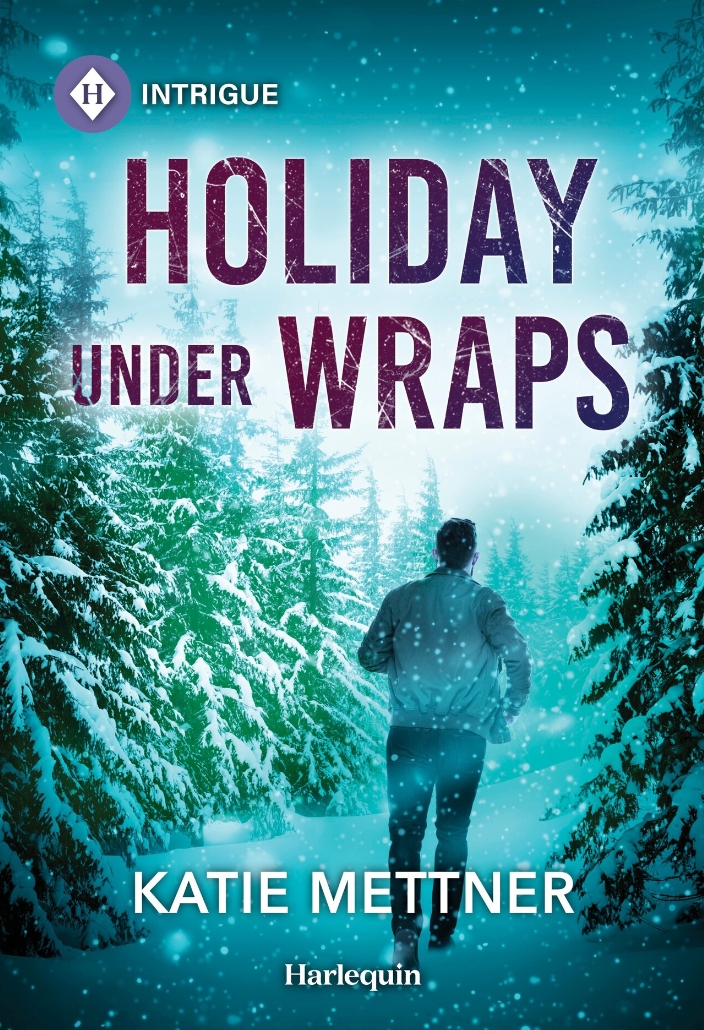
Holiday Under Wraps

Book Link

From Amazon:

He’ll do anything to protect her

But this Christmas there will be nowhere left to run…

It takes everything former army officer Lucas Porter has to cope with PTSD—and his new life as a security technician. But he plunges back into danger to help the one woman he never forgot. Now he and former military specialist Delilah Hartman are only seconds ahead of trained killers as they battle a brutal Minnesota blizzard. And keeping her safe means Lucas must resist the reignited passion between them. But will exposing the truth give them a life together—or become an inescapable trap?

From Harlequin Intrigue: Seek thrills. Solve crimes. Justice served.

Discover more action-packed stories in the Secure One series. All books are stand-alone with uplifting endings but were published in the following order:

Book 1: Going Rogue in Red Rye County
Book 2: The Perfect Witness
Book 3: The Red River Slayer
Book 4: The Silent Setup
Book 5: The Masquerading Twin
Book 6: Holiday Under Wraps

My Review:

Mary Schmidt

5.0 out of 5 stars Perfect series ending.

Reviewed in the United States on June 1, 2025

Verified Purchase

I loved this book. The main characters are flawed in every way possible and have sacrificed much in their lives. They all prove they can get past those scars, those memories, what they had to do in the military, and trying to live post military. This is not easy by any means. The romance/love connection never wavers, despite them not seeing how they could live life together. Mix in corrupt military higher-ups and a ton of missing antiquities and you have a thrilling novel mixed with good and bad.