Archive | August 2025

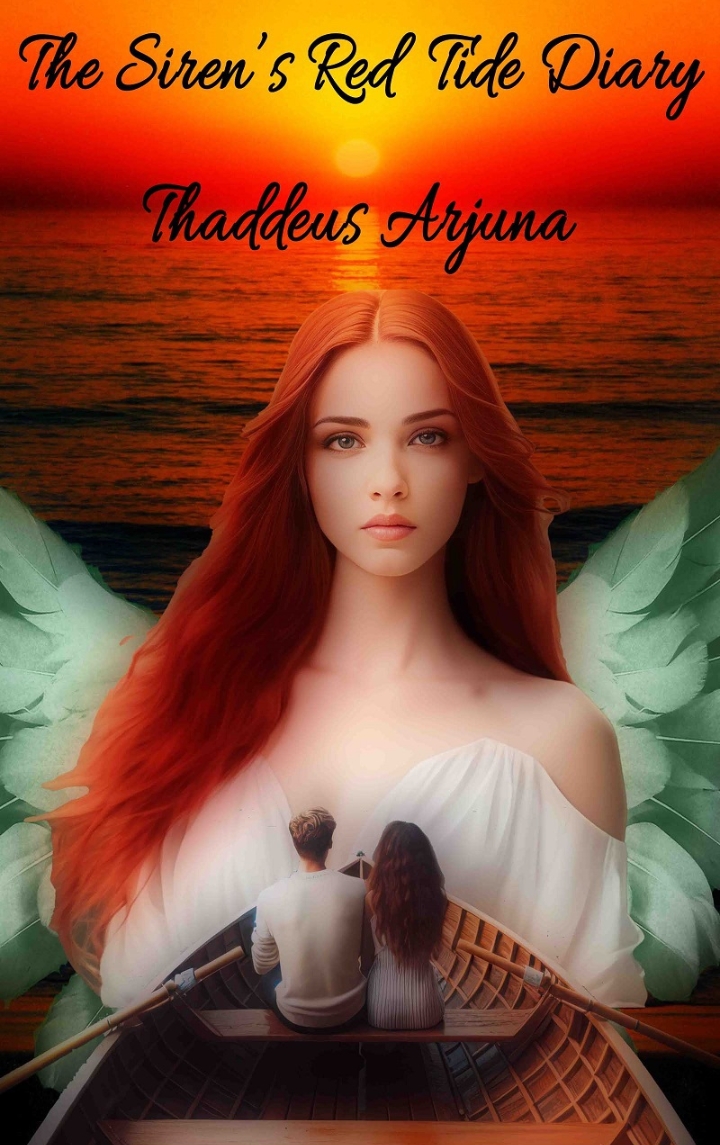
The Siren’s Red Tide Diary

Book Link

From Amazon:

A Fishing Captain set Adrift with a deckhand in a Toxic Sea is haunted by a Beautiful Siren who pledges their safety. She visits Captain Taylor’s dreams, and he and the worried Deckhand try to survive 70 miles from Stump Pass in the middle of a Red Tide Bloom. With Shark attacks, a Blistering Sun, and scant Food and Water, they must find their way home in this Romantic Fantasy full of Poetry and Mystical Dreams. A story of Treachery, Love ,and Perseverance.

My Review:

Darrell thought life was good, great university job, a wife, beautiful home, but they no interest in what events or hobbies eack liked. One of them cheats and that brings this saga into full force. Darrell left everything behind for a new life on the sea and catching fish. Not all hired deck hands are honet, and then to have a gorgeous siren come to life in your dreams, or right in front of you, Kyna helps Darrell become his future destiny.

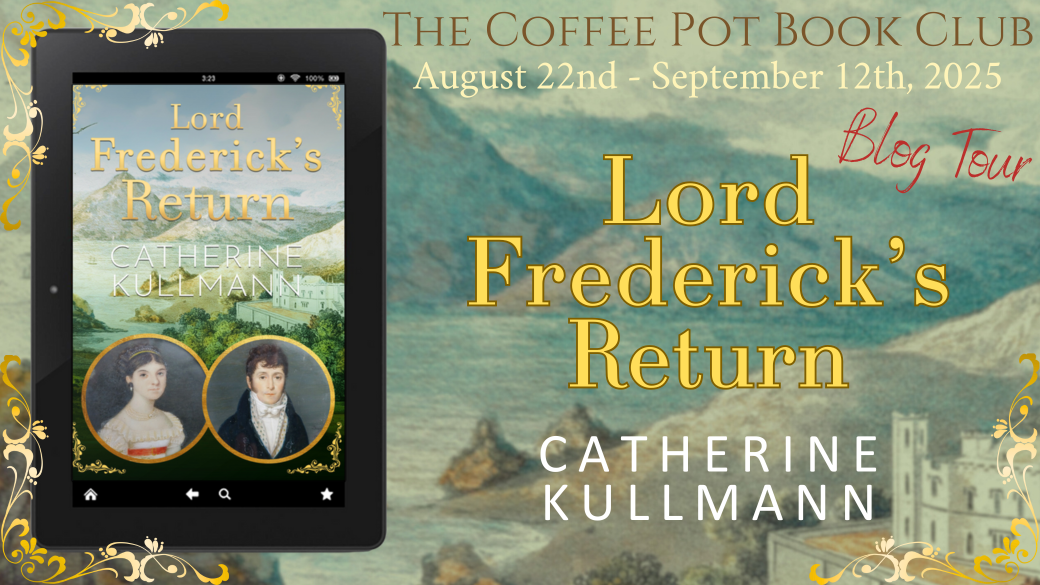
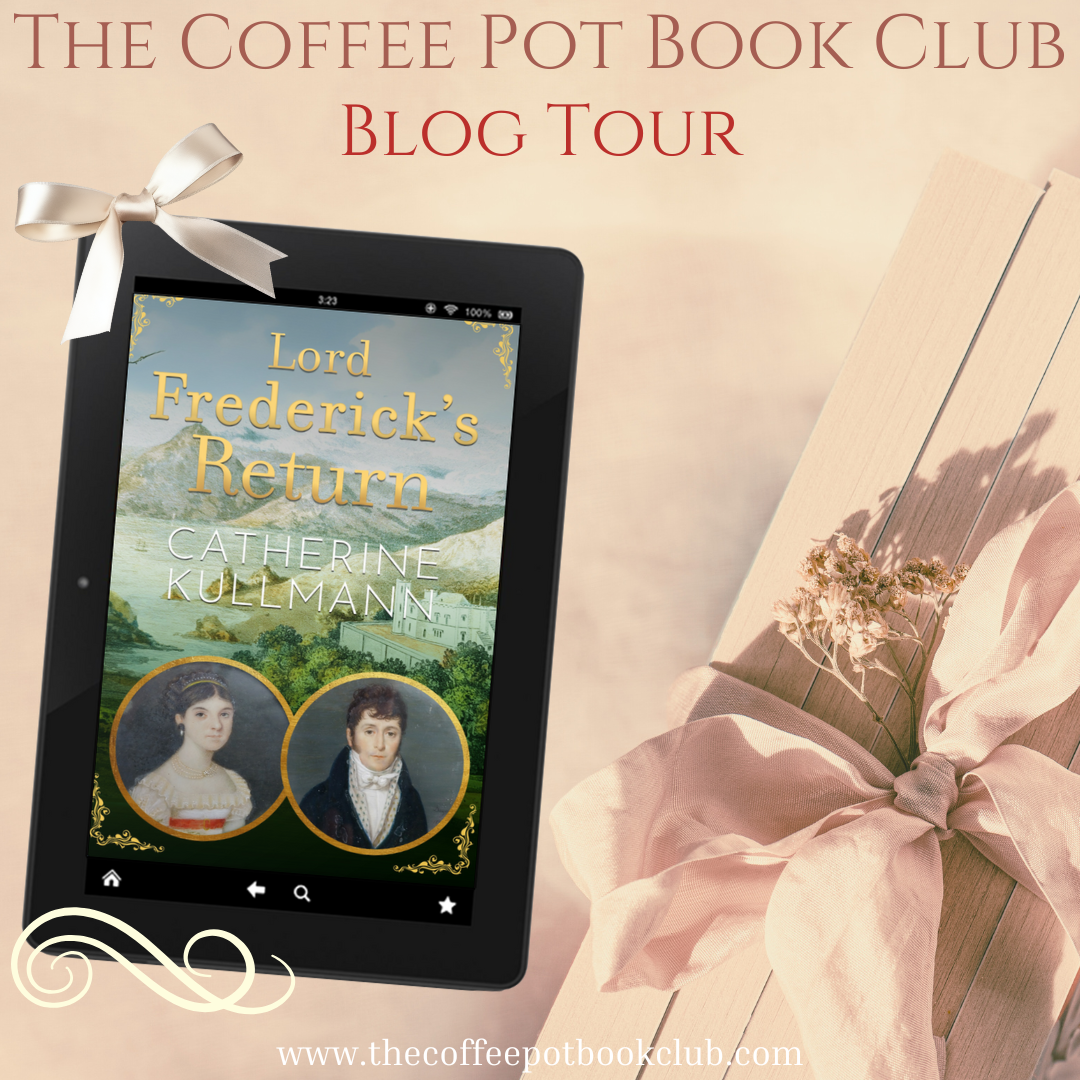
Lord Frederick’s Return

Name: Catherine Kullmann

Book Title: Lord Frederick’s Return

Series: n/a

Publication Date: 22nd July 2025

Publisher: Willow Books

Pages: 269

Genre: Regency Romance

Any Triggers: No

Twitter Handles: @CKullmannAuthor @cathiedunn @marylschmidt

Instagram Handle: @thecoffeepotbookclub

Hashtags: #Regency #HistoricalFiction #HistoricalRomance #BlogTour #TheCoffeePotBookClub

Tour Schedule Page: https://thecoffeepotbookclub.blogspot.com/2025/08/blog-tour-lord-fredericks-return-by-catherine-kullmann.html

Book Title and Author Name):

Lord Frederick’s Return

Catherine Kullmann

Blurb:

An older hero, an enigmatic heroine and a delightfully outspoken four-year-old. Throw scandal into the mix for a gripping and tender Regency love story.

August 1816. Lord Frederick Danlow returns to England after spending 18 years in India. He plans to make a home for himself and his motherless, four-year-old daughter, Ruperta. Unsure where to start, he accepts an invitation to stay at Ponsonby Place, home of Colonel Jack Ponsonby who made his fortune in India, and his daughter Susannah, the mistress of the household.

Soon Frederick finds himself in need of a governess—and a wife? The more time he spends with Susannah, the more his admiration of her deepens. Is she the woman with whom he will share his life?

He is resolved to court her, but then his younger brother Henry engulfs his family in an appalling scandal that could prevent any lady from agreeing to a connection with it. Now Frederick must support his family during this ordeal.

But what of Susannah? What will she say when she hears of the scandal? Should he, dare he offer her his heart and his hand?

Guest Post: When Angels Fly

Why Write or Read Historical Fiction?

What do we write and read historical fiction? First, I suppose, because it takes us out of ourselves—transports us to an unfamiliar society recreated partly from familiar facts and partly from a myriad of tiny, new details so that it seems as real to us as our world of today. The setting rings true and the characters’ actions are determined by the laws, morals and customs of their time, not ours.  Sometimes this horrifies us; at other times we find it liberating and long for more romantic, more adventurous, perhaps simpler bygone days.

Contemporary fiction instinctively reflects/portrays the world as it is at the time of writing. Historical fiction considers the past through the prism of the present, the author drawing on research rather than personal experience to create an authentic setting and story. But, while we cannot forget what we already know—that Germany lost both world wars, that the Allies under Wellington won the Battle of Waterloo or that the US won the War of Independence,—reading the right author, we are willing to suspend our belief, to become so caught up in the story, that we experience those events as if they were happening today. And within these grand story arcs there are so many smaller arcs concerning fictional characters with uncertain outcomes or gaps in the known narrative that informed imagination can fill so that no matter how well we think we know a period or an episode, there is always something new to discover.

With history becoming more and more of a niche subject at schools and universities, it is historical fiction that offers millions of readers a connection to the past, a past which casts long shadows. We need only look back two hundred years to the beginning of the nineteenth century. The Act of Union between Great Britain and Ireland of 1800, the Anglo-American war of 1812 and the final defeat of Napoleon at the Battle of Waterloo in 1815 are all events that still shape today’s world. At the same time, the ruling aristocracies were being challenged by those who saw the need for social and political reform, while the industrial revolution which led to the transfer of wealth to the manufacturing and merchant classes was underway. Powerful voices demanded the abolition of the slave trade and women, who had few or no rights in a patriarchal society, had begun to raise their voices, demanding equality and emancipation. It is the beginning of our modern society.

Following the collapse of the Treaty of Amiens in 1803, the United Kingdom was at war with Napoleonic France until 1815. Like Hitler in 1939, Napoleon swept eastwards conquering all before him until he stood at the gates of Moscow. Unlike other combatants in this long war, Britain was spared the havoc wrought by an invading army and did not suffer under an army of occupation. War was something that happened elsewhere, far away. For twelve long years, ships carrying fathers, husbands, sons and brothers sailed over the horizon and disappeared. Over three hundred thousand men did not return, dying of wounds, accidents and illness.

What did this mean for those left behind without any news apart from that provided in the official dispatches published in the Gazette and what little was contained in intermittent private letters? The question would not leave me and it is against this background of an off-stage war that I have set my novels. How long did it take, I wondered, for word of those three hundred thousand deaths to reach the bereaved families? How did the widows and orphans survive? What might happen to a girl whose father and brother were ‘somewhere at sea’ if her mother died suddenly and she was left homeless?

It is against this backdrop of an off-stage war in a patriarchal world where women are both second-class citizens and held to impossibly high standards that I set my first novels. My characters and their stories are fictional but the world in which they live is very real and there are no twenty-first century solutions to their dilemmas. The main story arc is romantic; I am particularly interested in what happens after the first happy end—how life goes on around the protagonists and sometimes catches up with them. In The Murmur of Masks, Olivia agrees to a marriage of convenience, unaware that her husband’s secrets will prevent love ever growing between them. How can she build a satisfying life for herself? Perception & Illusion charts the voyage of newly-wed Lallie and Hugo through a sea of confusion and misunderstanding. Will they come to a safe harbour or continue to drift apart? And, in A Suggestion of Scandal, simply being in the wrong place at the wrong time puts Rosa’s whole future at risk. Could it happen today?

In later stories, such as The Potential for Love and A Comfortable Alliance, I consider the situation of those who fought or lost love ones during the long war. The war may be over, but life goes on. Lady Loring’s Dilemma and The Husband Criteria highlight the situation of married women whose legal existence is denied under the legal fiction of coverture. And finally, in Lord Frederick’s Return, the situation of children born out of wedlock to an Indian mother and English father and the implications of this for their fathers is considered.

Good historical fiction therefore informs us about the past. It provides insights into yesterday and helps us understand today. It encourages us to persevere or warns us to change direction. It can reveal past, hidden wrongs, teach us to value the struggles of those who went before us and inspire us to preserve and build upon their achievements.

© Catherine Kullmann 2025

Buy Link:

Universal Buy Link: https://mybook.to/Frederick

Author Bio:

Catherine Kullmann was born and educated in Dublin. Following a three-year courtship conducted mostly by letter, she moved to Germany where she lived for twenty-five years before returning to Ireland. She has worked in the Irish and New Zealand public services and in the private sector. Widowed, she has three adult sons and two grandchildren.

She has always been interested in the extended Regency period, a time when the foundations of our modern world were laid. She loves writing and is particularly interested in what happens after the first happy end—how life goes on for the protagonists and sometimes catches up with them. Her books are set against a background of the offstage, Napoleonic wars and consider in particular the situation of women trapped in a patriarchal society.

She is the author of The Murmur of Masks, Perception & Illusion, A Suggestion of Scandal, The Duke’s Regret, The Potential for Love , A Comfortable Alliance , Lady Loring’s Dilemma and The Husband Criteria.

She also blogs about historical facts and trivia related to this era. You can find out more about Catherine’s books and read the blog (My Scrap Album) at her website where you can also subscribe to her newsletter.

Author Links:

Website: http://www.catherinekullmann.com/

Twitter / X: https://twitter.com/CKullmannAuthor

Facebook: https://www.facebook.com/catherinekullmannauthor

Book Bub: https://www.bookbub.com/profile/catherine-kullmann

Amazon Author Page: viewauthor.at/ckullmannamazonpage

Goodreads: https://www.goodreads.com/author/show/15549457.Catherine_Kullmann

This entry was posted on August 29, 2025. 1 Comment

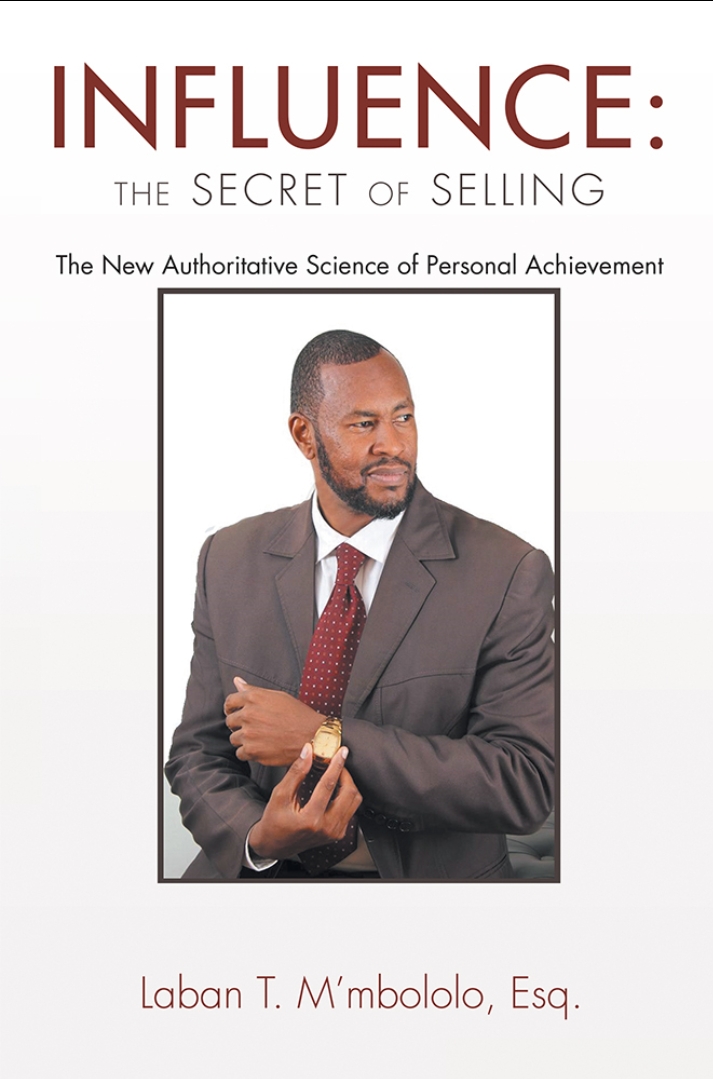
Influence: the Secret of Selling

Book Link

From Amazon:

“As someone who has been actively engaged in sales in diverse
forms my entire life, I can pick out valuable lessons in this book.
“Infl uence: The Secret of Selling” is a practical guide into building
customer engagement and rapport, both critical tools for ensuring
a successful sale and life in selling.”
—Dr. Chris Kirubi, Director, Centum Investment,
Billionaire businessman, entrepreneur & industrialist.
“A must read for anyone who cares about driving business and
positively impacting on customers’ lives”
—Amb. John Mwangemi, Kenya’s High Commissioner to
the Republic of Rwanda.
“Certainly, this is a walk-the-talk groundbreaking manual for the
21st Century for all to read.”
—Dr. Julius Gathogo (Ph.D), Senior Lecturer Kenyatta
University and Distinguished Prof. St. Alcuin,
Minnesota, U.S.A.

My Review:

This book is a must read for any business owner or anyone preparing to start a business. Why not start off full of confidence and having the ability to to successfully market your product and make the important sales? Yet this book is about more than simply sales. The writing style comes from a truly heartfelt perspective and helps you to not overdo things all at once. Self care is vital to growing a business.

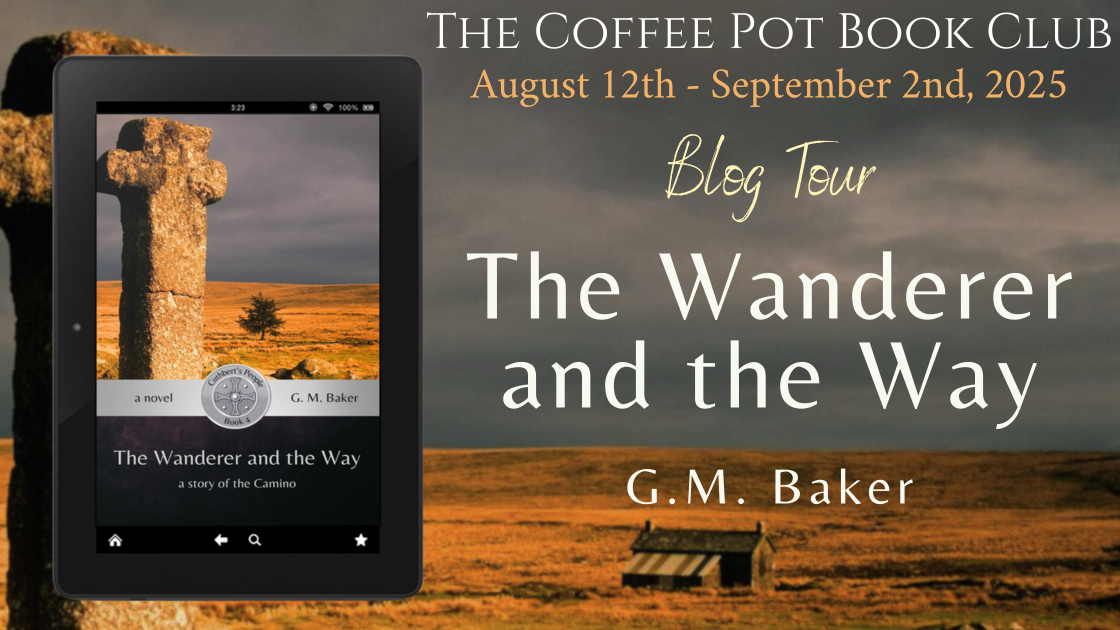
The Wanderer and the Way

Book Title: The Wanderer and the Way

Series: Cuthbert’s People

Author Name: G. M. Baker

Publication Date: March 10th, 2025

Publisher: Stories All the Way Down

Pages: 249

Genre: Historical Fiction

Any Triggers: Rape is mentioned by not portrayed.

Twitter Handle: @mbakeranalecta @cathiedunn @marylschmidt

Instagram Handle: @thecoffeepotbookclub

Hashtags: #HistoricalFiction #MedievalFiction #SantiagoDeCompostela #BlogTour #TheCoffeePotBookClub

Tour Schedule Page: https://thecoffeepotbookclub.blogspot.com/2025/07/blog-tour-the-wanderer-and-the-way-by-g-m-baker.html

Book Title and Author Name:

The Wanderer and the Way (Cuthbert’s People, Book 4)
by G. M. Baker

Blurb:

The Camino de Santiago de Compostela, now the most famous pilgrimage route in the world,

was founded in the early ninth century, largely due to the efforts of Bishop Theodemir of Iria

Flavia. As with most people of this period, nothing seems to be known of his early years.

What follows, therefore, is pure invention.

Theodemir returns footsore and disillusioned to his uncle’s villa in Iria Flavia, where he meets Agnes, his uncle’s gatekeeper, a woman of extraordinary beauty. He falls immediately in love. But Agnes has a fierce, though absent, husband; a secret past; another name, Elswyth; and a broken heart.

Witteric, Theodemir’s cruel and lascivious uncle, has his own plans for Agnes. When the king of Asturias asks Theodemir to undertake an embassy on his behalf to Charles, King of the Franks, the future Charlemagne, Theodemir plans to take Agnes with him to keep her out of Witteric’s clutches.

But though Agnes understands her danger as well as anyone, she refuses to go. And Theodemir dares not leave without her.

Buy Link:

Universal Buy Link: https://books2read.com/thewandererandtheway

Guest Post for When Angels Fly

I’ve long been fascinated by journeying. I don’t mean travel in the modern sense, which is not about the journey but the destination. For the modern traveller, the airport serves as a kind of transporter device. You enter a box at your start, time passes, and you exit the box at your destination. You have travelled, but you have not journeyed.

Journeying is not entirely dead, of course. YouTube is full of videos of hikes and road trips and long-distance train rides. In all of these, the journey is part of the experience. In some cases it is secondary to the sites visited along the way. In some cases it is the main attraction. But journeying of this kind is very much a choice today, a form of recreation. Often people will use planes to teleport themselves to the starting point of their road trip, rail journey, or cruise.

I am a road-tripper myself, and I recently published a book of reflections and recollections of what my wife and I called our Grand Tour, beginning with Route 66, then north along the Pacific Coast Highway, then returning East via Yellowstone and the Badlands of South Dakota. The book is called Ordinary Eccentricity, and it is very much a book about journeying, the motivation for it, and the way it changes how you see the world and feel about life.

In the past, journeying was a necessary part of human life. It was arduous, expensive, and above all dangerous. And yet even when it was so difficult, people still took journeys voluntarily as well as out of necessity. Sometimes they took them as a means of doing penance for their sins. Thus we find in many cultures the practice of pilgrimage, the journey to a sacred place undertaken for the sake of the soul. Some pilgrimage routes are now world-famous and attract hikers and tourists as well as pilgrims. One such is the Camino de Santiago, the most famous pilgrimage route in the world, running from Saint-Jean-Pied-de-Port in southern France to Santiago de Compostela in northern Spain. My novel, The Wanderer and the Way, is an imaginary account of the youth of the man, Theodemir of Iria Flavia, who in later life was responsible for the founding of the Camino.

So many of my favorite books are about journeys. The Odyssey is the story of a journey. So are The Lord of the Rings, The Grapes of Wrath, Lonesome Dove, and Huckleberry Finn. There is nothing so sure as an arduous journey to expose the heart, the character, the longing, and the dread of every character. Even the prospect of such a journey can become a moment of crisis for a character, forcing them to make hard choices between competing values. The classic model of story is the Hero’s Journey, first described by Joseph Campbell and popularized by Christopher Vogler and Star Wars, includes a vital step (though one that is curiously missing from some popular versions), the refusal of the call to adventure. The call to adventure is the event that gives the hero a reason to go on the journey. But the drama in the call to adventure lies in the hero’s reasons not to go. The tension between the reasons to go and the reasons not to go shapes everything that will happen to the hero, all the decisions they will make, all the emotions they will have, throughout the whole journey. The hero lives and moves in the tension between the call to go forward and the call to hurry back. Without that tension, the story of the journey is a mere travelogue.

As the journey goes on, the hero will also be tempted to stop and stay at several points along the journey. These temptations renew and build upon the tension that drives the hero ever forward and calls him ever back. But this is not to ignore that sometimes what calls the hero onward is the road itself. The road can become the normal world of the hero, the world they understand and are accepted in. The call to settle down then becomes a call to a different kind of adventure. In Campbell’s account of the hero’s journey model, there is a second refusal, though Vogler did not include it in his model. This is the refusal of return. The hero has become so attuned to life on the road that he has become too wild to settle, and must contend with the same stay or go dilemma again, but in reverse.

One of the great attractions of the past as a setting for stories is that one does not have to do any work to make a journey arduous. Finding a way to present a modern character with the choice to go on an arduous journey or not is difficult because few journeys today are arduous, and one therefore needs to invent extraordinary circumstances or extraordinary motivations to plausibly present your character with that choice. But in the past, all journeys were arduous, to one degree or another, leaving the author free to concentrate on the essential dilemma of whether to go or to stay.

It is that dilemma that hangs over both my main characters in The Wanderer and the Way. For Agnes, the kidnapped wife of a Viking warrior, escaping from her husband, and from the lascivious local lord who employs him, means abandoning the women she was kidnapped with. For Theodemir, nephew of that same local lord, staying means becoming a monster in the mold of his uncle, and going means leaving Agnes to her fate. But go they do, as go they must, along the lonely, sun-scorched roads of the abandoned territory of the Douro and through the treacherous ways of the Pyrenees, menaced by Moorish raids and by the wild, fierce tribes of the Pyrenees, treading the arduous way that so many pilgrims in centuries to come will follow after them.

Author Bio:

Born in England to a teamster’s son and a coal miner’s daughter, G. M. (Mark) Baker now lives in Nova Scotia with his wife, no dogs, no horses, and no chickens. He prefers driving to flying, desert vistas to pointy trees, and quiet towns to bustling cities.

As a reader and as a writer, he does not believe in confining himself to one genre. He writes about kind abbesses and melancholy kings, about elf maidens and ship wreckers and shy falconers, about great beauties and their plain sisters, about sinners and saints and ordinary eccentrics. In his newsletter Stories All the Way Down, he discusses history, literature, the nature of story, and how not to market a novel.

Author Links:

Website: https://gmbaker.net

Substack: https://gmbaker.substack.com/

Twitter / X: https://x.com/mbakeranalecta

Facebook: https://www.facebook.com/gmbaker

Book Bub: https://www.bookbub.com/profile/g-m-baker

Amazon Author Page: https://www.amazon.com/stores/G.-M.-Baker/author/B09WZK7MD4

Goodreads: https://www.goodreads.com/author/show/4259382.G_M_Baker

This entry was posted on August 26, 2025. 2 Comments

Success at Barnes & Noble!

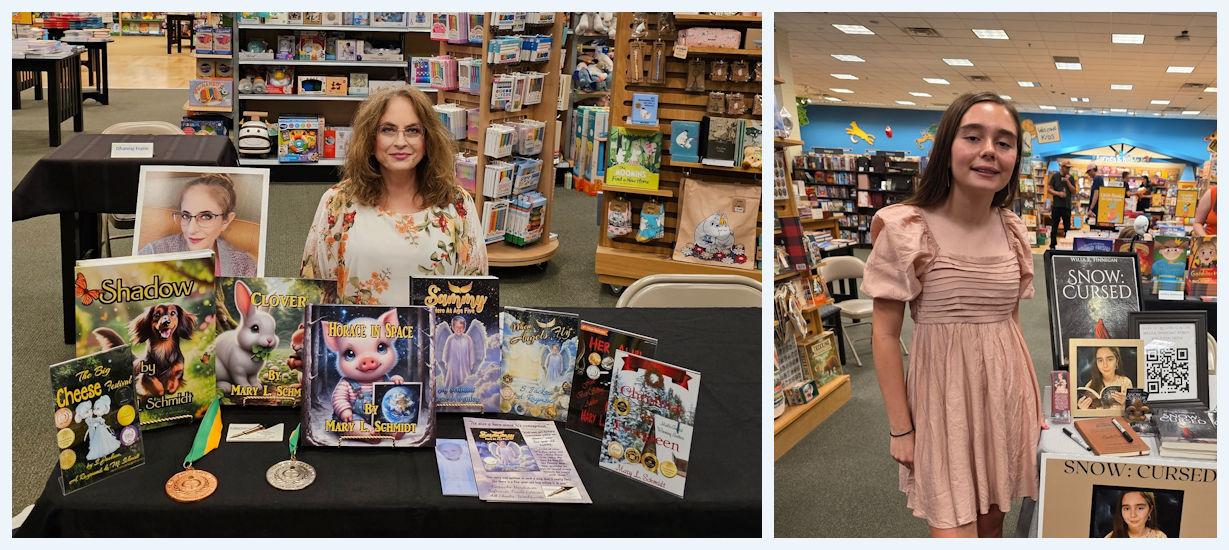
On August 23rd at the Bradley Fair Barnes and Noble in Wichita, Kansas, I had another successful SNOW: CURSED author signing. It was a pleasure to be at such a wonderful B&N book signing, with so many stellar authors there, along with making new connections with readers of all ages, genres, and interests. This is an event I will never forget and always cherish. The support of the individuals that attended blew me away. The thought that so many people are interested in my dreams and writing journey filled my heart with an indescribable joy. This signing motivated me in particular to give readers more of the SNOW SAGA, and other various novels that they have yet to experience. From each of the other writers, I learned something special. It was interesting to see how they all expressed themselves differently, yet in unique ways. Be on the lookout for upcoming author book signings from me, Willa R. Finnegan. Thanks again readers and authors for your amazing support! See you next time.

Snow can be found here: Snow

Not only was Willa at this book signing, but so was I, Mary L. Schmidt. I had four books for kids and it was a flurry of activity. Everyone was cordial, authors and buyers as well. I had the high honor of presenting Willa to a great friend of mine. She is a mom of four children, and she believes in literacy. Her children love to read. She bought all of my books, Willa’s and many other writers. Reading is so important and my friend has a heart of pure gold. She holds book reading groups in her home for kids! While I was introducing Willa, two members of Kansas Authors Club were at my table, and I wasn’t able to introduce Willa as by the time we were done taking photos with my friend and her children, they were gone. I’m sorry. Catch up next time?

Book link for Shadow, my best selling one at the signing.

Stay

Book Link

From Amazon:

A quiet coffee shop gives two men who have lost too much a chance at love.

Joe Calloway has been on the run since he was sixteen, homeless and alone. He never lets anyone close. Between his traumatic past and his autism, he isn’t used to people taking the time to understand him.

Even so, when a stranger offers him a way to build a better life for himself, Joe finds the strength to go for it.

Madden Fields is fully devoted to his older sister, her autistic son, and his job as a nurse, but when he meets Joe, his carefully ordered life begins to pick up speed.

As their connection deepens, Madden realizes he’s going to have to hold on tight if he wants to be an anchor strong enough for Joe to stay.

“Stay” is a 88,000 words gay hurt/comfort romance novel.

Sensitivity Warning: There are some scenes where violence is depicted or remembered, some adult language, and consensual male/male sex scenes.

My Review:

This novel touched me deeply. Children are often scarred by mental, physical, and emotional abuse. When that turns into sexual abuse, it’s tougher. But this story is not only about a child enduring the unthinkable. It delves into adult relationships when older. And before that, homelessness. Yet with all of that, two beautiful souls found true love. The path rocky and treacherous, yet what one thought would never be, happened.

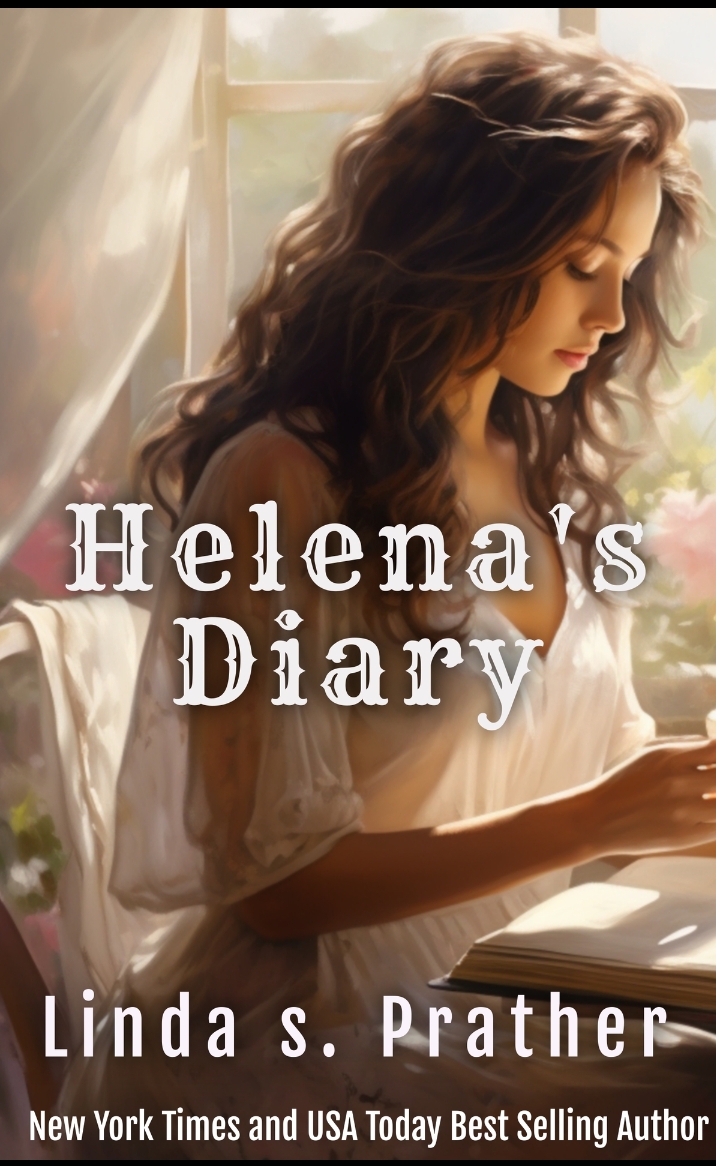
Helena’s Diary

Book Link

From Amazon:

Gabriella Carson had always believed that every grand adventure in life begins with a sealed envelope, a promise of mystery and discovery wrapped within layers of anticipation. However, nothing could have prepared her for the moment she pried open the tarnished, ornate locket left behind by her late mother—a small, delicate relic, its intricate filigree design whispering tales of the past. Accompanied by a cryptic diary entry filled with swirling emotions and half-revealed truths, the locket became the key to a world she never knew existed. She had no inkling that this path would lead her to unravel long-buried family secrets and place her life in grave danger.

The diary’s pages were alive with her mother’s vivid, almost poetic descriptions of a passionate first love, painting a portrait of youthful ardor and longing. Gabriella found herself irresistibly drawn to the piercing, soulful gaze of the young man immortalized within the locket’s delicate frame, his eyes holding secrets of their own.

Compelled by the weight of her mother’s final wish—to return the locket to its rightful owner—Gabriella embarked on a journey to Madrid, the city of her mother’s youth, a vibrant tapestry of cobblestone streets and sun-drenched plazas, with only the diary as her enigmatic guide. Little did she know, hidden within those pages lay a second, even more perilous request her mother had made, lurking like a shadow over the path she was yet to tread, threatening to unravel the very fabric of her existence.

My Review:

I’ve read many books by Prather, and this one took off in a different vein than those I’ve read before. Awesome romance is one theme. Diary pages could most likely bring a woman to orgasm if only a few more sentences were added. Who would want more than Spain, a castle, and a handsome man riding a stallion? I know…that psychopath that lives next door to the estate. I do wonder if she really can’t remember where she leaves people, or if that part is the devil inside her.

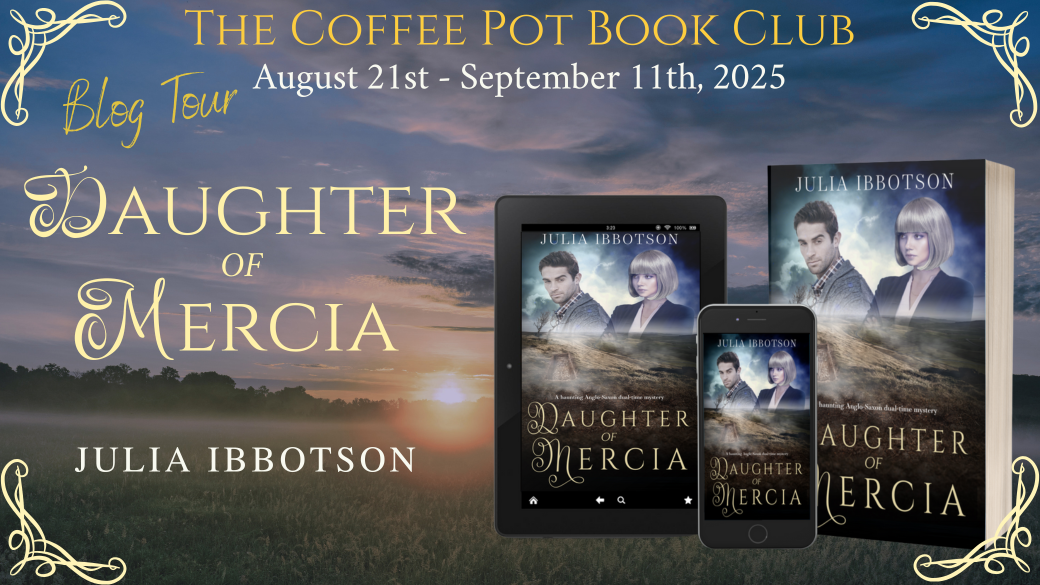
Daughter of Mercia

Name: Julia Ibbotson

Book Title: Daughter of Mercia

Series: Dr Anna Petersen Mysteries, book #1

Publication Date:  June 6th, 2025

Publisher:  Archbury Books

Pages:  301 ebk, 392 pbk

Genre:  medieval dual-time mystery romance

Any Triggers: n/a

Twitter Handles: @JuliaIbbotson @cathiedunn @marylschmidt

Instagram Handles: @julia.ibbotson @thecoffeepotbookclub

Hashtags: #DaughterOfMercia #JuliaIbbotson #medieval #anglosaxon #dualtime #timeslip #timetravel #mystery #romance #BlogTour #TheCoffeePotBookClub

Tour Schedule Page: https://thecoffeepotbookclub.blogspot.com/2025/08/blog-tour-daughter-of-mercia-by-julia-ibbotson.html

Book Title and Author Name:

Daughter of Mercia

by Julia Ibbotson

Blurb:

Echoes of the past resonate across the centuries as Dr Anna Petersen, a medievalist and runologist, is struggling with past trauma and allowing herself to trust again. When archaeologist (and Anna’s old adversary) Professor Matt Beacham unearths a 6th century seax with a mysterious runic inscription, and reluctantly approaches Anna for help, a chain of events brings the past firmly back into her present. And why does the burial site also contain two sets of bones, one 6th century and the other modern?

As the past and present intermingle alarmingly, Anna and Matt need to work together to solve the mystery of the seax runes and the seemingly impossible burial, and to discover the truth about the past. Tensions rise and sparks fly between Anna and Matt. But how is 6th century Lady Mildryth of Mercia connected to Anna? Can they both be the Daughter of Mercia?

For fans of Barbara Erskine, Elena Collins, Pamela Hartshorne, Susanna Kearsley and Christina Courtenay.

When Angels Fly (Coffee Pot Book Tour, August 2025)

Guest post of my choice:  Researching for a dual time/timeslip novel set in Anglo-Saxon times.

My latest novel, Daughter of Mercia (#1 Dr Anna Petersen series of haunting early medieval dual time / timeslip mystery romances) is really about two stories that mirror and intertwine: Dr Anna in the present and Lady Mildryth in 535 AD, both with a mystery to solve. I love researching the Anglo-Saxon world, since I studied it at university for my first degree. I revisited my research for my previous series of Anglo-Saxon dual time/timeslips, the Dr DuLac series, as there have been many interesting archaeological findings more recently. So I could update my work in line with new evidence, much arising from digs along the ill-fated HS2 line.

I write mainly about domestic history, rather than battles, kings and queens, so I love finding out about evidence related to how people used to live in those times: how did people dress in the 6th century? What did they eat? What were their houses like? How did they live? One of the best things about writing novels set in a particular historical period is the research. OK, a novel is fiction and I have taken some liberties, but readers still want to see it as an authority.

When I read a novel myself, I want enjoy the story but also to feel I’m learning something correct and authentic. It’s exciting to see that archaeology is now finding many clues as to everyday domestic life in the 5th /6th /7th centuries AD. Of course, Lady Mildryth is a high-status lady, a powerful regional cūning, (settlement leader) so her everyday life would have been somewhat richer than the lower classes of ceorls (freed men), or even of many lower thegns (high warriors). This is reflected in the archaeology of grave goods in high status burials.

It’s interesting to discover that life was much richer and more ‘advanced’ than had previously been supposed. There is now a growing body of archaeological, osteo-archaeological, geophysical and isotopic evidence to indicate how the people of the 5th, 6th and 7th centuries lived: feasting halls, jewellery, imported luxury goods. Recent excavations have uncovered evidence of large feasting halls (mead halls) as a focal point of the settlements, and analyses of human bones found in the cemeteries attached to these villages have confirmed the diet of meat, fish (for the wealthy), bread loaves, fresh vegetables and fruit, and, more surprisingly imported dates, figs, almonds, wine, although only for the wealthy.

In Cambridge, 2020, at the Kings College site, another 5th -6th century cemetery revealed rich jewellery including a chest brooch bearing fragments of cloak fabric showing evidence of a sophisticated weave, possibly indicating Byzantine trade, or local craftsmanship learned from elsewhere. On Salisbury Plain a 7th century burial revealed silver coin, bronze and silver rings, amethyst beads. Gold rings, jewel-encrusted brooches, bracteates (neck pendants) and gold torcs (neck rings), as well as engraved and jewelled seaxes, have also been excavated.

So, the Anglo-Saxon and early medieval periods are proving to be every bit as rich, culturally diverse and interesting in terms of everyday domestic life as later periods. It clearly wasn’t all about battles and land-grab!

However, to some extent, I also had to use my deductive powers to assess what might have been retained from the earlier Roman period, and what might be developing forward into the Anglo-Saxon period So there was a fair amount of both evidence and informed imagination at work as I wrote Daughter of Mercia.

It’s the same if you’re writing about a particular concept – as in the idea of time-slip, or echoes of a previous time period, and whether it could actually happen – and as an author, making the story believable. Could it possibly happen? And how? For Daughter of Mercia, I have a complex plot involving both Lady Mildryth and Dr Anna Petersen experiencing visions of being in a different time as Anna tries to resolve a mystery arising from strange findings at an archaeological dig, so I needed to research concepts of time, as well as archaeology.

I looked again at the scientific theories of quantum mechanics, which sounds a bit like something from Dr Who: the Einstein-Rosen Bridge theory, and worm-holes. Yes, really! They’re all basically scientific ideas about space-time portals through which you could ‘slip’, or glimpse, from one layer of the universe into another, or from one historic period into another. Fascinating, especially for all those who like fantasy and the paranormal, and yet these are real scientific theories of the concept of time, albeit unlikely to be tested by experiment! Strangely enough, I seem to be hearing those theories quoted so much more these days in the media, for example the lovely Professor Brian Cox in his fascinating series on the birth of the universe. So maybe something out there is catching on! 

Timeslip sounds insane, and of course Anna wonders what on earth is going on in her mind, yet as her life intertwines with Lady Mildryth’s, she comes to realise another important reason for her ability to identify with her counterpart in Anglo-Saxon times: a shared family history and a shared traumatic experience.

If you want to read more about this period of history, I have a series (Living with the Anglo Saxons) on my blog at https://juliaibbotsonauthor.com

Buy Link:

Universal Buy Link: https://myBook.to/DOMercia

This title is available to read on #KindleUnlimited.

Author Bio:

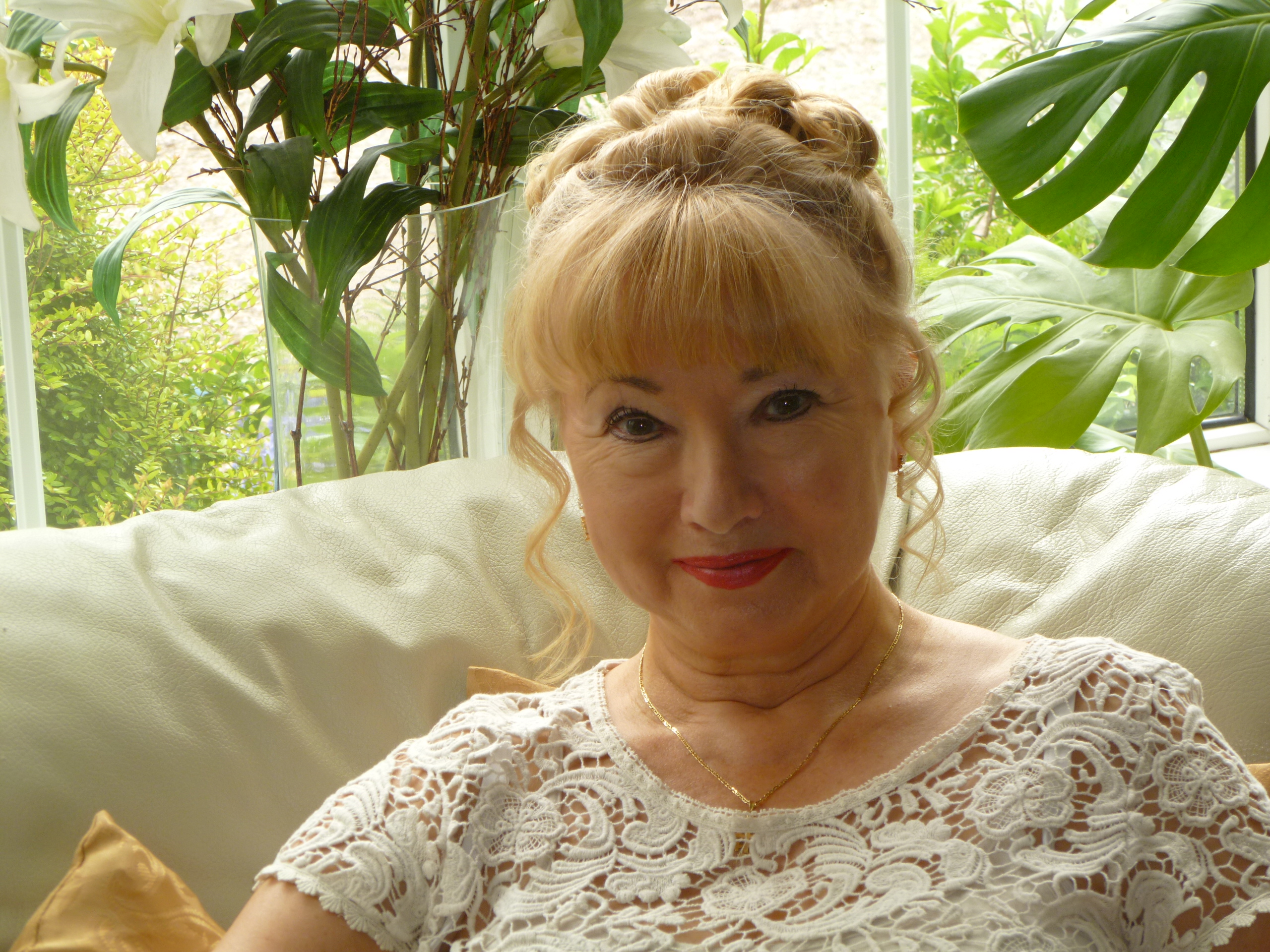
Julia Ibbotson is fascinated by the medieval world and the concept of time. She is the author of historical mysteries with a frisson of romance. Her books are evocative of time and place, well-researched and uplifting page-turners. Her current series focuses on early medieval time-slip/dual-time mysteries.

Julia read English at Keele University, England, specialising in medieval language / literature / history, and has a PhD in socio-linguistics. After a turbulent time in Ghana, West Africa, she became a school teacher, then a university academic and researcher. Her break as an author came soon after she joined the RNA’s New Writers’ Scheme in 2015, with a three-book deal from Lume Books for a trilogy (Drumbeats) set in Ghana in the 1960s.

She has published five other books, including A Shape on the Air, an Anglo-Saxon timeslip mystery, and its two sequels The Dragon Tree and The Rune Stone. Her latest novel is the first of a new series of Anglo-Saxon dual-time mysteries, Daughter of Mercia, where echoes of the past resonate across the centuries.

Her books will appeal to fans of Barbara Erskine, Pamela Hartshorne, Susanna Kearsley, and Christina Courtenay. Her readers say: ‘Julia’s books captured my imagination’, ‘beautiful story-telling’, ‘evocative and well-paced storylines’, ‘brilliant and fascinating’ and ‘I just couldn’t put it down’.

Author Links:

Website: https://juliaibbotsonauthor.com

Twitter / X: https://twitter.com/@juliaibbotson

Facebook: https://www.facebook.com/JuliaIbbotsonauthor

Instagram: https://www.instagram.com/julia.ibbotson

Bluesky:  https://bsky.app/profile/juliaibbotson.bsky.social

Pinterest: https://www.pinterest.co.uk/juliai1

Amazon Author Page: https://Author.to/JuliaIbbotsonauthor

Goodreads: https://goodreads.com/juliaibbotson

This entry was posted on August 21, 2025. 4 Comments

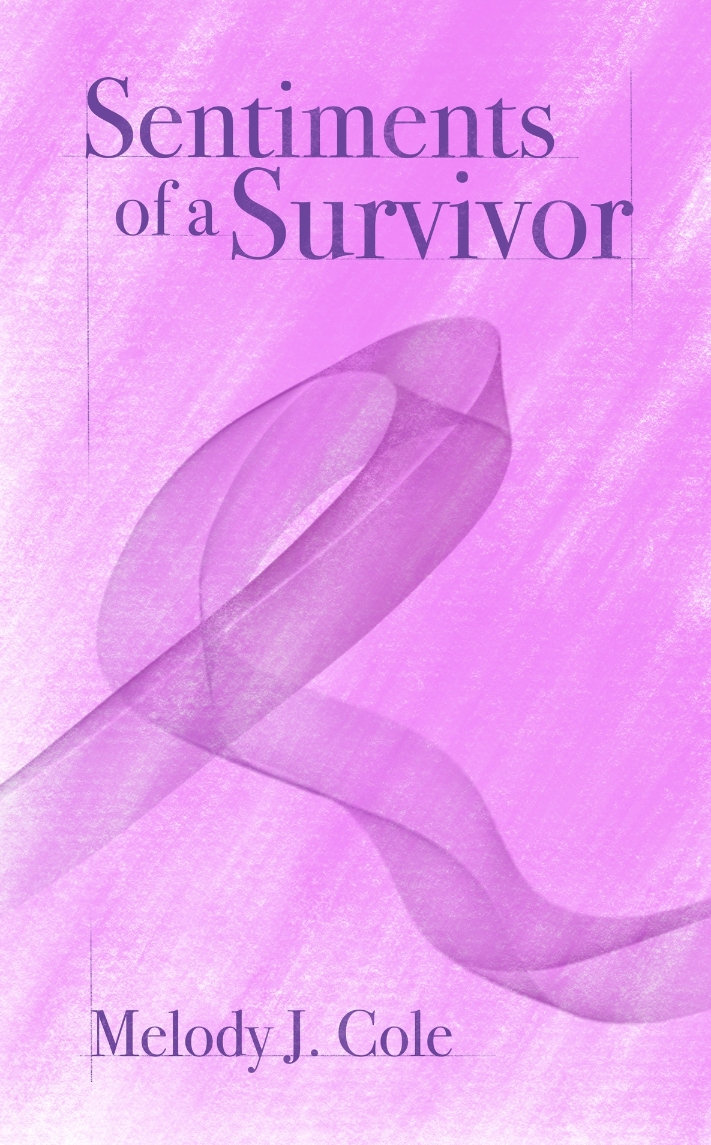
Sentiments of a Survivor

Book Link

From Amazon:

This book is a personal summary of the fears and frustrations of a young female with a disability while going through treatment for breast cancer. The author is now a first-time breast cancer survivor who tells of the faith, family, friends and fun that carried her through the ordeal. The author uses her faith, humor, honesty, and vulnerability to “have the conversation” with her readers about a topic that is uncomfortable for many in a way that is comfortable and conversational. She seeks to honor the memories of those that did not win their battles with cancer while here on Earth and remind her readers that life is beautiful!

My Review:

Mary Schmidt

5.0 out of 5 stars Life is beautiful

Reviewed in the United States on August 18, 2025

Life is beautiful. Literally. No doubt about it. First of all, I’m a registered nurse for decades, worked with cancer patients, those with chronic wound vac needs, and the entire everything one can do in nursing. I’ve had family with cancer. My youngest son had cancer and passed at age five years. Each cancer patient is unique! I mean that. No two cancer patients are the same. Two patients can have the exact same cancer and staging, receive the same treatment, but they are still unique. Our bodies are unique. How each body reacts is unique. Our strengths and weaknesses are unique. Hence, no two cancer patients are the same. I’ve heard others question why they lived, but their friend did not. We are unique. Melody writes from her heart. This memoir is from the heart. Her story is inspiring and also educational for others. I highly recommend this book. Life is beautiful is the perfect mantra.

Ciao, Amore, Ciao

Author Name: Sandro Martini

Book Title: Ciao, Amore, Ciao

Series: Alex Lago Book #1

Publication Date: March 26, 2025

Publisher: Black Rose Writing

Pages: 426 (kindle); 385 (paperback)

Genre: Historical Fiction

Any Triggers: War

Twitter Handle: @MartiniAlex @cathiedunn @marylschmidt

Instagram Handle: @lxmartini @thecoffeepotbookclub

Hashtags: #CiaoAmoreCiao #HistoricalFiction #WWII #BlogTour #TheCoffeePotBookClub

Tour Schedule Page: https://thecoffeepotbookclub.blogspot.com/2025/07/blog-tour-ciao-amore-ciao-by-sandro-martini.html

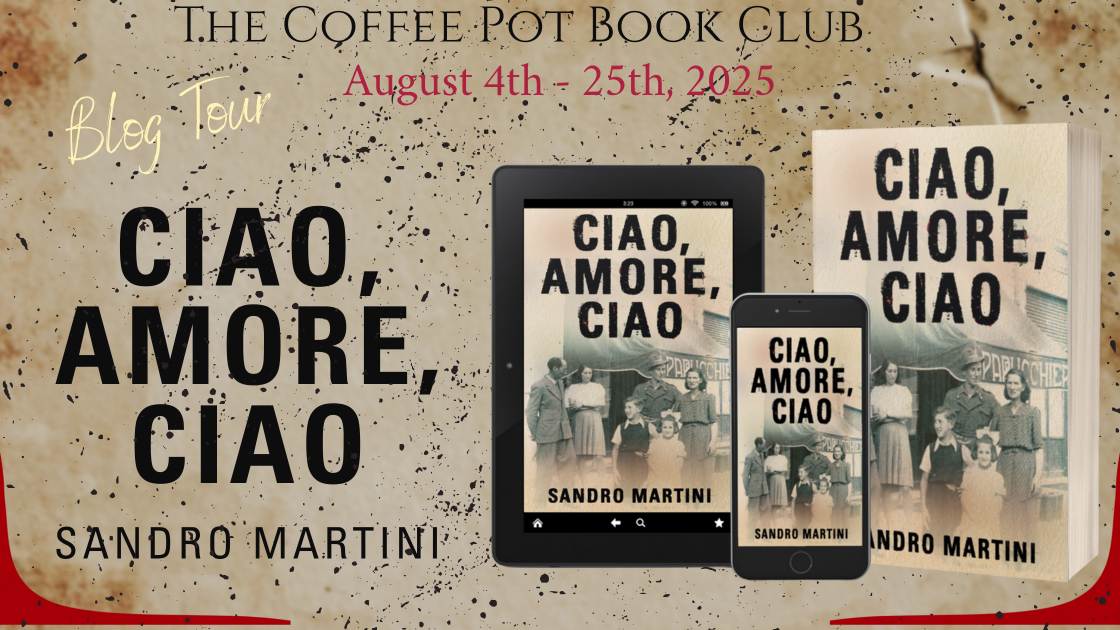
Book Title and Author Name:

Ciao, Amore, Ciao

Sandro Martini

Blurb:

An enthralling dual-timeline WWII family mystery, based on the heartbreaking true story of the massacre in a small town in Italy in July of 1945, from award-winning, bestselling novelist Sandro Martini.

“A gripping saga that roots excruciating betrayals in a nation’s tragic history.” –Kirkus Reviews

In the winter of 1942, an Italian army of young men vanishes in the icefields of the Eastern Front. In the summer of 1945, a massacre in Schio, northeastern Italy, where families grieve the dead, makes international headlines.

In present-day Veneto, an ordinary man is about to stumble onto a horrifying secret.

Alex Lago is a jaded journalist whose career is fading as fast as his marriage. When he discovers an aged World War II photo in his dying father’s home, and innocently posts it to a Facebook group, he gets an urgent message: Take it down. NOW.

Alex finds himself digging into a past that needs to stay hidden. What he’s about to uncover is a secret that can topple a political dynasty buried under seventy years of rubble. Suddenly entangled in a deadly legacy, he encounters the one person who can offer him redemption, for an unimaginable price.

Told from three alternating points of view, Martini’s World War II tale of intrigue, war, and heartbreak pulls the Iron Curtain back to reveal a country nursing its wounds after horrific defeat, an army of boys forever frozen at the gates of Stalingrad, British spies scheming to reshape Italy’s future, and the stinging unsolved murder of a partisan hero.

Ciao, Amore, Ciao is a gripping story of the most heroic, untold battle of the Second World War, and a brilliantly woven novel that brings the deceits of the past and the reckoning of the present together.

Balances action, suspense, and emotional depth to deliver a truly immersive, thought-provoking read with an unflinching look at the sins of the past and the lengths to which the powerful will go to keep them buried.” ~ Sublime Book Review

EXCERPT 2:

We order two cappuccinos outside the Bounty Bar and sit on cold wicker chairs. No blankets here—this isn’t Zürich, even if there’s a resemblance. It’s cold in the shadows of those brutalist palazzi that surround us, but we can smoke out here on the sidewalk under the apartment buildings that swallow the warmth, all those lives behind the yellow-lit windows.

“That was quite a coincidence,” she says. “Right?”

“No,” I reply, “it seriously was.” I watch the waitress place two capuccios on the table. I do up the top button of my coat, raise my collar and sink into its warmth. She looks at me with those eyes of hers and I ask, “Why were you there?”

“Where?”

“At—” I sip my cappuccino and watch my breath turn to mist. “We playing games again?”

“You first.”

“I don’t think I need to explain.”

She looks down at her steaming cappuccino. “I’m sorry,” she says.

I shrug. But I don’t trust myself to speak. Not for a long while. “Your turn.”

Cigarette between her fingers and a thumbnail between her teeth, she gazes at me as if searching for something that I know she’ll never find. It’s a strange sensation, to be seen. Then she crushes the cigarette into the ashtray, and I watch the smoke rise nervously into the cold. “Do you believe in destiny?” she asks me.

“Maybe, yes,” I tell her. “Maybe now more than ever.”

“Why?”

“Because I need it to make sense,” I reply before I can self-censor and glance down at the ring on her finger. “You’re married.”

“Yes,” she glances down at her wedding band and then my naked fingers. “Happily married. You?”

“Married,” I reply, but my mind is distracted by a thought that has just occurred to me. I’m about to ask when she says, “Come. Let’s take a walk,” and standing, she slips a five euro note under the ashtray and leads me up toward the Duomo casting its pompous shadow over the ornate Piazza Rossi. She turns left, down the hill past the Benetton store and the Palladio- designed façade of the Palazzo Schio. The shadows here, between the buildings, are dense, and the cold penetrates my coat.

“I was hoping you’d call,” I tell her.

“Really?”

“Sure.”

“I was going to send you a message tomorrow, actually.”

“Really?”

“Really, yes.”

“About?”

“The confession.”

“Yours?”

She smiles. I can almost picture my father as a young man walking these streets. He was born in the house down there on the left, just past the Due Spade. Nothing has changed much since back then; even the house, he’d told me once, still has the same front door. “Il freddo,” my father would say, as if it were a monster, “the cold, Sandro, always the cold.” Just there by the Due Spade, he told me, before the Nazis had left that April morning in 1945, he’d come across a dead German soldier in an alley with a set of binoculars around his neck and he’d had the desire to steal them.

I can’t understand why he’d come back here.

Sofia slows in front of a tiny piazza laid-out before a red stucco building. “The library,” she says. “This is where it happened.”

It takes me a moment. “Wait, this was—this was the jail?”

“Once a hospital, then a jail, and now a library,” she says. “Life compressed, no?”

There’s a tree that stands sentry before the building, a lone tree that rises in a stump from a vague round hole cut into the cobbles of the piazzetta. Circling the tree are two concentric, curved metal benches aiming at one another but never quite meeting. The tree stands fragile and cold, custodian to voices that have shared forgotten secrets on those benches, but I suspect that’s not our destiny, Sofia’s and mine.

“Come on.” Sofia leads me through a narrow door and into the yellow-lit library and down a long hallway flanked on one side by broad windows beyond which is a murky courtyard. I think of my father in Malo. I should be with him now, not here, not doing this. Whatever this is.

“Here and upstairs,” she says, “is where the shooting happened. Offices now.” There’s a reading room to our right, and behind the long communal tables, kids flick through pages under lights invisible in the sun, and people shuffle about in the silence of heavy carpets. There’s no link with this place and the past. It’s just bricks. And a place where things have always come to die—people first and now their words. History is memory and objects deflect memory. Who’d told me that?

Buy Link:

Universal Buy Link: https://books2read.com/u/4A6R10

This title is available to read on #KindleUnlimited.

Author Bio:

Sandro Martini has worked as a word monkey on three continents. He’s the author of Tracks: Racing the Sun, an award-winning historical novel.

Sandro grew up in Africa to immigrant parents, studied law in Italy, chased literary dreams in London, hustled American dollars in New York City, and is now hiding out in Switzerland, where he moonlights as a Comms guy and tries hard not to speak German.

You can find him either uber-driving his daughter, chasing faster cars on the autobahn, or swimming in Lake Zurich with a cockapoo named Tintin.

His latest historical suspense novel, Ciao, Amore, Ciao, is now available.

Author Links:

Website: https://www.sandro-martini-writes.com/

Twitter / X: https://x.com/MartiniAlex

Facebook: https://www.facebook.com/SandroMartiniWrites/

Instagram: https://www.instagram.com/lxmartini/

Book Bub: https://www.bookbub.com/authors/sandro-martini  

Amazon Author Page: https://www.amazon.com/stores/SANDRO-MARTINI/author/B00JOBZR2C

Goodreads: https://www.goodreads.com/author/show/55190776.Sandro_Martini
This entry was posted on August 18, 2025. 2 Comments