
Book Title: Red Anemones
Sub title: A story of struggle, resistance, and hope
Author Name: Paula Dáil
Publication Date: 17 October 2025
Publisher: Historium Press
Pages: 449
Genre: Historical fiction
Any Triggers: No
Twitter Handle: @cathiedunn @marylschmidt
Instagram Handle: @thecoffeepotbookclub @mschmidtphotography
Hashtags: #HistoricalFiction #FamilyLegacy #JewishHistory #BlogTour #TheCoffeePotBookClub
Tour Schedule Page: https://thecoffeepotbookclub.blogspot.com/2025/12/blog-tour-red-anemones-by-paula-dail.html
Book Title and Author Name:
Red Anemones
A story of struggle, resistance, and hope
by Paula Dáil
Blurb:
Moving among generations of a German-Jewish-American family, Red Anemones is a poignant exploration of the intricate bonds, untold secrets, and unspoken legacies our ancestors bestow upon us.
Natalie Barlow’s journey of self-discovery begins when her estranged mother’s sudden death releases a storm of unrevealed family secrets reaching back to pre-WWI Germany.
As Natalie navigates the complexities of her newly discovered Jewish identity and her ancestral heritage, she comes face-to-face with the early 20th-century German immigrant experience, which included strong anti-German sentiment and deep antisemitism that prevailed across America.
Through diaries and letters her mother saved, Natalie learns of the personal costs this ugly reality extracted from generations of her own family. Ultimately, she must confront the question of her own identity.
Like Israel’s red anemones carpeting the western Negev and Dvira Forest of the Judean foothills year after year, Natalie is determined, no matter the personal costs, to find the courage, resiliency, and passion to embrace the changes that bring new beginnings. Inspired by a true story.
Praise for Red Anemones:
““Red Anemones” by Paula Dáil weaves a powerful narrative inspired by a gripping true story, infusing the text with authenticity and emotional resonance. This book is an absolute must-read for fans of the genre, as it expertly blends enthralling storytelling with fully realised characters and a rich plot.”
~ Yarde Book Promotion, Editorial 5* Review
“Poignant, disturbing, and historically and dramatically riveting.”
~ Kirkus Reviews
“As I read, I found myself utterly taken by Dáil’s writing. Her prose has rhythm and patience, tight, deliberate, and quietly powerful. She writes with tenderness but never sentimentality, allowing emotion to rise naturally from her characters’ choices. I could almost feel the weight of Nathalie’s conflict between family duty and self-determination, between love and freedom. The language is lived-in, grounded, and full of quiet heat.”
~ Literary Titan, 5* Review
Excerpt 4:
Not long after seeing the newsreel, a woman who calls herself Hannah appears at the walk-in clinic, explaining that she has some knowledge of medicine and offering to volunteer. Desperate for any help we can get, Sister Mathilde and I ask few questions before accepting her offer, and within days are very impressed with her efficiency. Used to people whose English is less than perfect, we ignore her limits with the language.
Late one afternoon a few weeks later, I overhear her whispering to her husband in German when he comes to escort her home on the streetcar, which occurs each day she comes to us. They are a handsome couple, both slender, with dark hair, sad, fearful eyes and the quiet demeanor of gentle souls who keep to themselves and are determined to be invisible. Hannah works hard, dresses plainly, says little and is so capable we are soon depending on her to keep inventory straight, take care of the minimal bookkeeping we bother with, and help with anything else we ask of her. We are flooded with patients, and the more Hannah is able to do, the more time Sister Mathilde and I have to administer much needed direct patient care. Nevertheless, with my suspicions heightened after the rally. I’m not sure how much we should trust her, nor do I have any idea how to figure this out. Finally, at the end of a particularly busy day, I invite her to sit down and share a cup of tea.
“Perhaps I misunderstood, but I thought I overheard you speaking German the other day,” I begin, leaking the German accent I’m normally careful to mask. Suddenly pale and obviously frightened at being discovered, Hannah fearfully admits she is a native German speaker. After a great deal of encouragement and reassurance, she reluctantly reveals she is a trained nurse, which accounts for her remarkable efficiency in the dispensary. Her husband, Chaim, is a rabbi, and they escaped Nazi Germany through Shanghai two years ago, eventually landing on the West Coast of California. A learned man, Chaim has a job cataloging books at the Los Angeles public library and she is hoping to parlay her experience with us into a paying job, perhaps in private duty nursing, which doesn’t require a license. I compliment her bravery, determination, and abilities, then suggest we have tea together more often.
The next week, she brings a tin of mouthwatering homemade pfeffernüsse, which she places near the tea canister. Slowly, we grow more trusting of each other, then begin worrying together over the growing anti-Jewish sentiment overtaking Los Angeles. Without outwardly admitting I am also a Jew, I make it clear where my sympathies lay and that I fret greatly over the growing ugliness in the world, even here in America.
One Friday, she stays later than usual, asking to speak privately with me.
“There is an underground Nazi resistance movement in Los Angeles that relies on eyes and ears in the community for information. You are German-fluent, Charlotte, and you could help enormously to fight the anti-Jewish, pro-Nazi effort,” she says, eyes wider than I have ever seen them. Several seconds pass before I respond.
“I really would like to help, Hannah, but I am not likely to overhear very much. People living in both the encampments and the barrios are barely surviving; they don’t have time to get caught up in political movements.”
“This is not entirely true. You’ve heard about the German Bund?” she asks. I nod, explaining I’ve heard it mentioned but know little about it.
“It is a German-American pro-Nazi organization with many members. They are recruiting in the barrios and encampments, promising that if the men sign up, they’ll have paying jobs after the war ends. It is very a clever idea,” Hannah explains. I admit having heard rumors about this but am surprised they are true and have no idea how I can help combat the problem.
“There are ways…”
Buy Links:
Universal Buy Links:
Ebook: https://geni.us/m6lqq
Paperback: https://geni.us/oZtRC
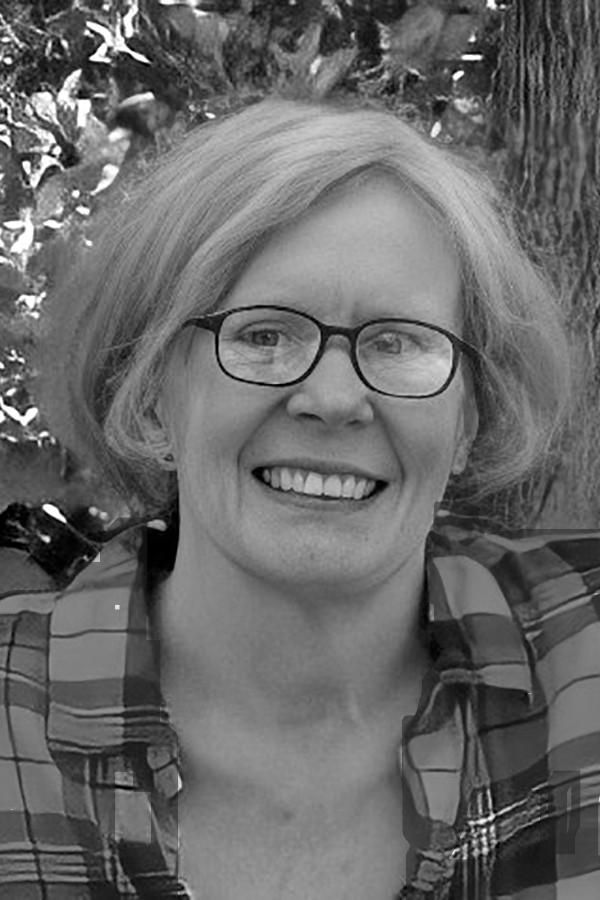
Author Bio:
A native Californian, Paula Dáil is an emerita research professor of social welfare and public policy and award-winning author. Widely published in the social sciences, she has also been recognized for her non-fiction and fiction writing, both under her own name and her pen name, Avery Michael.
She is the recipient of first or second place Readers Favorite, Reader’s Choice, Independent Publisher, Bookfest and Literary Titan awards, a Booklist Starred Review and several other five-star reviews, including Goodreads, The Book Commentary, and Independent Book Review. Two of her books received the Non-fiction Book of the Year Award from the Council for Wisconsin Writers. She holds a PhD from the University of Wisconsin-Madison and lives with her husband and dog in the Great Lakes Region of the Upper Midwest.
Red Anemones is her tenth book.
Author Links:
Website: www.paula-dail.com
Facebook: https://www.facebook.com/pauladailbooks
Amazon Author Page: https://www.amazon.com/stores/Paula-W.-Dail/author/B005W7EZ34
Goodreads: https://www.goodreads.com/author/show/737907.Paula_Dail
 When Angels Fly