Have you been a victim of piracy on Amazon? You may be able to recover the royalties from the pirated work.
Amazon Notifications Regarding Copyright

 Image: dailyfinance.com
Image this: You have the perfect campaign lined up, and are counting the days before you finally start paying off the cost of those ads.
Then, you receive an email from Amazon accusing you of copyright infringment. Your book has been taken down for now, until you prove it is, indeed, written by you.
This is what’s been happening to several authors, who have received the dreaded copyright notifications from Amazon. Specifically, they’ve received the following email:
Hello,
We are writing to you regarding the following book(s):
Title:[book title]
During a quality assurance review of your catalog, we found content (text and/or images) that is widely available on the web. You can do an online search for the content inside your books to discover which sites are offering the content for free. Copyright is important to us – we want to make sure that no author or other copyright…
View original post 618 more words
How to Characterize Love in Your Writing

 I posted this last year, but it’s worth repeating: How do we characterize love in your writing?
Because, if you’re a writer, you must. It doesn’t have to be sex but it has to take readers that direction, right to the edge of the cliff. Yes, you can leave the lurid details out, but let readers peek over the edge.
How do you do that? Start with a few decisions:
- Is it platonic?
- Is it unrequited?
- Is there conflict?
- Is it lust disguised as love?
- Is it serial love? Or one-of-a-kind?
- Is it kinky or traditional?
- Does love bring joy or sadness–or misery?
- Is the manifestation of love baby-ish or mature–goo-goo eyes and saccharin words or Paris vacations?
- Is love verbal or silent?
- Is this love constructive or destructive? Flowery or brutal?
- what part does the spiritual play in the emotion–or is it uninvolved?
- Is it a subplot or a…
View original post 672 more words
FREE Kindle! Lots of Prizes! Party Time!!

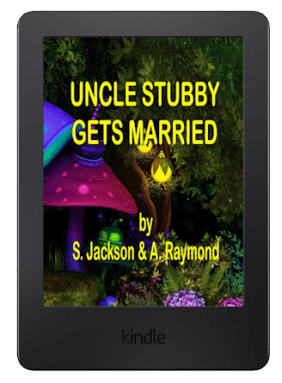
Anybody interested in FREE books, Gift Cards, Prizes, or a FREE Kindle???
All genres, all authors, and all readers are welcome! This is a come and go party to allow for family needs, etc. Click the link above to be taken to a Facebook Early Valentine Event on Saturday, Feb 11, from 11:00 AM to 4:00 PM Central Time! There will be a mix of authors presenting with fun games and such, and lots of prizes!
I’m hosting a Facebook Party event on Saturday, February 11, 2017. Each author will have 30 minutes to promote their book (s), and play games and such. No valentine type book is needed, just a book. During your 30 minutes, you can invite people to like your author page, connect on Twitter, invite to follow your blog, etc. Write of your book and do a game such as each person post their favorite valentine…
View original post 154 more words
FREE Kindle! Lots of Prizes! Party Time!!
Anybody interested in FREE books, Gift Cards, Prizes, or a FREE Kindle???
All genres, all authors, and all readers are welcome! This is a come and go party to allow for family needs, etc. Click the link above to be taken to a Facebook Early Valentine Event on Saturday, Feb 11, from 11:00 AM to 4:00 PM Central Time! There will be a mix of authors presenting with fun games and such, and lots of prizes!
I’m hosting a Facebook Party event on Saturday, February 11, 2017. Each author will have 30 minutes to promote their book (s), and play games and such. No valentine type book is needed, just a book. During your 30 minutes, you can invite people to like your author page, connect on Twitter, invite to follow your blog, etc. Write of your book and do a game such as each person post their favorite valentine post below one of your posts and the winner receives a free book. ONE of the prizes I’m giving away is a FREE brand new KINDLE!! Author spots are still open!
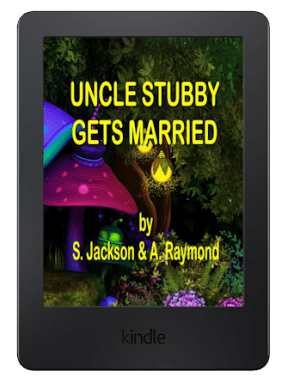
I am launching the 6th book in our ‘Shadow and Friends’ series, “Uncle Stubby Gets Married”, a wonderful and magical children’s book that both children and adults will enjoy. The story hits the targeted age range of 4–11. My grandchildren loved the beauty of the magical Valentine Fairy Forest, and they loved seeing two squirrels get married. The illustrations are lovely and the entire book sparkles, in a tale of pure imagination for child and adult. As a Christian, I loved how the authors wove in the kindness of all the animals, and the book speaks of kindness to all. This book is perfect for home, schools, and libraries. I highly recommend this book. ~ Susan Vance, “Leaving Savannah.”
Self Publishing – Selling Your Work

Now that you have a book, you want to sell it, right?
CreateSpace does some limited marketing even if you don’t pay for the marketing package. I remember how happy I was when I had just bought some Joel Rosenberg books and got an email saying “If you liked Joel Rosenberg, you might like The Dice Of Fate by Rohvannyn Shaw!” That was truly awesome. Recently I randomly found an ad for my new comedy book on a Hubpages post about customer service! Not sure who put the ad there, Amazon or the writer, but so far it’s found me about ten customers. If you put your work out there, it’s entirely possible that others might find it and decide to promote it. There’s a lot you can do to improve those chances.
Basic Marketing Steps:
Announce on your social media. That one’s pretty easy to guess.
Create a website…
View original post 360 more words
Enjoy the Journey – Guest Post by Yecheilyah Ysrayl…

I’d like to thank the world’s most generous Ape for this opportunity to spend this time with you today. I don’t take this kind of stuff for granted. It is an honor. Truly.
__________
A journey is defined as moving from one place to another. Some people do this with such speed that you may feel the wind bouncing off them, others move much slowly and then there are those who pace. According to Wikipedia, pacing strategies in track and field are the varied strategies which runners use to distribute their energy throughout a race. In a championship race, where the goal of the race is to win, the pace is typically slow at the beginning of the race and gradually speeds up. I don’t know about you, but I’m in it to win and for this, I must pace and so should you.
Writing is a skill and…
View original post 745 more words
Words and Common Confusions

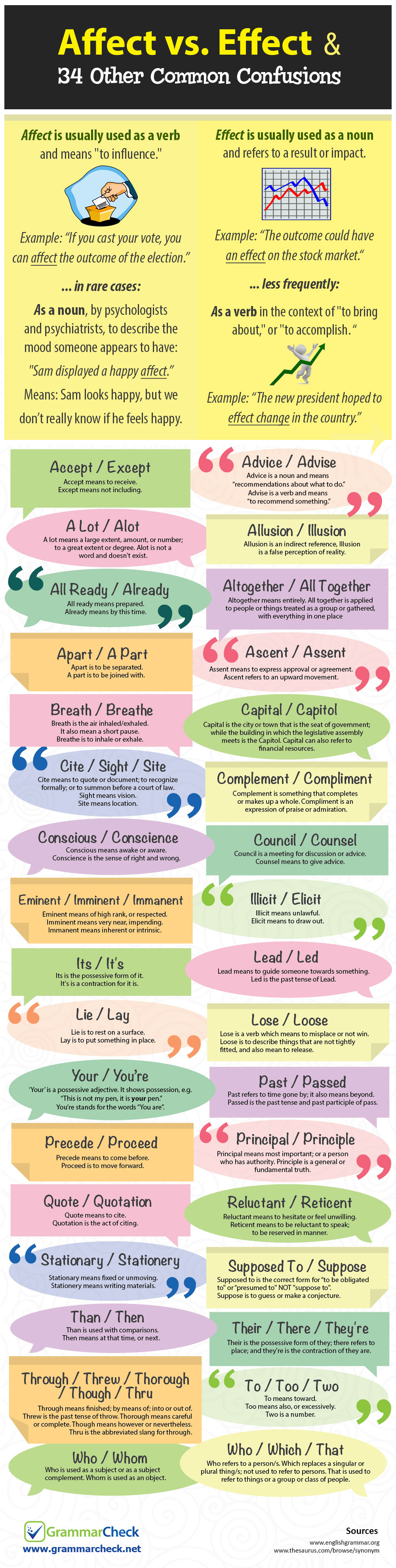
Today is a day for revisiting the madness of the English language. We have all had moments when our minds blank and we can’t figure out what word we should use. “Affect or effect?” We wonder to ourselves. “Affect is usually a verb, right?” Luckily the fine folks at GrammarCheck have a bright and bubbly infograph that helps writers make the proper word choices.
Back when I was grading students’ essays, this would have been a great resource to hand to them. I’m still half-tempted to send it around to people I know, but I’ll restrain myself.
Want to win a brand new FREE Kindle?
Event Link!
https://www.facebook.com/events/1041658799293756/
I’m hosting a Facebook Party event on Saturday, February 11, 2017. Each author will have 30 minutes to promote their book (s), and play games and such. No valentine type book is needed, just …
Emotional Beats: Eyes
Back in September, I published Emotional Beats: How to Easily Convert your Writing into Palpable Feelings. As promised, I will be posting the book on my blog. So, here is the next installment, featuring Part 2 of the book: Body Parts. This post deals with eyes:
Eyes
 Read for free with KU
As the saying goes, eyes are the window to the soul. They are also a writer’s best friend, as they can convey a wide variety of emotions. The only thing you need to watch out for is using overworn words: doesn’t “he gaped, unable to peel his gaze off the woman” sound better than “he stared at her”?
- Her eyelids fluttered shut.
- A flash of movement caught her eye.
- Her eyes clouded.
- He blinked owlishly.
- She blinked with feigned innocence.
- Her eyes rolled skyward.
- Her eyes wandered.
- Out of the corner of her eye, she saw him.
View original post 799 more words

