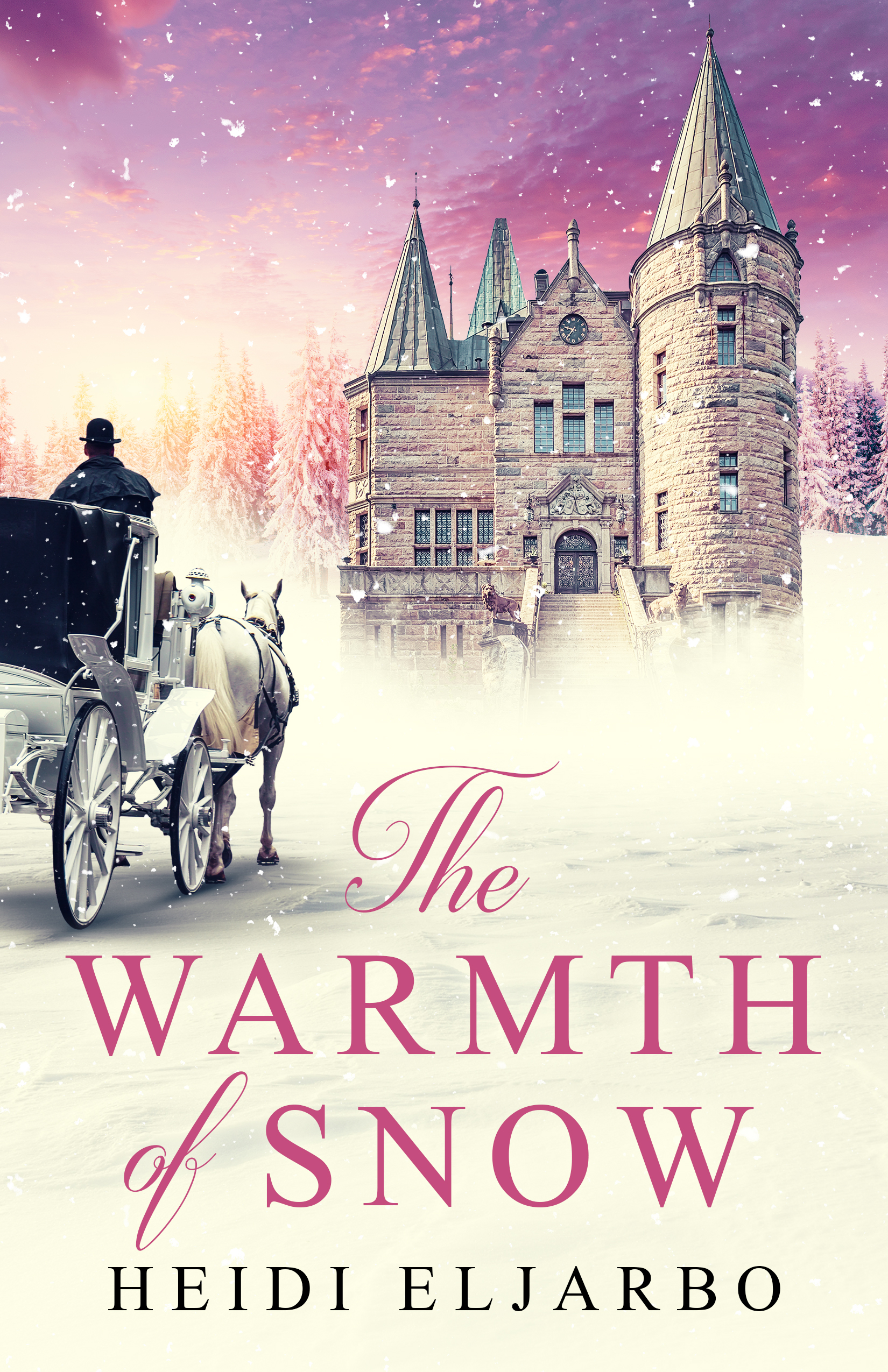
There must be a way to thaw a heart long frozen. Can she help him, or does he have other plans?
Sweden 1810. August Brandell, the count of Linborg, has returned home after four years of war against the French Empire under the direction of Napoléon Bonaparte. Wounded and downtrodden, he is a meager shadow of the man he used to be.
One day, a lovely young woman comes calling. She’s strong and bright and, unlike the rest, seems unaffected by his wealth and unfortunate disability. He soon discovers he wants more than a sweet friendship, but a life of caring for him would not be fair to such a beautiful soul. Oh, how dearly, deeply he loves her and secretly wants her to stay, but he cannot and will not ask such a sacrifice from her…especially not when it’s out of pity for him.
Erica Gustava Ebbesdotter has primarily been left to herself since she was orphaned at an early age. Although grateful to her aunt and uncle for taking her in, they pay her no attention and even keep her in the dark about her parents.
Hearing about Count Brandell’s unfortunate fate on the battlefield, she knocks on the door at Castle Linborg to leave him a card of encouragement.
Meeting Count Brandell changes Erica’s entire world. Falling for him is utterly unexpected. Soon, he fills her heart, but he is far above her station. How can a man like him see beyond her less refined clothes and past? Worst of all, he is already betrothed.
This is a sweet and wholesome historical romance—a hauntingly beautiful tale of two hearts meant to be together.
Snippet 5:
If God would take him to Heaven then and there, he’d gladly go. His bones ached and he was empty, as if he’d said everything there was to say, and there was nothing left to talk about.
Now, he just wanted to sleep.
Ulrik helped him to bed and heated a brick to place under the blanket by his feet. The night was unpleasantly cold, and the winds howled around the castle corners, sounding like ghouls and banshees wailing and shrieking on his behalf about the pain in his legs.
As he closed his eyes, the young woman appeared in his mind, smiling, beckoning him to live—not only to exist but for the joy of being alive. Was she a fairy or a human being? There was something mesmerizing and whimsical about her, but at the same time she appeared grounded and sensible.
Buy Links:
This title is available to read with #KindleUnlimited.
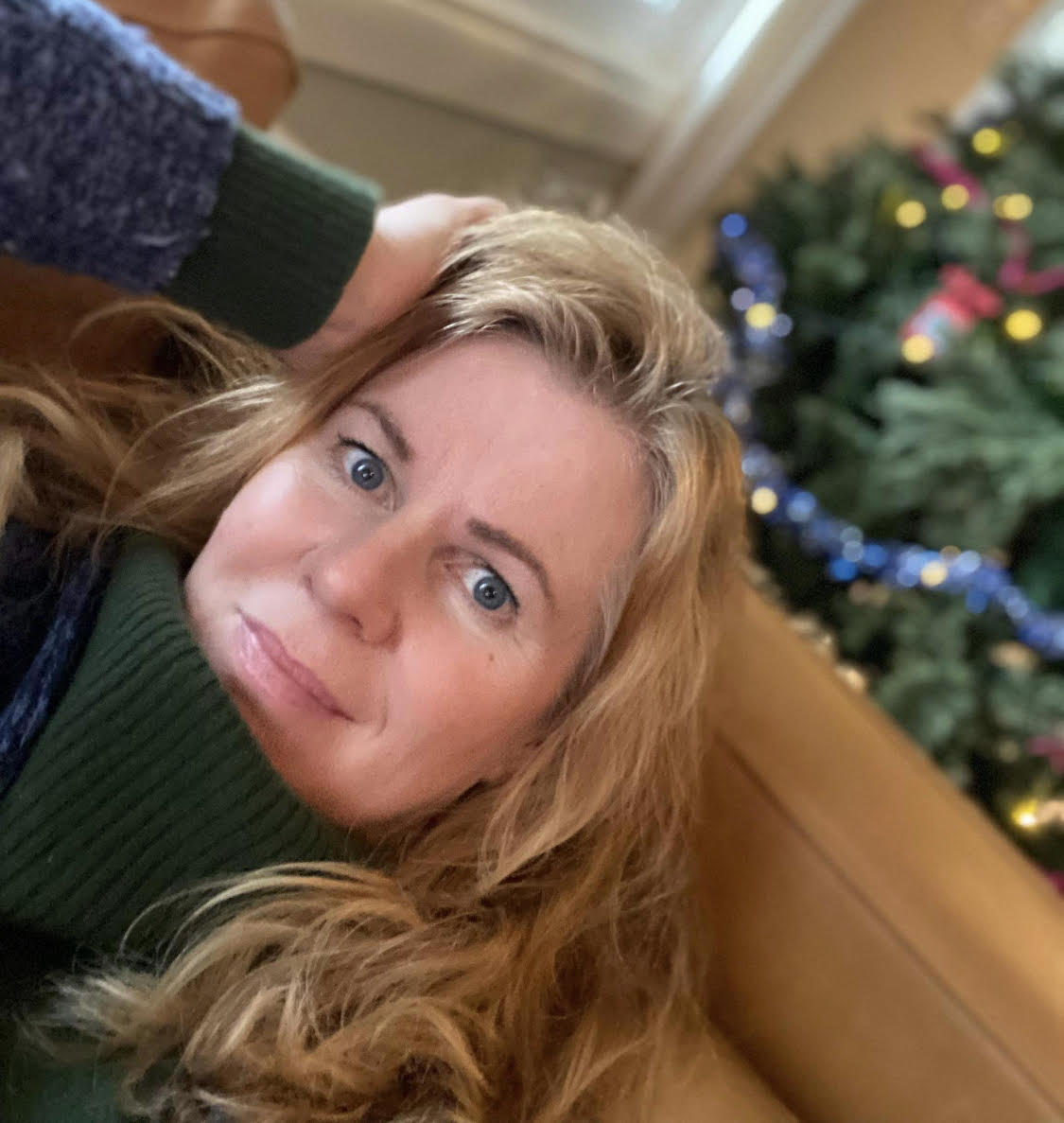
HEIDI ELJARBO grew up in a home full of books, artwork, and happy creativity. She is the author of award-winning historical novels filled with courage, hope, mystery, adventure, and sweet romance in the midst of challenging times. She’s been named a master of dual timelines and often writes about strong-willed women of past centuries.
After living in Canada, six US states, Japan, Switzerland, and Austria, Heidi now calls Norway home. She lives with her husband on a charming island and enjoys walking their Wheaten Terrier in any kind of weather, hugging her grandchildren, and has a passion for art and history.
Her family’s chosen retreat is a mountain cabin, where they hike in the summer and ski the vast white terrain during winter.
Heidi’s favorites are her family, God’s beautiful nature, and the word whimsical.
Ehli-nikkalu, eldest daughter of the Hittite emperor, is married to a mere vassal of her father’s. But despite her status, her foreignness and inability to produce an heir drive a wedge between her and the court that surrounds her. When her secretary is mysteriously murdered while carrying the emperor a message that would indict the loyalty of his vassal, Ehli-nikkalu adopts the dead man’s orphaned children out of a guilty sense of responsibility.
A young cousin she has never met becomes a pretender to the throne and mobilizes roving armies of the poor and dispossessed, which causes the priority of her loyalties to become even more suspect. However, Ehli-nikkalu discovers a terrible secret that could destabilize the present regime if the pretender ever learns of it.
With the help of a kindly scribe, her brave young ward, and an embittered former soldier trapped in debt and self-doubt, Ehli-nikkalu sets out to save the kingdom and prove herself to her father. And along the way, she learns something about love.
When Angels Fly blog
Since The Moon That Fell from Heaven has two female protagonists, it might be fun to take a look at some of what we know about women in the Bronze Age kingdom of Ugarit. To be sure, it was patriarchal—we have no evidence ever of a female ruler, for example. Yet women were a visible and even powerful sector of society, and the king’s wife or mother might exercise considerable influence over her man.
In the first place, females were prominent on the heavenly scene. Male gods were never without their consorts, who were just as powerful as they. Nor were they relegated to domesticity: Anat was a bloodtirsty warrior goddess. Obviously, the divine realm isn’t a perfect reflection of the earthly, nor do human societies necessarily pattern themselves on the gods. One need only think of the ancient Greeks, whose pantheon was filled with goddesses, yet who kept their real-life women barefoot and pregnant, legal minors till the end of their days! But it does suggest a sensitivity to the female principle in the universe and to the power of maternity—this in a world where fertility might be a life or death issue.
Let’s start at the bottom, with ordinary people. Legal texts are of use to here, because they show patterns of inheritance and how citizens, male or female, were treated in legal transactions. Fortunately, a fairly large number of such documents have survived in Ugarit, thank to the fiery end to which the city was put when it fell before the advances of th Sea Peoples in the early twelfth century BCE.
What we find is that marriage—no surprise—was a contract between families, but perhaps not too strictly between the groom and the girl’s father. The bride-price offered by the groom was not always paid to the father, but at least sometimes to the bride herself, when, in case of the dissolution of the mrriage by death or divorce, she could take it with her. Once married, however, she was subordinated to her husband, who was her “ba’al”, her lord. Adultery was only an offense against a married man. His wife had no exclusive claim to him. One might expect to find polygamy in Ugarit, but in fact there is no hard evidence of it. On the other hand, people sometimes identified themselves by their mother’s lineage rather than their father’s, and women certainly served as active partners in their husbands’ businesses, capable of buying and selling property in their own name. This protection against a lopsided financial dependence on their husbands gave them a certain independence, and widows were not automatically helpless.
Whether Ugaritic women commonly had careers is unclear. Records of artisan guilds show very few few feminine names in their member lists. On the other hand, it seems almost incredible that a poor family wouldn’t employ every pair of hands in, for instance, weaving or pottery making, let alone helping on the family farm. So we must admit we just don’t have enough sources to make a judgment here.
Evidence for women in public life is limited and seems to begin late in the kingdom’s history, perhaps reflecting an adoption of the social norms of their new masters the Hittites, who accorded females a substantial presence, particularly from the time of their omnipresent queen dowager Puduhepa. Long-lived Ugarite dowagers like Ahat-milku, widow of of Niqmepa II, were prominent in diplomatic correspondences, no doubt furnishing valuable experience to their newly-crowned sons and grandsons. Unlike Egypt, nowhere in Ugarit do we find evidence of women holding political positions of authority.
On a lower level, women were considered the equals of men before the law, were able to testify, bring lawsuits, and generally defend themselves. It isn’t clear whether women and men mingled in social settings, but mythology suggests that it’s so—taking part together, for instance, in banquets.
Thus, we find in the millennial history of this small Syrian city state an environment not too hostile to its women. They seem to have been respected, given credit for intelligence, and well treated. Perhaps the idea of their complete equality with men would have developed had the society not disappeared completely and suddenly. When one thinks about how limited the rights of American women were even in the early 20th century, things don’t look too bad there on the shores of the Mediterranean a long time ago!
N.L. Holmes is the pen name of a professional archaeologist who received her doctorate from Bryn Mawr College. She has excavated in Greece and in Israel and taught ancient history and humanities at the university level for many years. She has always had a passion for books, and in childhood, she and her cousin used to write stories for fun.
These days she lives in France with her husband, two cats, geese, and chickens, where she gardens, weaves, dances, and plays the violin
It is 1718 and Duncan Melville and his time traveller wife, Erin, are concentrating on building a peaceful existence for themselves and their twin daughters. Difficult to do, when they are beleaguered by enemies.
Erin Melville is not about to stand to the side and watch as a child is abused—which is how she makes deadly enemies of Hyland Nelson and his family.
Then there’s that ghost from their past, Armand Joseph Chardon, a person they were certain was dead. Apparently not. Monsieur Chardon wants revenge and his sons are tasked with making Duncan—and his wife—pay.
Things aren’t helped by the arrival of Duncan’s cousin, fleeing her abusive husband. Or the reappearance of Nicholas Farrell in their lives, as much of a warped bully now as he was when he almost beat Duncan to death years ago. Plus, their safety is constantly threatened as Erin is a woman of colour in a time and place where that could mean ostracism, enslavement or even death.
Will Duncan and Erin ever achieve their simple wish – to live and love free from fear of those who wish to destroy them?
Why Time Travel?
Many years ago, I attended a writer’s conference. I has several one-on-ones booked with agents and one of them gave me a bored look and sat back in his chair. The wood creaked, his shirt strained over his padded torso.
“Why the time travel?” he asked. “What’s the point?”
Huh. One can ask that about a lot of genres, IMO. Why Sci-Fi? Why Fantasy? Why all those werewolf and vampire novels? I guess those who write any of the previously mentioned would reply that they write what they love, what intrigues them.
The same goes for me and time travel. The concept is mindboggling, and even if by now I’ve given up on it being possible—Stephen Hawkins sort of nailed the lid down on my hope by pointing out that if time travel were at all to become possible, by now we’d have people from the future visiting us. The sheer circularity in that makes my head ache. After all, the future hasn’t happened yet, so there are no people there to travel back in time, and. . .
In The Whirlpools of Time, Duncan Melville falls three centuries forward in time, crashlanding in 2016. He quickly realises it’s wise not to tell anyone he is from another time—well, no one but Erin, because he has to tell someone, and he trusts her. She reacts with a major “WHAAAT?” I suppose we would all react with a certain wariness were we to come face to face with a time traveller, right? And our first reaction would be incredulity. “Poor sod: he needs help, ASAP.”
Back to my fascination with time travel. As a child, I conducted various experiments in the hope of somehow transporting myself backwards in time. I had my heart set on the twelfth century—more specifically on Richard Lionheart’s reign. Even more specifically, it was at Richard’s feet I wanted to land, riding with him as he set out on his adventures.
My experiments involved midnights, lit candles set in various formations, the consumption of pilfered whiskey (Ugh! To this day, I can’t bear the stuff) and a lot of chanting in—wait for it—German. Not that I knew any German, but I had hold of my mother’s old German grammar and read aloud from the pages and pages of verb declinations. To this day, I think things would have gone better had I instead used her Latin grammar.
My various attempts to travel through the veils of time came to an abrupt halt when, one night, my father yanked open the door to my wardrobe (I had to conduct my ceremonies in secret) and was so shocked his voice rose into a squeak as he realised that his idiot of a daughter had been lighting candles among all her clothes. Yes, yes: he had the right of it, of course, but an idiot I was not—not then, not now. I was simply gifted with an extraordinarily vivid imagination. To my father’s credit, he apologised for the idiot, but told me that he would give me the spanking of my life if he ever caught me doing something that foolish again.
He never did spank me. Instead, he spent hours making me beautiful wooden swords, shields, helmets—everything I could need to indulge in my fascination with medieval times without attempting to distort the flow of time. It is one of the few times I recall truly bonding with my father. He was a very talented artist but spent his days running a large business. I think all those hours carefully shaping my sword did him good, and when he decorated my shield with heraldic lions he hummed under his breath while I sat beside him and shared everything I knew about dear Richard.
These days, I’ve reassessed Richard. Yes, he was flamboyant and capable and brave, but he wasn’t much of a king—at least not to the English, whom he mainly seems to have seen as a source of the money he needed for his ventures abroad. But whenever I’m in London, I detour by the statue of him outside Parliament, just to say hi.
When I started to write, I knew that at some point I would write about someone who fell through time. That’s the benefit of being a writer—I can indulge myself. In my first novel, A Rip in the Veil, the time traveller was Alex Lind, who ended up landing at the feet of Matthew Graham, a very devout Presbyterian who feared this strange woman was a witch of sort.
In Times of Turmoil, my time traveller is Erin, who sort of was dragged back through time with Duncan when he was returned to his original time. Not something she is entirely thrilled about. I am though, because other than wanting to treat myself to some time travelling by proxy, there was another reason why I wanted my female protagonist to be a time traveller. As I told that agent, having a modern protagonist in a historical setting allows for much more commentary. A woman born in the 1690s will not react to the food she eats, the clothes she wears—of course not, as they’re familiar. But having my readers experience the 18th century through a fellow modern woman gives me the opportunity to really submerge them in the past.
A modern protagonist also offers me the opportunity to comment on how restricted women were back then—at least legally. It is my personal opinion that women have often overcome these restrictions by being a powerful mover and shaker behind the scenes—like in their homes. But still: officially, a woman in the 18th century woman was chattel, accorded no rights beyond those extended to her by her husband.
Writing a time travel story does not preclude hours and hours of research. To some extent, the research becomes even more important, as it is in the small details—like how the tallow candles leave streaks of soot, or how the rope frame of the bead creaks and groans—that I truly transport my readers to my protagonist’s new reality.
I hope I’ve managed to do that in Times of Turmoil. “Oh, you have,” Erin mutters. “But how about you do something anachronistic and have someone invent a shower, hey?” Nope. Not happening. But I can offer her a pitcher of hot water. “I hate you,” she mumbles. “No you don’t. Without me, you’d never have met Duncan.” “Maybe I’d have been happy anyway,” she retorts. “You think?” I shake my head. Content, maybe. Happy, no. She sighs and rolls her eyes before muttering that maybe I’m right. Of course, I am. I share a wink with Duncan as he enters the room and enfolds Erin in his arms. She may be far from home, both in time and place, but if we’re going to be quite honest, she’s found a new home. With him.
Had Anna been allowed to choose, she’d have become a time-traveller. As this was impossible, she became a financial professional with two absorbing interests: history and writing. Anna has authored the acclaimed time travelling series The Graham Saga, set in 17th century Scotland and Maryland, as well as the equally acclaimed medieval series The King’s Greatest Enemy which is set in 14th century England.
Anna has also published The Wanderer, a fast-paced contemporary romantic suspense trilogy with paranormal and time-slip ingredients.
More recently, Anna has been hard at work with her Castilian series. The first book, His Castilian Hawk, published in 2020, is set against the complications of Edward I’s invasion of Wales, His Castilian Hawk is a story of loyalty, integrity—and love. In the second instalment, The Castilian Pomegranate, we travel with the protagonists to the complex political world of medieval Spain, while the third, Her Castilian Heart, finds our protagonists back in England—not necessarily any safer than the wilds of Spain! The fourth book, Their Castilian Orphan, is scheduled for early 2024.
All of Anna’s books have been awarded the IndieBRAG Medallion, she has several Historical Novel Society Editor’s Choices, and one of her books won the HNS Indie Award in 2015. She is also the proud recipient of various Reader’s Favorite medals as well as having won various Gold, Silver and Bronze Coffee Pot Book Club awards.
Find out more about Anna, her books and enjoy her eclectic historical blog on her website, www.annabelfrage.com
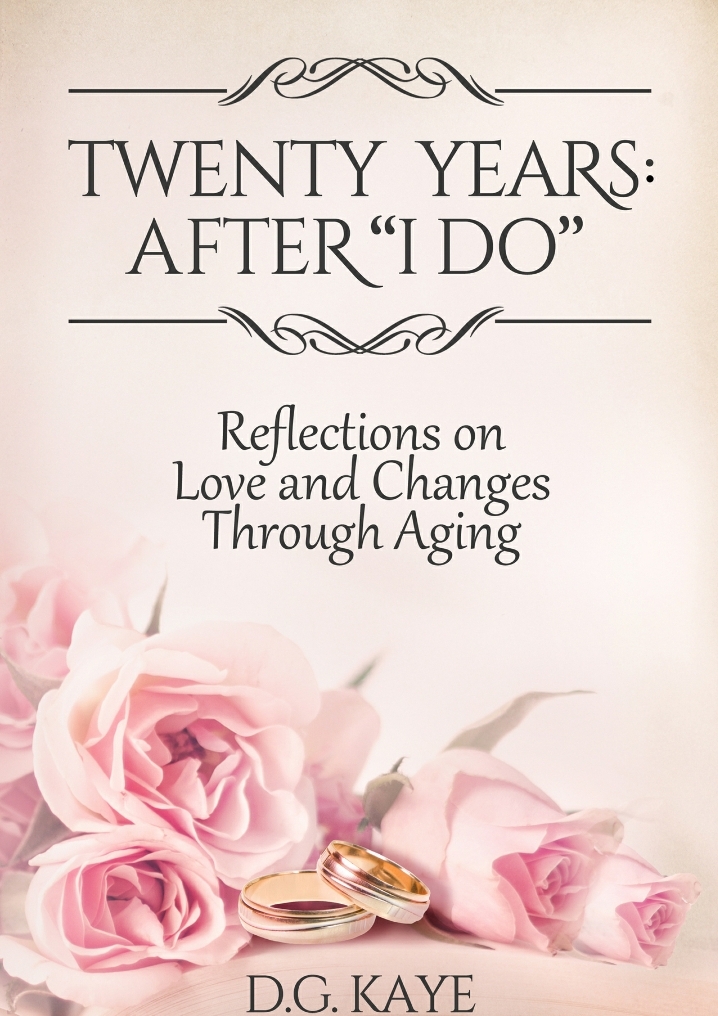
In this personal accounting, D.G. Kaye shares the insights and wisdom she has accrued through twenty years of keeping her marriage strong and thriving despite the everyday changes and challenges of aging. Kaye reveals how a little creative planning, acceptance, and unconditional love can create a bond no obstacle will break. Kaye’s stories are informative, inspiring, and a testament to love eclipsing all when two people understand, respect, and honor their vows. She adds that a daily sprinkling of laughter is a staple in nourishing a healthy marriage. Twenty years began with a promise. As Kaye recounts what transpired within that time, she shows that true love has no limits, even when one spouse ages ahead of the other.
My Review:
This book is a gem, a book that all couples planning to marry or already married should read. Personally, I found every word truthful. Why? My husband and I built our relationship on a strong foundation of friendship first, then love came along. Kaye writes about making sure the foundation your relationship is built is secure, secure enough to withstand anything, and everything thrown at it so the foundation doesn’t form a crevice. Part of a piece of mortar can fall off, but be right there and prepare it ASAP. Those couples who have a great foundation can weather any and all storms tossed at them. There will be many storms amid times of splendor, and if your foundation is strong, you will survive each and come out stronger and more in love than you thought possible. I know. I have this in my life. Without that strong foundation, we wouldn’t have made it, or if we did make it, the hard times would have been much worse. Both my husband and I’ve had desperate life-threatening issues, and each time, our love grew stronger. Even if you don’t think you can love a person more, that your heart already overflows, we find out how much more we love each other. Five stars.
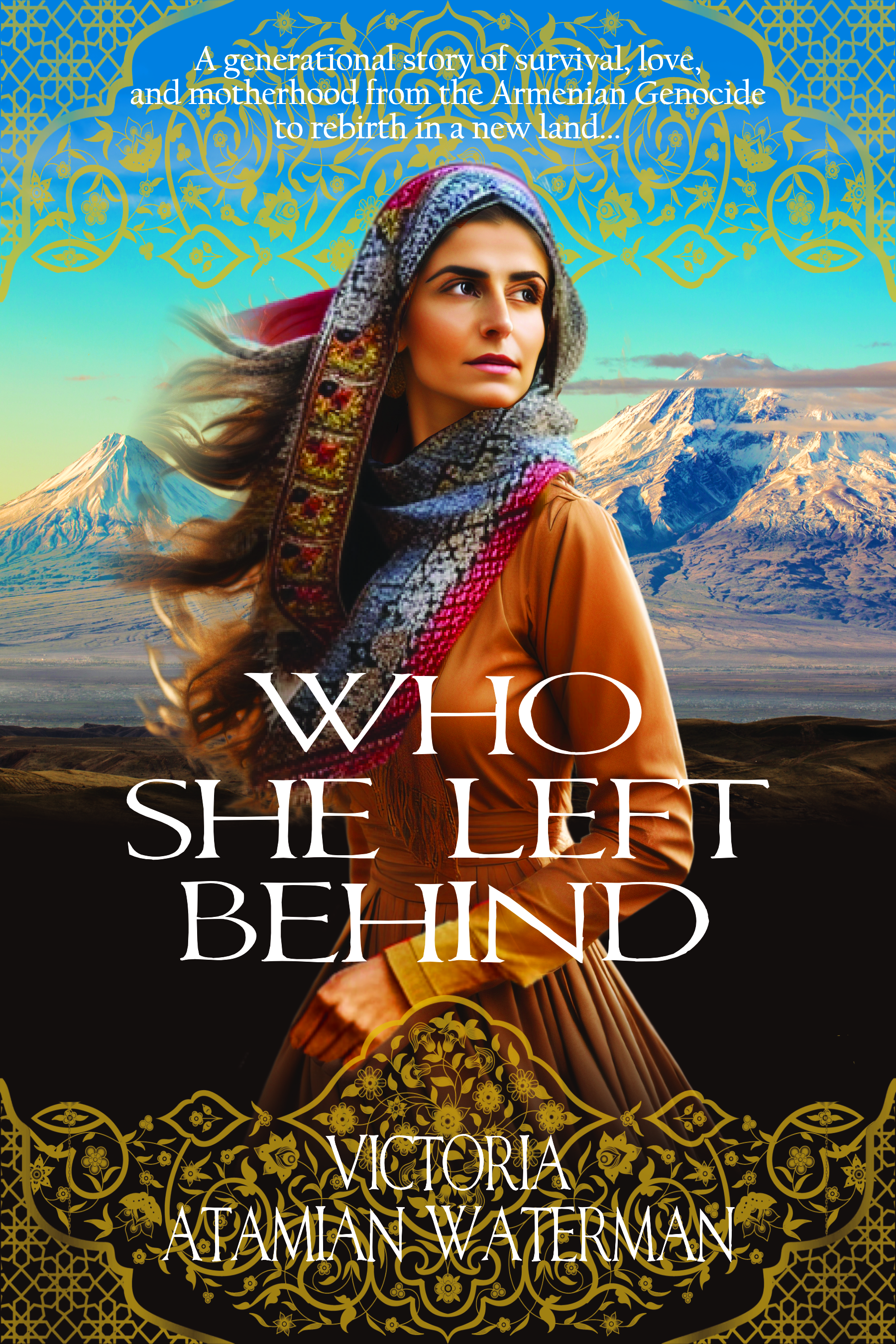
“Who She Left Behind” is a captivating historical fiction novel that spans generations and delves into the emotional lives of its characters. Set in various time periods, from the declining days of the Ottoman Empire in Turkey in 1915 to the Armenian neighborhoods of Rhode Island and Massachusetts in the 1990s, the novel completely immerses its reader in a lesser-known era and the untold stories of the brave and resilient women who became the pillars of reconstructed communities after the Armenian Genocide.
It is a story of survival, motherhood, love, and redemption based on the recounted stories from the author’s own family history. The narrative is framed by a mysterious discovery made almost six decades later of a pair of Armenian dolls left at a gravesite.
Excerpt 5:
The night before Lucy’s wedding, Vicky crawled into bed long after midnight, sore and chilled, but the dress and veil were finished and pressed, waiting on a hanger for the bride to arrive before church in the morning.
“You give us all so much, my love,” Pesa whispered into the dark. “I hope your sister knows how fortunate she is in you.”
Vicky kissed her husband’s shoulder and lay still while his breathing slowed, and he slipped back into sleep. Her heart banged against her chest, as though all her secrets might burst from her chest.
I failed everyone who needed me most.
I failed my living child. I lost her forever.
I lied to everyone I loved and hid her from the world.
I failed our baby girl. My body wasn’t strong enough to keep her alive.
I failed you, my love.
Rolling over, Vicky let her silent tears soak into the pillowcase. She would not fail Lucy and that would make up for all the secrets.
Victoria Atamian Waterman is an Armenian American storyteller and speaker who draws inspiration from the quirky multigenerational, multilingual home in which she was raised with her grandparents, survivors of the Armenian Genocide.
Her empowerment of today’s women and girls makes her voice ideal for telling the little-known stories of yesterday’s women leaders. Her TED Talk, “Today’s Girls are Tomorrow’s Leaders” has been seen by thousands of viewers. When she is not writing and speaking, she is reading, puzzle-making and volunteering.
Victoria lives in Rhode Island and is enjoying this next chapter of life with her husband, children, and grandchildren. “Who She Left Behind” is her first novel.
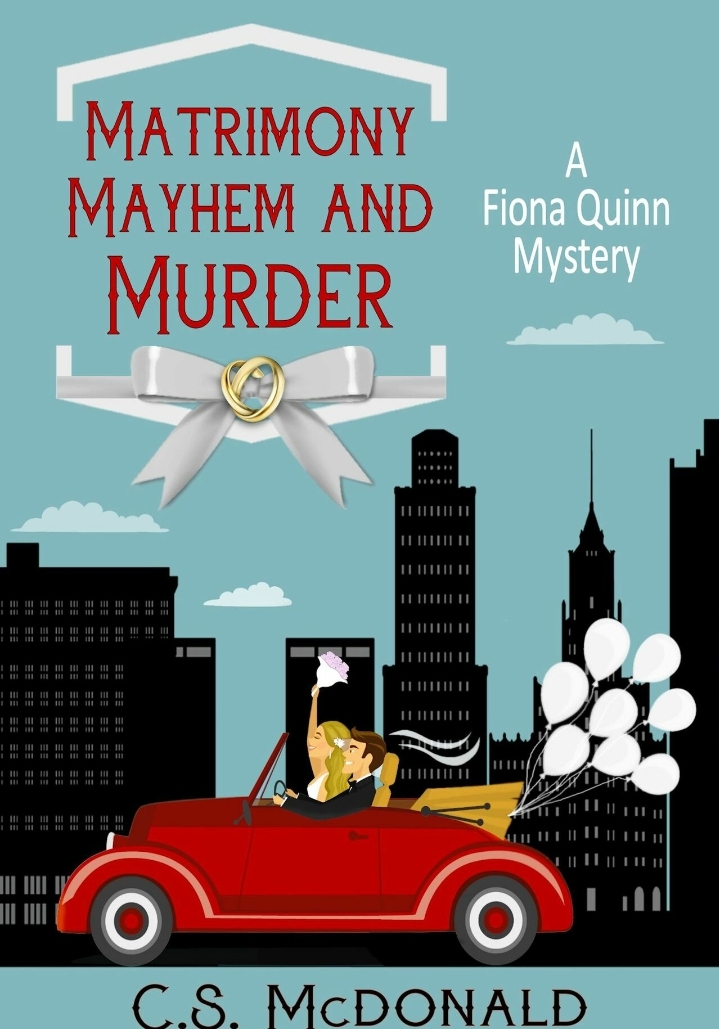
The venue is set, invitations sent, and the flowers ordered. It’s almost time for Fiona and Nathan to get married…again. What could possibly go wrong? Nothing…well, until the wedding planner is found dead. Then the woman Fiona has never met shows up–Nathan’s enigmatic mom, Rita Landry. And she’s wearing a gorgeous but mysterious necklace. Worse, Rita is being followed by two sinister-looking men, forcing her to flee the country. Who gets dragged along? None other than the bride-to-be! How does a girl prepare for all of that? Looks like Fiona’s perfectly planned matrimony has morphed into mayhem and murder! You’re formally invited to Fiona and Nathan’s wedding. Question is: Will the wedding happen?
My Review:
Having just finished reading this book, I can say it’s quirky and a lot of fun. Combine an upcoming wedding of two people already secretly married, a murder of a secret agent, a mother in law who’s also a secret agent, one diamond necklace belonging to Queen Elizabeth II, meeting the Duchess of Cambridge, an air Marshal two Russian agents, a table full of cut flowers waiting to be made into flower arrangements and bouquets, and only one person knowing how to do so, along with more agents, staff, hotel rooms, flights, and very little sleep makes for a rambunctious and hilarious novel. Five stars.
A collection of art inspired by Kintsugi and Wabi-Sabi coupled with honey words to heal and mend by author-poets, Julie L. Kusma and Derek R. King. The complete poem, ‘Kintsugi’ by Derek R. King can be read at julie-kusma dot com.
This book carries the reader along on an uplifting soothing spiritual and motivational journey of healing and cleansing when the world acts as a siphon extracting joy and harmony from our mind, body, and soul.
When you seek peace, you will find it when you gently turn the pages of Honey; Words to Heal & Mend. This book guides you through a realm of sweet, flowing poetry. The words in this book are like the nectar of the Greek Gods of Love; Eros and Aphrodite.
Grab your favorite beverage, turn on some meditative music, and bask in the delights of poetic prose. You’ll be transported into the arms of Love, healing, and peace—no longer broken, scarred, and alone, if only for a moment in time.
We are the “perfectly imperfect” and looking for the “magic which binds us together.”
My Review:
Sublime? Yes. Evocative? Yes. Love? Yes. Ambrosia for the heart and soul? Yes. The graphics and words within this book are all of those things and more. Gold, golden, warmth in color, gold heals and is the perfect design behind the written words. Five shiny gold stars.
From the author who gave us the worldwide #1 AMAZON BESTSELLING GRIPPING True Story, WRONG PLACE WRONG TIME, which has left readers leaving 5* reviews in their HUNDREDS and now becoming a MOVIE, David P Perlmutter now offers us his next True Life adventure about his dreams of becoming a Hollywood superstar.
Following his adventures in America graphically depicted in his second true story, FIVE WEEKS, David takes us again to the USA, but this time on a trip to New York where once again you will become immersed in the tension as you find yourself walking side by side with him while he attempts to make his dreams come true.
24 Hours In New York is a story of life, dreams and reaching for the stars, but will his dreams become a reality?
Will he fulfill all that he desires………?
Once again, get hooked with another of David’s adventures…….
David P Perlmutter lives in London, England. He is the very proud father of four children and has one grand-son. David is exceptionally close to his large family, which includes four brothers and one sister, who all live within a 10-mile radius of each other.
My Review:
This book is a short read. The protagonist decides to purchase a plane ticker from London to Manhattan – one way only due to money constraints. His buddy lived on Manhattan borough of New York City, and he had dreams of Hollywood. Needless to say, he made it to NYC, and then he found out his mistakes, and that is left for next readers to read.
“A tour-de-force of historical fiction, Madame Pommery is a deeply fascinating work that blends true-to-life details with artfully crafted elements.” –Publishers Weekly BookLife Prize
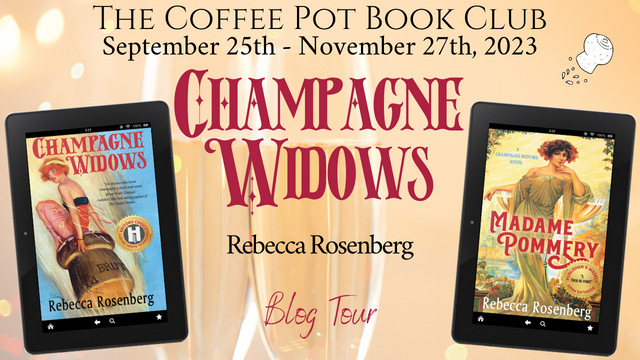
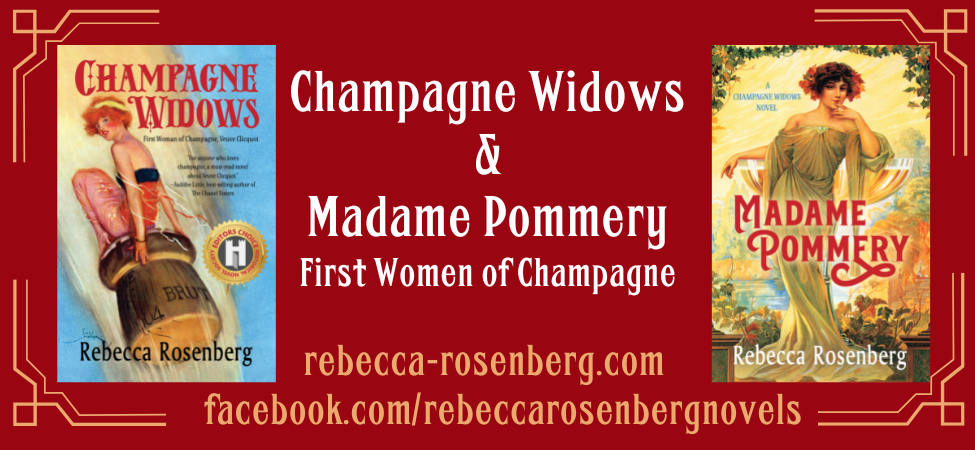
Madame Pommery is a story of a woman’s indomitable spirit in the face of insurmountable odds. Set in Champagne, France in 1860, Madame Pommery is a forty-year-old widow and etiquette teacher whose husband has passed away. Now she must find a way to support her family. With no experience, she decides to make champagne, but no champagne makers will teach her their craft. Undeterred, Madame Pommery begins to secretly excavate champagne caves under the Reims city dump and faces numerous obstacles to achieve her dream. From the Franco-Prussian war that conscripts her son and crew to the Prussian General Frederick Franz occupying her home, Madame Pommery perseveres. She even must choose between her champagne dreams and a marriage proposal from her former lover, a Scottish Baron. Inspired by a true story, Madame Pommery is a heroic tale of a woman’s strength and determination to create a champagne legacy. If you enjoyed the novel Sarah’s Key, you will enjoy Madame Pommery.
~~
CHAMPAGNE WIDOWS, the First Woman of Champagne
EDITORS CHOICE HISTORICAL NOVEL SOCIETY This engrossing historical novel by Rebecca Rosenberg follows Veuve Clicquot, a strong-minded woman determined to defy the Napoleon Code and become a master champagne maker. In 1800 France, twenty-year-old Barbe-Nicole inherits her great-grandfather’s uncanny sense of smell and uses it to make great champagne, despite the Code prohibiting women from owning a business. When tragedy strikes and she becomes a Veuve (widow), she must grapple with a domineering partner, the complexities of making champagne, and the aftermath of six Napoleon wars. When she falls in love with her sales manager, Louis Bohne, she must choose between losing her winery to her husband to obey the Napoleon Code, or losing Louis. In the ultimate showdown, Veuve Clicquot defies Napoleon himself, risking prison and even death. If you enjoyed books like ‘The Widow of the South’ by Robert Hicks or ‘The Paris Seamstress’ by Natasha Lester, you’ll love ‘Veuve Clicquot’.
How Women Overcame Pandemics, Mental Illness, Sexism, War,
and Napoleon to Build Champagne Empires
By Rebecca Rosenberg, author Champagne Widows novels
For centuries, women have faced the devastation of pandemics and roadblocks of sexist laws. Yet, one of them, the audacious and determined Barbe-Nicole Clicquot, found a way to build a champagne empire despite the hardships.
In 1805, the Typhoid Fever pandemic swept through the Champagne region of Reims, France, and took the life of champagne house owner Francois Clicquot, who suffered from mental illness. His young wife, Barbe-Nicole, was left a single parent to a six-year-old daughter. Her father-in-law promptly informed Clicquot winery customers, employees, and vendors they were closing the doors.
Under Napoleon Code, she inherited only a quarter of her husband’s property, the rest reverting to his family. Now known as Veuve (widow)Clicquot, Barbe-Nicole needed money to support herself and her daughter and was dismayed that their champagne winery would be taken from her. In a time when married women were prevented from owning a business in France, she found a loophole. Seeking legal advice, she learned that a widow could own a business and property. She’d never run a business or handled finances, but Barbe-Nicole was determined to continue the champagne house. She bargained with her father-in-law to carry on the winery, which he agreed to on the condition he chose a male business partner for her.
Despite her ambitions and best intentions, her first steps in the male-dominated world of wine-making were doomed. She started this new venture in the middle of thirteen years of Napoleonic wars (1803-1815). As Napoleon fought to rule Europe, he blocked trade between countries and destroyed Europe’s economy, making it nearly impossible to sell wine. By 1810, Veuve Clicquot’s business partner knew their venture failed and broke off the partnership.
On her own again, her father-in-law pressed her to close the winery and stem the losses. In the face of rising doubts and mounting debt, Barbe-Nicole became more determined. She boldly rebranded the winery as Veuve Clicquot-Ponsardin, using her title, widow (Veuve) and adding her maiden name, so there would be no mistake who was making the wine. Veuve Clicquot-Ponsardin was the first champagne house owned by a woman.
The next few years were bleak for the single mother managing the vineyards and winery alone. Napoleon and his French army waged two more wars; the Fifth Coalition War with Austria and Britain and the Peninsular War with Spain. In 1812, Barbe-Nicole’s champagne sales fell from a peak of 130,000 bottles to 10,000 bottles. She used those dark years to improve the wine. Champagne in the early 1800s was unpredictable and mysterious. It could grow snakes of yeast, be flat and lifeless, or murky with frog’s-eye bubbles. Barbe-Nicole invented new methods to enhance her champagne’s clarity and taste. Eventually, she created the riddling rack, a large board with holes to store wine bottles neck down. A gentle rotation of the bottle slid sediment down into the bottleneck for easier removal. This method of riddling bottles and the riddling rack are still used in champagne making today.
“The world is in perpetual motion, and we must invent the things of tomorrow. One must go before others, be determined and exacting, and let your intelligence direct your life. Act with audacity.”
–Barbe-Nicole Clicquot
The Great Comet of 1811, known as Napoleon’s Comet, streaked across the sky for one million miles and was visible for more than two hundred and sixty days. Prophets said the comet predicted Napoleon’s invasion of Russia and the war of 1812. But, for Barbe-Nicole, the Great Comet of 1811 brought the most magnificent and bountiful grape harvest of a decade. Using her new techniques and skills, she crafted an exquisite champagne that would make her famous. Le Vin de Comète was the first vintage champagne ever made, using only grapes from that comet year instead of the traditional method of blending wines from different years.
While Barbe-Nicole aged her Vin de la Comète in the chalk caves under her winery, France remained in turmoil as Napoleon waged the Sixth Coalition war against Prussia, Sweden, Austria, Russia, the United Kingdom, and several German states. In 1812, he marched his Grand Army of half a million soldiers to Moscow. When they arrived, Moscow was deserted and burned by the Russians. Napoleon had to march his army back across the vast frozen wilderness in the winter. Bitter winds froze the horses in place. Men died of Typhus and other diseases. Battling peasants and Cossacks on the way back, Napoleon’s Grand Army dwindled to ten thousand men.* When Napoleon heard of a coup d’etat in Paris, he abandoned his army and fled back through Barbe-Nicole’s town of Reims, seeking lodging at her father’s house.
Prussians, Cossacks, and Russians invaded and occupied Reims until Napoleon abdicated in March 1814. Finally, the time had come for Barbe-Nicole to launch the audacious strategy she had been planning. She hired a Dutch vessel, packed it with 10,550 bottles of Clicquot champagne, and sent it with her salesman, Louis Bohne, through the Baltic Sea.
He found an eager market starved for fine wine and other luxury goods. “Our ship is the first for many years to sail North…with a cargo of champagne,” Bohne wrote. He immediately sold out his stock in Konigsberg and St. Petersburg. Barbe-Nicole sent another ship with 12,500 bottles.
By Autumn, they had 70,000 bottles committed. Barbe-Nicole worried they would run out. “What a lovely problem to have,” Bohne wrote. Veuve Clicquot-Ponsardin rocketed to 280,000 bottles in 1821. Survival of the champagne house was assured. Had Barbe-Nicole remarried, her business and power would have been ceded to her new husband. Instead, by remaining a widow until she died in 1866, Veuve Clicquot gave us a model of strength, creativity, and vision as she used her intelligence, tenacity, and sheer guts to break through the chaos and confusion in the world around her.
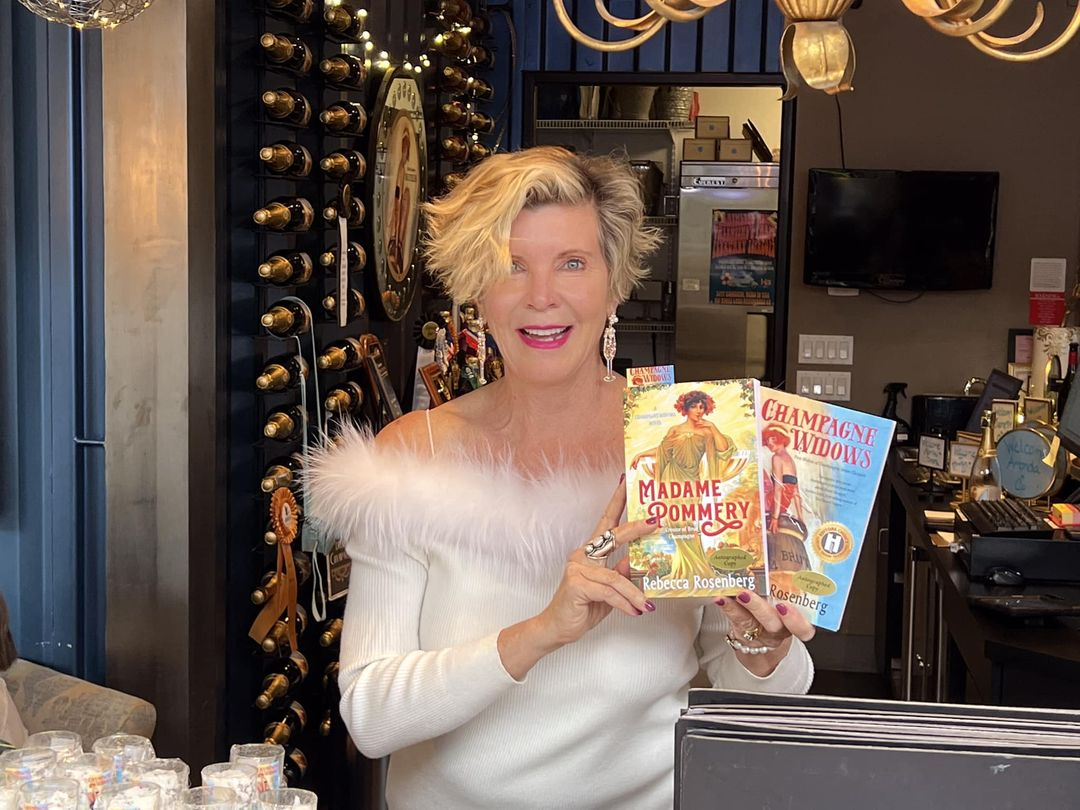
Rebecca Rosenberg is a best-selling author of historical novels celebrating creative, fearless women who broke the rules to make them better. Her Champagne Widows Novels tell the stories of the first woman to build the champagne industry. Madame Pommery, Creator of Brut Champagne, Champagne Widows, First Woman of Champagne, and Lily Bollinger (2025)
Rebecca Rosenberg is an award-winning novelist, champagne geek, and lavender farmer. Rebecca first fell in love with methode champenoise in Sonoma Valley, California. Over decades of delicious research, she has explored the wine cellars of France, Spain, Italy, and California in search of fine champagne. When Rebecca discovered the real-life stories of the Champagne Widows of France, she knew she’d dedicate years to telling the stories of these remarkable women who made champagne the worldwide phenomenon it is today.
Rebecca is a champagne historian, tour guide, and champagne cocktail expert for Breathless Wines. Other award-winning novels include The Secret Life of Mrs. London and Gold Digger, the Remarkable Baby Doe Tabor.
Life on Molly is a travel and lifestyle blog. I am a normal girl with many passions. I am an explorer of new places, a learner of new languages, creator of my ambitions, blogger, and a good pal. This blog is my little corner of the world where I am able to share my adventures with you and inspire you to live a life full of purpose.









 When Angels Fly