Archive | March 2018

How Can Authors Protect Their Works in Progress?

Chris The Story Reading Ape's avatarChris The Story Reading Ape's Blog

by RJ Crayton  on Indies Unlimited:

This question gets asked by readers a lot here at Indies Unlimited: How can I protect my manuscript from being taken by someone I let read it? And as common as the question is, it’s an easy answer: you can’t.

That’s not the answer most people want to hear, but Indies Unlimited is an “Alternative Facts Free Zone,” so only the truth appears here. And the truth is, you really can’t stop someone from doing unauthorized things with a document you give them.

The good news is that most people don’t do untoward things with your document. Most people do what was asked: read your manuscript and then either provide you feedback or write a review. However, occasionally, an unscrupulous person may share your book. Like I said, there’s really no way to stop someone who wants to do wrong with your file, if they…

View original post 39 more words
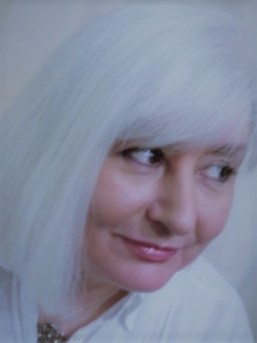
Meet Christine!

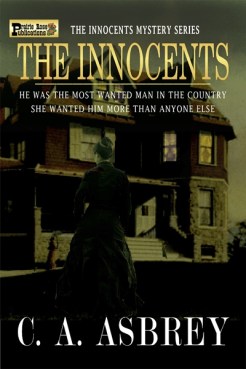
The Innocents CAAsbrey Web cover

Thank  you Ms. Asbrey for being my guest today. 

Did you ever consider writing under a pseudonym?

I kinda do. I write under my married name and feature on social media under my maiden name for social interactions. I also write under initials. I don’t hide my gender, but it’s not immediately obvious when you look at the book cover.

Do you want each book to stand alone, or are you trying to build a body of work with connections between each book?

‘The Innocents’ is most definitely part of a larger body of work. It’s the first of a trilogy, but if people like them there’ plenty of scope to keep them going. I would still continue with each book being a self-contained mystery with the larger universe of the characters providing an over-arching connection between the books. The third book is written and at editing stage, but there are plenty of trials I can still put the characters through yet.   

What is your writing Kryptonite?

Emotional upset for sure. My last book took me a year to write as I was distracted by my husband being injured in an accident and my mother-in-law passing away from a long illness. I was very lucky to have a lovely mother-in-law. She is sorely missed.

What other authors are you friends with, and how do they help you become a better writer?

I’ve met many wonderful people on this journey and I’ve found them to be an incredibly generous and open community. I’d really encourage new writers to reach out and make contact. Not only will you find that they share resources, but you’ll probably make all kinds of new friends too. There are too many to mention but Kit Prate and Joanie Chevalier deserve a special mention. Both have been so supportive and inspiring to a brand new writer and have gone the extra mile in helping me cross over so many barriers. Kit introduced me to her publisher after reading my work, and helped me out of the slush pile. Joanie helped to point me towards the various groups which help a new writer with marketing and publicity. Not only that but she actually made up some advertising material and told me to ‘get my swag on.’ I was being far too Scottish—reticent and unwilling to look like I was bragging by saying my book was good. Both ladies have been incredible and I can’t thank them enough. Read their books and you’ll soon see how lucky I was to be assisted by them.

What was an early experience where you learned that language had power?

That would be in my work as a young police officer. I learned that talking people down from spiraling emotions is a powerful tool in keeping people safe, and more potent than violence. I also learned that listening to detail is vital too. Noting the small things helped to push cases along in gathering evidence. I also learned the complex and intricate ways people use language to put you down and grab power in a situation. Understanding that really helps you stay in control of a situation.

What’s your favorite under-appreciated novel?  

That would have to be ‘The Moonstone’ by Wilkie Collins. Not only is it considered the first proper detective novel in the English language, it also shows working class females as rounded characters instead of foils for male attention. It also is the first to introduce many of the elements we take for granted in mysteries such as red herrings, false suspects, the skilled investigator, and a final twist. Collins was actually vastly more popular than Dickens in his day, but is now largely forgotten in comparison.

As a writer, what would you choose as your mascot/avatar/spirit animal? 

Lol, maybe a giant sloth? Or one of those dogs or cats which go viral for bumping into glass doors or falling off things.

What kind of research do you do, and how long do you spend researching before beginning a book? 

Copious amounts. ‘The Innocents’ has taken years of research into the work of the early Pinkertons, especially the female agents and the kind of work they did, including their methodologies. I research everything, even the stationary which was in use and the correct codes for the telegraph stations mentioned in the books. The theatrical make up used as disguises in the book began to flourish right around the period the books are set in as lighting improved and people could see the flaws in the rudimentary stuff previously only lit by candles. The forensics are fascinating to dig into too. You name it I researched it.

How do you select the names of your characters?

As I write 19TH century characters I try to keep them in period and maintain a sense of place. I’ll research popular or unusual names as well as using names of people I know if they’re appropriate. I’ve also been known to add really unusual names to my note as I come across them. Some are too good not to use.

Who is the most famous person you have ever met?

That would be either the Pope or the Queen – on a protection duty. When the Pope visited Scotland I was the police officer at the bottom of the aircraft steps. We then moved with him into the city. As a fun aside, the glass-covered vehicle he used was nicknamed the Pope Mobile by the press. The crowds were all still there when we returned to the airport in the Pope mobile without him. We stood in full uniform waving flowers out the top to cheering crowds as we drove the full length of Prince’s Street in Edinburgh (the big main street in Scotland’s capital city). The crowd cheered us and waved flags as we passed. Only a Scottish crowd could hail a car full of police officers like that. Great fun.

What was your hardest scene to write?

The interrogation scene. I had to inject a sense of menace into it to make it work. I know it’s not usual to make your hero do bad things, but he’s a professional criminal and he has to find out who this mysterious woman is and how much danger the heroine poses to him.

How long have you been writing?

I’ve been playing with the characters for about ten years, but work and life got in the way. I started writing seriously about two years ago and spent about a year being turned down by everyone. I acted on every bit of feedback and continually got my work reviewed and improved until it was polished enough to be accepted.

What inspires you?

Often fact is stranger than fiction, so I’ll start with real crime or criminals. I‘ll then change it to ensure that even people familiar with that particular crime can’t guess whodunit. The stories are inspired by real crimes and people but they are not a memoir. They are stories where everything is historically possible. It either happened or could have happened.   

How did you come to write The Innocents?

My grasp on the methodologies used by law enforcement, when applied the law in day to day enquiries in the days before technology was available, as well as historic weaknesses and blind spots in the both the legal and court systems, make for an authentic backdrop to the characters.    

I was always a voracious reader, my mother teaching me with flashcards at the age of two, and graduating to the adult section of the library about the age of ten. I easily finished three books a week for years and was lost without one. Mysteries were a real love and I consumed the works of writers old and new constantly. The one thing I always wanted to do was to write but never had the confidence or time to do more than dream about it.

As a child I loved to run lines with my actor father when he rehearsed, and peeked in on the parties full of creative people singing, dancing, telling jokes, performing and discussing the issues of the day. Childhood taught me that creativity was something you do, not something you passively watch. That carried over to a love of singing, professionally and with choirs, as well as playing some dodgy fiddle music, alongside far better musicians who either made me sound okay or drowned me out entirely. Either way I managed to carry it off for a bit and even bagged a musician husband.  

I first became interested in the female pioneers in law enforcement when I joined the police in Scotland. History has always held a draw and the colorful stories of the older officers piqued my interest, making her look even further back.

The very first women in law enforcement had been in France, working for the Sûreté in the early 19th century. They were, however, no more than a network of spies and prostitutes, the most infamous being the notorious ‘Violette’. Now there’s another story which needs to be told!

The first truly professional women in law enforcement worked for the Pinkerton Agency, and they were trained by the first female agent Kate Warne, an ex-actress and an expert in working undercover. Kate Warne was an expert at disguise, adopting roles, and accents. She was said to be daring and able to pass her characters off, even in close quarters. In the only known photograph of her she is dressed as a man. This was a skill set my childhood had prepared her to understand.  

These women were fully-fledged agents, with their skills being held in high regard by Alan Pinkerton who once said, “In my service you will serve your country better than on the field. I have several female operatives. If you agree to come aboard you will go in training with the head of my female detectives, Kate Warne. She has never let me down.”

I started to wonder why one of the female agents couldn’t be a Scottish Immigrant. After all, Alan Pinkerton was one. He came from Glasgow. Being a Scot in another land is something I know well. They do say you should write what you know.    

My work has taken me all over the world, but working in the USA and visiting the places where these women worked deepened my  passion for finding out more about how they lived. I also researched the tools and equipment available to them at the time. Connections to police and Home Office experts allowed me to research the birth of forensics with people who knew their subject intimately.   

The topic for ‘The Innocents Mystery Series’ simmered in the background for years, and all the time I was researching more and more deeply into the period. I love the rapid pace of innovation and invention in the 19th century. Nothing pleases me more than finding spy gadgets available at the time which were invented far earlier than most people would think possible.

Work and life got in the way of the books being anything more than an idea until I was suddenly grounded by a serious accident. The enforced leisure time of recuperation focused my mind and the old dream of writing resurfaced. It started as a short story which took on a life of its own when it grew and grew—then grew some more.

Eventually, ‘The Innocents Mysteries’ evolved and I found the perfect home for it at Prairie Rose. This is my first foray into fiction. I have produced magazine and newspaper articles based on consumer law and written guides for the Consumer Direct Website. I was Media Trained by The Rank Organization, and acted as a consultant to the BBC’s One Show and Watchdog. I have also been interviewed on BBC radio answering questions on consumer law to the public.

I run a blog which explores all things strange, mysterious, and unexpected about the 19th century. It was a huge compliment to be told that another writer finds it a great resource. The link can be found below.

I live with my husband and two daft cats in Northamptonshire, England—for now. Another move is on the cards in 2108 to the beautiful city of York.

book pic cropped

Blog which includes things obscure and strange in the Victorian period   http://caasbrey.com/

Twitter  https://twitter.com/CAASBREY

Facebook  https://www.facebook.com/mysteryscrivener/

Facebook group for The Innocents Mystery Series 

https://www.facebook.com/groups/937572179738970/?ref=br_rs

Book Release Day: 19 April 2018


This entry was posted on March 19, 2018. 2 Comments

It has arrived!!!

WAF-3600x3600-11-11-2017

WHAT WONDERFUL BOOKS HAS PAULA SLADE BEEN RECORDING?

Her newest release, WHEN ANGELS FLY, a multiple award winning and deeply touching memoir of a mother’s love and loss by S. Jackson, A. Raymond and M. Schmidt.

To read reviews, listen to a preview and to purchase, please visit Amazon.com, Audible.com and iTunes.

This entry was posted on March 19, 2018. 2 Comments

What is the value of a like?

abetterman21's avatarA Better Man

Brands and advertisers poured tens, often hundreds, of thousands of dollars collecting Likes, and Facebook had us convinced there was value in doing so. Today, there are various advertising opportunities and objectives, but Likes are still widely considered an indicator of brand loyalty and growth opportunity.

The question remains, however: What is the value of these Likes? This is the million-dollar question, and it’s one that few marketers dare to dive into. We’ve been accustomed to avoiding it, only going so far as to concede that “there’s gotta be some value there.”

In my opinion, there is value in a Like, but maybe not in the way you might think.  It can certainly be stated that there is relationship between a follower Liking a brand on a social platform and that follower spending more on the brand than non-followers. But is that relationship one of correlation or causation? Here is…

View original post 1,054 more words

To Sequel or Not to Sequel – It’s a Good Question

P. H. Solomon's avatarArcher's Aim

Hello to all the Archer’s Aim readers. Life has been a whirlwind lately but I’ve been making some progress on several writing projects. However, I wanted to pause and answer a question that seems to get bigger and bigger with each month:

Will there be another book to The Bow of Hart Saga?

Based on the number of these questions I’m getting, there likely will be another book but not as part of the core trilogy that is currently out. I know that I left the door open for another book or two and that was somewhat by design. I understand that, while I’ve wrapped up the series nicely, there are fans who want more. Honestly, the request for a sequel cropped up from my daughter who also asked for a prequel series. So, I left the saga with a bit of an opening to move toward a sequel as…

View original post 468 more words

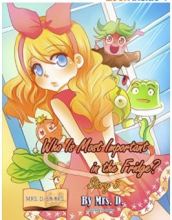
Who Is Most Important in the Fridge?

MostImportant3

Who Is Most Important in the Fridge? by Mrs. D.

My review follows the author’s book blurb found on Amazon.

“A playful arrangement of all types of food gives this yummy story a different look at how to make healthy choices, which are mostly stored inside the fridge. This delicious book shows veggies and fruit so juicy and alive, children will wish they could jump off the page right into their mouth. Even vegetable haters will find it hard to resist the vibrantly colored illustrations, which make each food look scrumptious and tempting. Serve this splendidly illustrated book to all who relish a good, healthy feast! It can be fun!”

This is book 3 of 3 in this series about Frank the Fridge and the food items inside the fridge. This time Stacey opens the fridge door and peers inside, and once again, the foods are arguing about hat item Stacey should eat first. Children learn the value of nutrition taught to them via the food items in the fridge. When a strawberry pops out, Stacey sneezes and children learn that some people are allergic to them. The same ca be said of some of the other fruit and veggies. I find this part a wonderful addition in helping children learn that allergies are important to them and to their friends. Stacey learns how to cook a nutritious meal by combining different foods from the fridge. Highly recommended and Five Stars! I received a digital copy of this book and voluntarily chose to read and review it for no compensation giving my honest opinion.


This entry was posted on March 10, 2018. 2 Comments

What’s Going on Inside the Fridge?

FridgeStory2

What’s Going on Inside the Fridge? by Mrs. D. 

My review follows the author’s book blurb found on Amazon.

“Off-kilter fun for book lovers! Be aware! This story could make you hungry! Do you ever wonder what’s really happening inside the fridge? What food does when it spots a hungry girl by the fridge? Does it run, hide, or fight? A funny and endearing look at how the fridge and its occupants behave when a little girl opens the door. This delightful story is a perfect tool for helping children understand all kinds of food. It may also inspire them to try new food that they’ve never had before. A feast for young readers’ eyes, and they’ll want to mimic the food’s upbeat attitude!”

Frank the Fridge is very sad. The little girl, Stacey, remains in the pantry and she is very hungry. The foods in the fridge are still arguing about which one is the best for Stacey to eat. When Stacey leaves the pantry, she goes to the fridge and opens the door. The healthy foods inside try to tell Stacey why they are important in her diet. Mrs. D.’s imagination shines throughout, and in the back are recipes and images for children to color. Highly recommended and Five Stars. I received a digital copy of this book and voluntarily chose to read and review it.

This entry was posted on March 10, 2018. 2 Comments

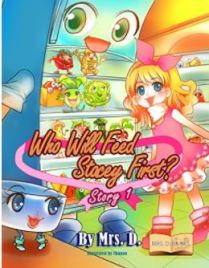
Who Will Feed Stacey First?

Fridge Story one2018

Who Will Feed Stacey First? by Mrs. D.

My review follows the book blurb found on Amazon.

“These fun rhyming stories introduce young readers to delightful food characters with goofy personalities, real feelings, passions, and fears, who always disagree with each other about who will feed a hungry little girl first. Each turn of the page reveals a mouthwatering food and its importance. Eager and picky eaters alike will enjoy the wordplay and outrageous situations created by the edgy characters. Silly humor will appeal to young readers wanting something a little different.
For all who relish slightly funny stories with some adventure and a whole lot of fun!”

This is truly a delightful illustrated children’s book and it teaches how to eat in a healthy manner. I loved the rhyming and how the different foods in the fridge all wanted to be the first to feed Stacey. Children get to see and read about the foods that are good for them and this is very important as a child grows up. The story itself is at 21 pages which is a little short for illustrated books, however in the back portions one finds recipes and more. Highly recommended and Five Stars! I received a digital copy of this book and voluntarily reviewed with my honest opinions for no compensation.


This entry was posted on March 10, 2018. 2 Comments

A Response about Copyright Violation from Internet Archive!

vanderso's avatarJust Can't Help Writing

Hello, readers,

I need your help.

On January 11, 2018, I shared a post from Victoria Strauss of Writer Beware about possible copyright infringement by the Internet Archive, which scans books and posts them for free in a “lending library” without notifying authors or receiving permission.

On the Internet Archive site, I found a pdf of the 1989 mass-market paperback of my novel, King of the Roses (originally published by St. Martin’s in 1983). I sent two email notices requesting that the book be taken down, using the free form included in Victoria’s original post.

I have received a response. The response raises several questions for me and I would appreciate feedback from readers. In particular,

1) Have I understood the response correctly?

2) What is the correct and ethical response to the fact that the Internet Archive plans to retain a copy of my book for “blind and print-disabled”…

View original post 632 more words

This entry was posted on March 8, 2018. 2 Comments