
Archives
Holiday Train “Book Trailer” Block Party

It’s back and it’s great to be part of this year’s #RRBC Holiday train, Book trailer and block party! Each year members of this amazing book club, join together for a month long book trailer tour. Check out the line up here: RRBC Book Trailer line up.
I have one day this year, December 30th. Today I have two prizes: One eBook copy of When Angels Fly and the winner will also receive a $10 Amazon eCard.
All you have to do to enter is to watch my book trailer in full and leave a comment on the YouTube video. You will then be entered into a prize draw. The winner will be notified a few days later.
The book trailer is found right at this link!
Words from others regarding my memoir, When Angels Fly, are found directly below the cover. Enjoy my red and green font colors!

Awards
2016 New Apple Official Selection eBook Award
2016 Circle of Books Ring of Honor Silver 2nd Place Award
2016 Amazon Number One Best Selling Book
2016 McGrath House Indie Book Awards Finalist
2016 Readers Favorite Five Star Book Award
2017 Literary Titan Silver 2nd Place Award
2017 Book Excellence Award Finalist
“Memoirs that deal with tragedy often turn out to be the most life-affirming and give a hope of resilience and strength. Kudos to you, Mary! You found the tender words to tell Eli’s story and your own journey.” ~ Jan Hawke, Author
“I read this book after the author appeared on the We Love Memoirs group, Spotlight on Sunday. The story is a very moving account of the authors life and most importantly the story tells of her son Eli who becomes sick with cancer and subsequently dies. The book is in four parts with the third part being told from her diary recounting the months of Eli’s illness and his passing away. The first two parts of the book set the scene and show how Sarah’s life has been hard with an abusive mother throughout her childhood and then marrying a husband who is also abusive. As I read I felt very much that the mother was a psychopathic narcissist at best and the husband was an abusive alcoholic who had no feeling for his family and his only love being the bottle. Sarah has a very hard road which many of us would not survive I am sure. Her faith though does give her solace and even though it wavered at times in the end does help her through. I enjoyed reading the book but not so much the diary format although this was a way of telling the story day by day. I admired Sarah’s love and devotion to her children and her loving heart comes through. How she managed to cope with the mother’s ongoing abuse through her son’s illness is beyond belief. I will refrain from saying too much more as don’t want to give more away as there are many other aspects to this heartfelt story.” Julie Watson, Author
“This book’s effect on me is hard to explain. I gave it a 5 Star review because all the emotional triggers were engaged. As I read, I found myself crying, angry, happy, excited and overwhelmed by the detailed story of young Eli, Noah and their mother. I agree with other interviewers, no one should have to endure this type of life, but fact is, life isn’t always a bed of roses or cotton candy and everything nice. S. Jackson’s has poured her heart into telling the day-to-day story of her son’s journey, along with sharing her faith mixed with the power of a mother’s resolve. I highly recommend this book to anyone facing hard challenges in their life.” Raven H. Price, Author
“A heartfelt and heartbreaking story of a mother’s love; that this beautiful child was subjected to such horrific treatment by his own father, grandmother, and uncle and yet allowed by the “system” to continue to suffer abuse by them while he was undergoing such a serious illness is despicable. Thank God that she was there to protect him and his brother. A must read for anyone who has ever loved a child.” ~ S. Bailey
“So much praise to you for surviving the unthinkable. Thank you so much for sharing your story with the world as inspiration to any other woman who is going through this or has been through this and needs to know they are not alone.”
“As the father of two wonderful daughters, I cannot begin to imagine the horror that took place in this mother’s life. How any man can be so evil is beyond me. Thank God for men like Matt, however. There are a few happy moments in this story that made tears of temporary joy hint from behind my eyes: when Eli was able to drink apple juice without choking; the late-night trip mom took to get watermelon her son craved; when Eli and Noah played, as much as they could, in the hospital together. But sadly these moments too quickly moved aside, and the harrowing acts by a despicable grandmother and truly evil husband and father darkened the story. But this is real. That is partially what attracted me to this book. There is a time for the raw truth, it keeps one grounded. To me, this book was more than a succession of events. Often, I felt like I was sitting across from the mother at a diner. My mind fades to gray images as she recollects her story from years ago. She opens her heart, and I listen to her thought process in awe. The mother is amazing for hanging on for dear life, even when it surely felt the bottom had fallen away and there was nothing to believe in anymore. She was there for her son regardless of all else. If you don’t believe evil exists, you will after reading this. Above all, little Eli shows strength and heroism, and despite the bitter end, he triumphed over life.” ~ Robert Kimbrell, Author
“I couldn’t help thinking about womanhood while reading When Angels Fly. As a man and a father, it is hard to imagine the kind of feeling my wife has for our two kids. Many times I had to stop reading, close my eyes, and ask myself: “Could this be really happening?” I couldn’t help but wonder about the stuff of which women are made, because Sarah is a tough woman, sensitive, and rich in her humanity. It is inspiring to see how she gives life and nourishes it. The experience with Eli, her son suffering from cancer, is very touching and one that will inspire many people in the way they relate with their children. S. Jackson and A. Raymond have done a wonderful job in sharing experiences that will offer hope and provoke a silent revolution in the way most of us see women and life. It’s a book that every man should read. And I mean every man!” Romuald Dzemo for Readers’ Favorite

Merry Christmas 2017
Days are busy… time is short… may this be your most blessed Christmas ever!
For unto us a child is born… laying in a manger… for there was no room in the inn.
Final Art of 2017





Grammar-Get It Right!

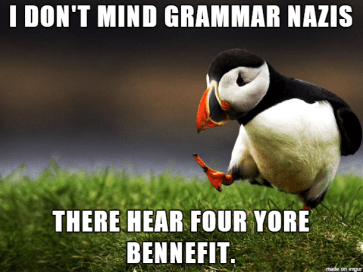 If you think grammar is just a small child’s mispronunciation of “grandmother,” and if you think syntax is a tax that the church levies on sin, maybe you should consider becoming a nuclear physicist or a neurosurgeon or just about anything at all except a novelist. Dean Koontz
Maybe you’re inexperienced, or perhaps you have been writing for a while, but still haven’t produced a publishable piece of work. You probably have a few things to learn about writing a novel, but grammar should not be one of them. Writing grammatically sound prose has nothing to do with creativity. It is a mechanical process.
You don’t need extensive experience to produce prose that meets minimum standards of correct English usage. You don’t even need a formal education. Grammar is something that can be self-taught. While a publisher may understand your deficiencies in characterization, shaky plotting, and an overblown style, he…
View original post 139 more words
7 Tips to Maintaining a Long Term Blog

 Yahoo Image Search
I realized as I chose topics for the Warlord of the Forgotten Age promotion that I should probably talk about blogging. I started mine in December of 2012, which was about 3 months before I released Beginning of a Hero and I had no idea what I was doing. Some people would say I still have no idea what I’m doing. To them I say, ‘I will see all of you at the next family reunion’. Let’s see how serious I can actually be here this time:
- DO NOT forget images. This is something I never considered when I was starting out, so most of my earlier posts lacked pictures. Once I was told I needed something to draw people in from the reader, I started connecting to photos in a way that doesn’t allow them to show up these days. Honestly, I don’t even remember…
View original post 490 more words
The Little Girl Praying on the Hill
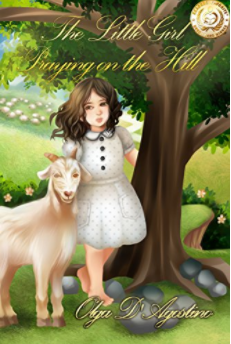
The Little Girl Praying on the Hill by Mrs. D.
From the author:
“2014 Readers Favorite International Award Winner
The Little Girl Praying on the Hill is a bittersweet story based on the emotional childhood memories of a young girl determined to understand the purpose for her existence. Growing up in a poor village of the post-World War II era in a country where half the men drink themselves to death by the age of forty, the confused child questions God. The beauty of nature around her animates her and paints the perfect combination of colors, but life in her rundown village, sinking in mud after each rainfall, is a strong contrast. She exists between two worlds: her beautiful imagination and the harsh realities of life. The picture of majestic nature does not fit with the picture that God created for the people he loves. Why did he divide this world so unevenly? Why did he drop her in the wrong place? Her emotions rise to unreachable heights and sink to devastating lows. The gripping beauty of his creation mesmerizes her young mind, but only for a moment before her memories of specific events make her doubt God’s intentions.”
The Little Girl Praying on the Hill by Mrs. D. aka Olga D’Agostino was an emotional and endearing read for me. A young girl narrates her life as she was growing up in a tiny village, and in a home with a cold dirt floor. This child narrates the harsh conditions of her life, and those of her working mother and drunk father. I was torn and just wanted to get that little girl and show her real love – precious hugs, and more. The harshness of post-WWII rural life in Europe was compelling. Children won’t be able to grasp what the narrative is about but those in mid-grade will, and they should. This is real life history in the voice of a little girl. The story gave me thought of the author, Olga D’Agostino, and I wondered if this is how she, herself, grew up in her younger years. Truly an educational read for mid-grades and for those kids to see the actual difference of what this time period and life was like, compared to today’s kids and their life with instant television, cell phones, and other gadgets.
I received a free PDF copy of this book in exchange for an honest review.
The Royal Palm by Mrs. D.
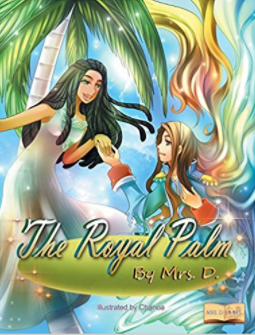
The Royal Palm by Mrs. D.
From the author:
“Honored for Excellence by the Mom’s Choice Awards
2015 Readers Favorite International Award Winner
Recommended for home and school libraries and has earned the Literary Classics Seal of Approval: age 6-8
A thought-provoking tale of the journey of a royal palm born on a tiny island surrounded by mysterious waters. This tender story explores the world of someone wrapped up in herself. Protected by her cousins, the short plain palms, the royal palm grew up beautiful, but very self-centered. Dreaming about life outside the island, she did not bother with her friends, who lived as one big family. Immersed in her own beauty, she only cared for herself, until one day a hurricane struck the tiny island. Then the royal palm discovered the true meaning of family and real friendship. Inspiring story with valuable lessons to be learned and shared.”
The Royal Palm is an enchanting read designed for ages 6-10. This book tells, and shows, the tale of a beautiful palm tree and other palm trees on a tiny island. The Royal Palm tree grew tall and silvery and becomes vain, thinking she doesn’t need her sister shorter palm trees. From the wind to the waves and the birds to the sand, everything came to life and could speak to each other. The Royal Palm thought she was better than the other shorter palm trees. When a hurricane strikes, she finds out that she does need her friends and family, and the shorter palm trees help to protect her from being uprooted. The Royal Palm learned not to snotty to the other trees and island life. A nice twist to this story is having it begin at the end making a different impact on the child who reads it and the children for whom it is read to. Grammar and language usage is perfect and the illustrations are exquisite.
I received a free PDF copy of this book in exchange for an honest review.
About the Author
Olga D’Agostino (aka Mrs. D.), an award-winning children’s author, was born in western Ukraine. She lived in the historical city of Lviv, where she studied business in Lviv Business College. In 1992 she immigrated to the United States with her two small daughters and for years worked in her own business. In 2011 she began her career as a writer, focusing on writing children’s books that have meaning and provide valuable lessons. Two of her children’s books, The Trees Have Hearts and Good Morning, World, won Mom’s Choice Awards in 2013, and three are winners in the 2014 Readers’ Favorite contest. She is a member of SCBWI and speaks a few languages fluently. She lives in the famous town of Smithville, N.J., with her husband Patrick and a meticulous old cat named Nyda.
Published children’s books by Mrs. D. include Carlo the Mouse on Vacation, The Trees Have Hearts, The City Kittens and the Old House Cat, Good Morning, World!, Runaway Clothes, The Royal Palm, and Carlo the Mouse, Book 1: Too Many Rules for One Little Mouse.
The full series of Carlo the Mouse and her new books The Mysterious Life Inside a Closet, That Is How Things Are (two connected stories: The Autumn Wind and The Kitten and the Sparrow), and her new book, The Cat Who Wonders, by Itself, and three rhyming stories in Who Is Most Important in the Fridge? will be published in the near future. Her books are available in print on Amazon and Barnes & Noble, and as e-books for most popular e-devices.
She is presently working on her first novel, The Chinese Princess, and a short story, “A Taste of Bread.” For updates on Mrs. D.’s books, please visit her website: mrsdbooks.net
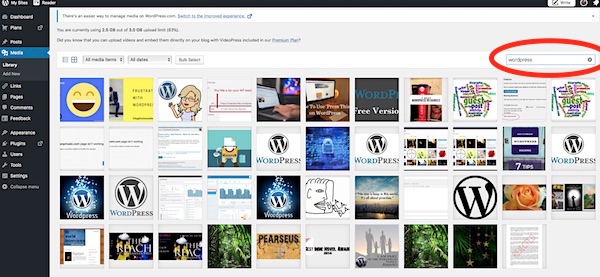
Blogger Tip 01 – How to Resize Images inside your WordPress Media and SAVE STORAGE SPACE..

Have you been using images that are VERY LARGE, and/or, PNG Format?
Have you been reblogging and noticed how LARGE, some folks make their images?
Result
Running out of space in your WordPress Media Storage and thinking about paying for more?
Unless you are displaying your own images / photos, and WANT to have them full size
Before you spend any money, go through your Media Storage images and reduce their sizes
You might be shocked at how much longer you can work with the storage space you save.
Step 1:
Select an image and click on it to see its size (width x height in pixels)
and
how much it ‘weighs’ (i.e., how many KB or MB it is):

Step 2
My example has already been adjusted, but you can see its size and weight
To reduce them, click on the Edit Image button shown under the image:
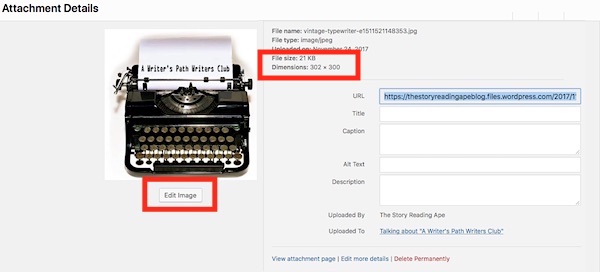
Step…
View original post 127 more words
Blogger Tip 02 – How to Reduce the Number of Images Required in Your WordPress Media and SAVE STORAGE SPACE…
WP TIP 1
If you use more than one image in your posts, then use WordPress Publicize to automatically upload your post to Twitter, Facebook, etc, or, manually upload them, the image last inserted into your post, is the one that will be displayed on your media.
To avoid the wrong image being displayed, either:
Insert it LAST
OR
Select it as your ‘Featured Image’

Authors especially would probably prefer their Book Cover being displayed, rather than some other, random, image.
WP TIP 2
If you opt for using a Featured image, or, have the same image appear more than once in your post (as I’ve done on this post):
You DO NOT NEED to upload the same image for each separate appearance!
Select the same image to be inserted wherever you want it to be shown in the post.

This will save taking up unnecessary space in your media…
View original post 45 more words

