When a homeless single mother lends comfort to a grieving stranger and is mistaken for a psychic, she runs with it and straight into the arms of the confirmed bachelor who saved her little boy from danger. The bachelor, on the other hand, is flummoxed about why a mom lives in a hippy-style flower-power van and vows to do something about it, to provide the boy a Christmas to remember – falling in love with this enchanting woman wasn’t part of his Santa surprise.
Another winner from Susan Ricci. This one is filled with heartbreaking moments interspersed with warmth and love. The short story isn’t shy of melting sexual love and real honest love. The scenes of love are not explicit, but perfect. A better Christmas can’t be found.
Hated as a foreigner, despised as a woman, she became First Lady of Athens.
Aspasia falls passionately in love with Pericles, the leading statesman of Fifth Century Athens. Artists, writers and thinkers flock to her salon. She hides her past as a sex-worker, trafficked to the city, and becomes Pericles’ lover.
Her writings attract the attention of Socrates, and she becomes the only woman to join his circle. She is known throughout the city for her beauty and wit and strives to become recognised as an intellectual alongside men.
Pericles’ enemies attack him through Aspasia and charge her with blasphemy. As a foreigner she faces execution, but her impassioned address to the jury shames the city and saves her. Pericles is spellbound, they marry, and she becomes First Lady of Athens.
Sparta besieges the city; plague breaks out and Pericles is once again in danger.
THE IMMIGRANT QUEEN tells the true story of how Aspasia rose to become the First Lady of Athens and triumphed against all the odds.
Guest Blog for When Angels Fly
Aspasia’s World – the background of Fifth Century Athens
Aspasia was a remarkable figure of great intellectual and political insight who made her way in Athens, the leading city in the Eastern Mediterranean at the height of its glory. The background of the city shaped her life and the opportunities open to her, as a woman, as a non-citizen and as someone who wished to make her mark on history and succeeded.
A modern observer would be struck by the similarities and differences between Athens “the cradle of Western civilisation” and contemporary societies. Both have highly developed cultures and think of themselves as democratic. Both are markedly unequal, on both gender and class lines, and are marred by racism and tensions over immigration. In both, political life is increasingly influenced by populism. Both are prepared to engage in destructive wars for their own advantage and to justify the slaughter of enemies as advancing humane values.
At this time Athens was the acknowledged leader of the Greek world in drama, architecture, philosophy, sculpture, literature and public education. The plays performed at the Dionysiac festival in the city still provide a fertile basis for much modern drama. Athenian philosophy is still at the heart of our thinking. Aspasia was the only woman ever to be included in Socrates circle and her dialogues are quoted with respect by contemporary thinkers such as Xenophon. She was a woman, so her work was of low priority for copyists in the great libraries and is now almost all lost.
The city was also a direct democracy in which officers (apart from generals) were chosen by lot and ordinary citizens were required to participate in meetings and paid to do so.
The Athenians ruled a great Empire stretching beyond the Eastern Mediterranean and brutally repressed any attempts to withhold tribute or secede. The city used the taxes it levied to build temples pre-eminently Parthenon, and public buildings and for armaments, ships and fortifications. A major additional source of income was the silver mine at Laurion where slaves laboured underground naked and in chains throughout their short lives. The historian Diodorus Sicilius regarded conditions there as atrocious even by contemporary standards.
Athens was a divided society. Women had virtually no rights and, in families that could afford it, were rarely seen in public. While men, especially from the upper class, were highly educated most women would receive only very basic schooling. Aspasia contributed to women’s education, opening an academy for women parallel to those provided for men. We can only imagine the discussions that would have taken place, and their impact on the women fortunate enough to participate.
The rights to vote and hold public office were confined to male citizens, a small minority, who met in the Assembly, the key decision-making body. Generals were directly accountable to their fellow-citizens and on a number of occasions were executed for displeasing them. Pericles’ power was based on the growth of a wider democracy, with the loose coalition of ordinary citizens, centred on the harbour, Piraeus becoming more assertive against the old aristocrats.
In the sixth century Athens had made a difficult transition from a kingdom to an aristocracy and then a city in which more and more people exerted influence. These shifts were driven by the importance of agriculture which gave power to large landowners running slave-farms, and then as commerce developed to an expanding middle-class. The shift from the land army based on the aristocrat warriors to the fleet, supreme in the Greek world, also enhanced the influence of the ship-builders and workers on the coast and the citizens who rowed the triremes. At the height there were nearly two hundred docks on the coast each providing at least one trireme a year.
Estimates of the size of the different population groups vary. At the zenith of its power, the city contained between two hundred and fifty and three hundred and seventy thousand people. A small number came from aristocratic families with many slaves and substantial hereditary land-holdings who wielded disproportionate power. About a fifth were Athenians (citizens if they were male) by virtue of descent from the original inhabitants of the land, a bit under a third ‘outlanders’ (immigrants attracted by the wealth of the city, who had very few rights) and slightly under half slaves with no rights whatsoever. The conditions under which slaves lived varied: a minority were valued for their skills as musicians, craftsmen or secretaries. Most worked on farms or in the mines and were treated and thought of as little better than animals, since contemporary thinkers believed that they lacked a soul and an advanced capacity to reason. Household slaves came somewhere in between.
Aspasia’s life was touched by the thirst for glory. Various writers tell of the oracle that accompanied the birth of Achilles, “the greatest of the Greeks” as Homer calls him. Achilles must choose: fight on the plains of Troy and die young but gain a lasting fame, or live long and comfortably, sitting by the fireside in a forgotten kingdom and fade from men’s memories. He chose to fight and die. Men will read of his deeds as long as the Iliad exists.
Later, Odysseus met Achilles in the underworld and asked him whether he still thought he had made the right choice. He replied:
“Say not a word in death’s favour. I would rather be a beggar in a poor man’s house and be above ground, than king of kings among the dead.”
Aspasia also yearned for glory and lived a strenuous and in some ways painful life in a brutal yet highly civilised city. We still remember her name. Pericles died of the plague in the second year of the thirty year war between Athens and Sparta. Finally the city surrendered and fell from eminence. Whether she regretted her quest for glory is unclear. She was certainly a woman of great achievement who faced many challenges and overcame them. I have always thought that her story should be told. This is my attempt to do so.
Probably the best source for Aspasia’s life and the political background is Prisoner of History: Aspasia of Miletus and Her Biographical Tradition by Madeleine M. Henry, Oxford University Press, 1995. This provides a full review of the literature on Aspasia.
Peter Taylor-Gooby is an academic who believes that you can only truly understand the issues that matter through your feelings, your imagination and your compassion. That’s why he writes novels as well as research monographs. He worked in India as a teacher, in a Newcastle social security office and as an antique dealer.
Now he’s professor of social policy at the University of Kent, a Fellow of the British Academy, loves playing with his grandchildren and writes novels in what time is spare.
Please welcome Carolyn Summer Quinn to my blog. “Good morning, Carolyn! Please sit down. I’m thrilled to have you on my blog today. Carolyn is an award-winning Author of fifteen books.”
Please introduce yourself to those reading this blog post.
Greetings from New York City! I’m an Author and Photographer. I grew up singing show tunes in the suburbs of New Jersey and particularly like anything to do with the 1920s, the clothes, cars, styles, music – everything!
Has writing always been part of your life and when did you “know” that it was time to start writing your first book?
I’ve been writing stories since I learned how to write in the first grade. I loved it right from the start!
How difficult was it writing your first book?
My first book was MAMA ROSE’S TURN. It was a biography of Gypsy Rose Lee’s mother, Rose Hovick, whose unorthodox parenting style inspired the beloved Broadway musical GYPSY. The writing wasn’t difficult, but the amount of research I had to do was enormous! It took two and a half years of meticulous research in my spare time while working full time as well. When all was said and done, it was well worth all that effort. The musical was written by playwright Arthur Laurents, and it’s fantastic, but he freely admitted it was “75% fictionalized.” I found an entirely different story by looking into old newspaper articles, official records like the census, the family’s archives, and interviewing people who knew Rose or were her relatives.
Have you ever wanted to give up and what stopped you?
No, I’ve never wanted to give up. I am writing because I enjoyed it. If I didn’t like it, I wouldn’t do it. I’m always rather astounded at some of the authors who say it’s a chore for them to write because I must wonder what’s going on there.
Who is the most supportive of you and your dream to be a writer?
My parents were very supportive, and so was my godmother, but they’re all gone now. It’s my friends and cousins who are my cheering section now!
Anything specific you want to tell your readers?
If you enjoy writing and have an idea for a book, go for it! Start to write and see where it goes. To those who think they’re untrained, keep in mind that Dame Agatha Christie was one of the bestselling authors of all time – and she never went to school for a day in her life.
What is the best advice given to you (book or otherwise), and by whom?
My father said the best attitude to have, especially in the face of any naysayers, is, “Hooray for me – to heck with you!” And the lady who ran the musical theater I participated in during the summertime in my town used to say, “Don’t let the idiots get you down.” In both cases I’ve cleaned up the language they used in those two phrases, tee hee!
What is your target audience and what aspect of your writing do you feel targets that audience?
I’ve written in three different genres, including two books for middle school students, but my main target audience is adults. My favorite genre is cozy mysteries and historical fiction. One of my most recent books, UNTIL THE STARS ALIGN, is about the Kindertransport and World War II, when Jewish children were sent to foster homes in the United Kingdom to escape persecution. That one is historical fiction. So far UNTIL THE STARS ALIGN has won eleven writing awards! And a mystery I wrote, THERE’S NO CURE FOR IMPOSSIBLE, was the Cozy Mystery Award Winner at the American Fiction Awards this year, too.
Did the cover evolve the same way, or did you work with someone to make it come together for you?
I pick out all the images for the covers then work with an artist who puts them together for me. Here’s how that evolved. One of my first books was for middle-grade students and I needed a cover with a nice picture of a 12-year-old girl on it. I was working with a different artist than the one I use now, and she found this utterly ridiculous picture of a girl who looked like a 15-year-old Lolita type! It didn’t work. From that point on I’ve had to insist on finding the images myself. I found a better image for the cover of that book, NOW AND FOREVERMORE ARABELLA.
What are you working on now? Can we get a peek, an excerpt?
I’m working on THE MYSTERY FROM WAY BACK WHEN. It’s set during the 1940s and 1980s in the Catholic neighborhood where my father grew up. It isn’t finished yet, but it’s coming along.
Any last words before we wrap things up?
I’d just like to say to other writers when they’re first starting out, as the old song says, “Don’t give up the ship!” Keep going! Give it a whirl!
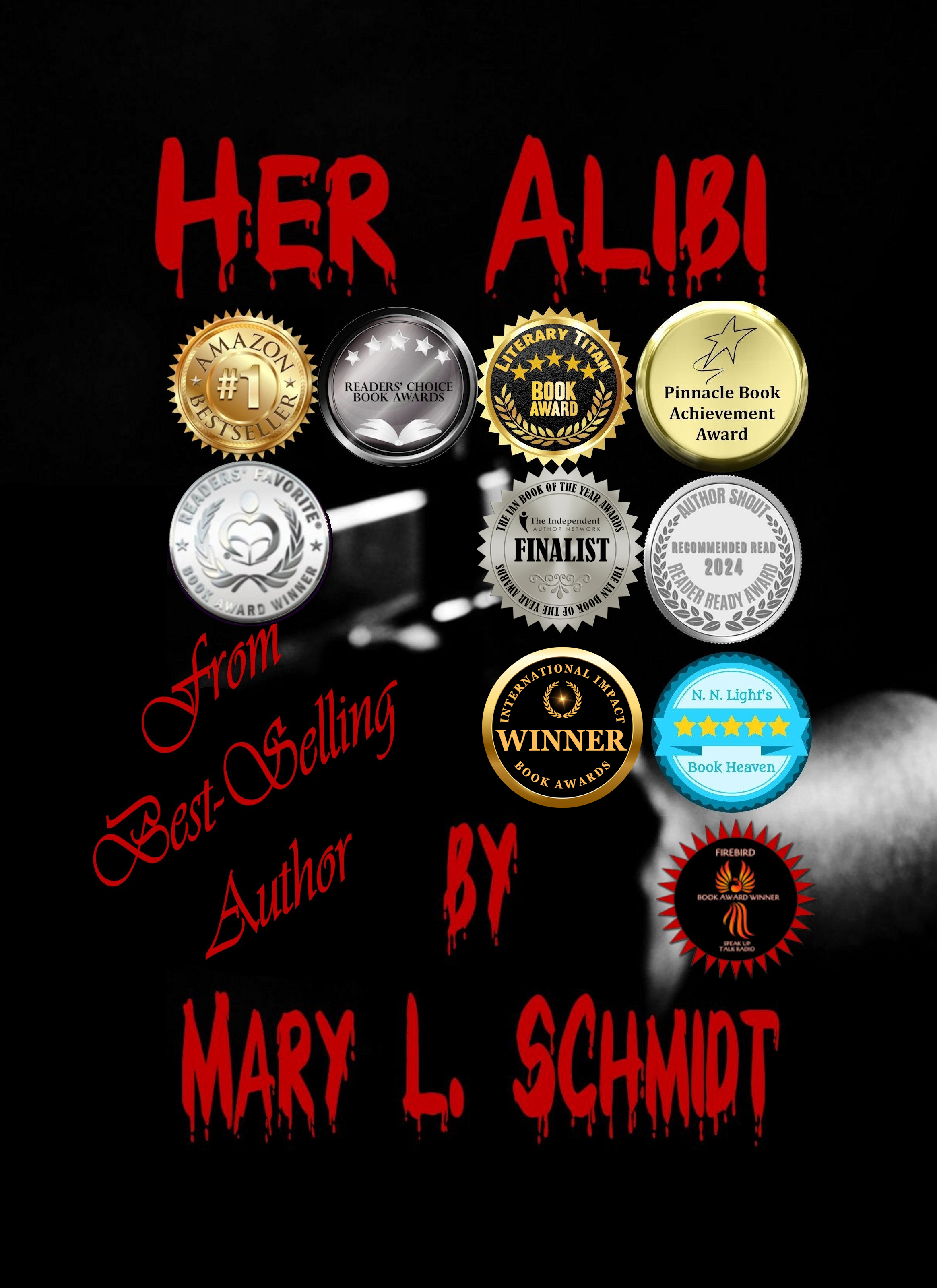
I’m honored to annouce that Her Alibi was a Finalist in the IAN book Awards under Non-Fiction/Relationships. If you would like a copy of this impactful book of 69 pages, let me know.
Short Blurb:
No! This can’t be! Not after the joking around at my home last night. NO!!!!Did she use me last night? She’d never use her scapegoat child. No, she couldn’t! Even Marguerite wouldn’t sink that low! Or would she? Marguerite had always been abusive and vile to most people,and especially to her children and husbands, but would she shoot Harold?
Editorial Review:
Reviewed by Essien Asian for Readers’ Favorite
As a child, Mary could not figure out why her mother’s behavior toward her tended to be either violent or angry. As she got older the relationship between them only got worse, so much so that she could not wait to get out of living under her mother’s control. Her siblings were not immune and even her mother’s partners bore their fair share of her vitriolic attacks. After she had moved out, got married, and started her own family, you would expect that Mary would be free of her mother’s machinations. Then she received a call about her stepfather’s death which coincided with her mother’s strange late-hour visit. Could it be that her mother somehow found a way to rope Mary into her fiendish scheme? One so unbelievable it could involve murder?
Mary L. Schmidt tells a compelling story in her book. Her accounts are detailed and graphic, leaving precious little to the imagination. She explains her family history thoroughly, making it easier to understand her story. It is difficult to believe that some of the events transpired in the way she recorded them, but the waythe details come together in the latter stages gives the reader ample opportunity to draw conclusions as to the mental state of Mary’s mother and her capabilities. Her Alibi is another example of where reality trumps fiction and Schmidt must be commended for finding the courage to pen this book.
She risked everything for her country, now she’s fighting for her life.
A gripping WWII novel of love, espionage and courage in Occupied France, inspired by true events.
February 1933: When twenty-year-old Nancy receives an unexpected inheritance, she embarks on a world cruise that changes her life forever. After a whirlwind voyage, her journey ends in London, where she trains as a journalist, eventually finding herself in the glamorous, bustling city of Paris—a haven for journalists, artists, and refugees.
While covering assignments across Europe, Nancy catches the eye of wealthy industrialist Henri Fiocca. Though love is the last thing on her mind, fate intervenes, and their lives become intertwined.
As World War II looms, Nancy is appalled by the Nazi atrocities she witnesses in Vienna. Determined to resist the enemy, she vows to fight back. When Paris falls, a chance encounter with a British officer draws her into the dangerous world of the French Resistance. With courage and determination, Nancy plunges into a high-stakes game of espionage and sabotage.
Dubbed “The White Mouse” by the Gestapo, Nancy becomes a target of a relentless manhunt. As the iron grip of the enemy tightens around her, Nancy and Henri are forced to make a heartbreaking choice—what price will they pay for freedom?
My Review:
This is such a moving and unforgettable biography that reads like a memoir. Nancy Wake, aka Madame Fiocca, is a character of substance. Real substance. The protagonist has been researched well, and this amazing woman was brought to life. The story is well written and centers around WWII. She was a writer and journalist who fell in love with a wonderful man, who loved her just as deeply.
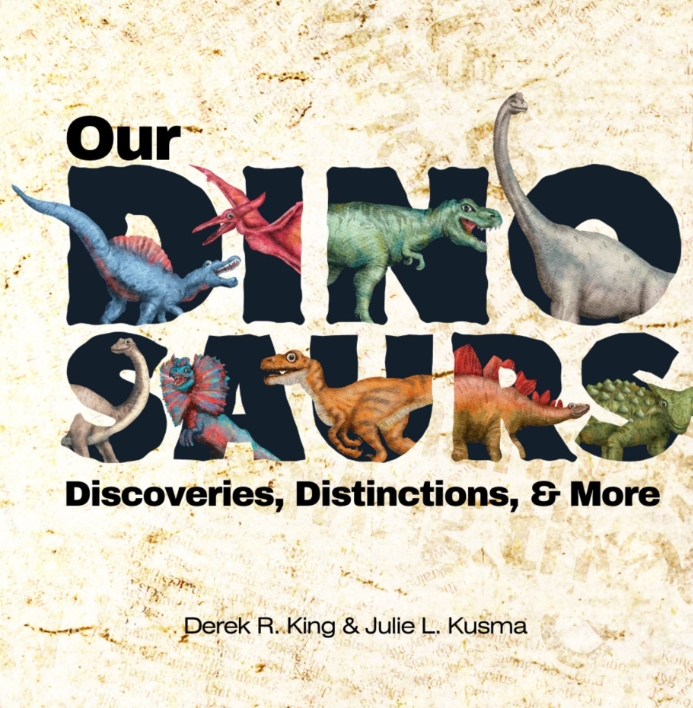
Our Halloween weaves an intricate web of mysteries and surprises. Once again, the authors Derek R. King and Julie L. Kusma give your family a book that teaches and inspires imagination. Every page offers beautifully designed illustrations accompanied by a story, poem, or the history behind the object portrayed. Also included in this book are excerpts from various prior publications, as well as original shorts stories from both authors. You’ll be excited by the colors, photos, and puzzles from the first page to the last. Monsters find their way into your line of sight throughout the book. But, don’t worry, there’s a story behind each one. You and your family will find yourself reading and re-reading this Samhain treasure.
This is a fun yet scary book centered around Halloween. Included are illustrations, photographs, and puzzles with many different Halloween activities. Historical references are included. The one that touched me most was the child crying in the house when no children were home. Furthermore, the adult was on the phone at the time, and that woman also heard the cries.
Sonny’s husband dies shortly after inheriting his wealthy grandmother’s large farmhouse and entire estate, so she, in turn, gets it. The young widow now has the means to support herself while she launches her career as a watercolor artist. Besides the hours she spends painting, she begins to make some changes in the peculiarly decorated house, searches for a key to open a locked door in the basement, and hires a ruggedly handsome man, Clark, to repair some damages on the building. She meets her two nearest neighbors—Justine, a cheerful middle-aged woman and Rolf, a handsome author who requires solitude in which to write. In spite of a few nasty glitches, Sonny’s life is moving peacefully along, with romance possible in the near future. A mile away, however, is a top-secret laboratory, located on three lower levels of an old, underground mine, where microbiologists are putting the final touches on a malignant virus they call CONTROL, which they plan to first release on two European countries, eventually infecting the population of the entire world. This dangerous information becomes known to the four acquaintances and puts their lives in jeopardy in this contemporary tale of romance and suspense, lightened up with humor.
This book made me laugh out loud mutiple times, the sci-fi aspects were cool in a unique manner, the romance slowly blossomed into hormonal rip-the-clothes-off but sexually explicit at all. This book has a bit of everything mixed into the story, woven tightly, and I loved this book.
A Yorkshire orphan struggling for opportunity against 18th-century odds reluctantly transforms into a Venetian courtesan during the Empire’s last days.
Sixteen-year-old Renna Covert toils away in the shadows of a Yorkshire workhouse, her days filled with the mundane task of shelling cotton and the dangerous duty of scouting for punters. One fateful night, she crosses paths with two sailors and finds herself thrust into the heart of a chilling encounter at the local asylum.
These harrowing experiences catalyze Renna’s journey, promising newfound opportunities and revealing long-buried family secrets. Yet, at every turn, powerful forces conspire to thwart her quest for truth, forcing her to abandon her scullery work and embark on a daring escape to Venice alongside her steadfast companions.
In the labyrinthine alleys of Venice, Renna’s fate takes yet another twist. She is ensnared by a cunning Madam who trains her as a Venetian courtesan. But beneath the veneer of luxury lies a world fraught with danger, where Renna must rely on her witts and resilience to navigate the treacherous waters of deceit and betrayal.
Set against the backdrop of Venice’s tumultuous Napoleonic invasion of 1797, this is a tale of a girl’s struggle for survival. It is a story of resilience, defiance in the face of adversity, and, ultimately, one young woman’s determination to reclaim her identity.
THE CURSE OF MAIDEN SCARS is a coming-of-age, women’s fiction novel with gothic flair set in the tradition of Victoria Mas’ THE MADWOMAN’S BALL, and Sarah Dunant’s IN THE COMPANY OF THE COURTESAN, with the sensuality of LADY CHATTERLEY’S LOVER.
Nicolette Croft can’t remember a time when she was not creating imaginary worlds inspired by her Hungarian and American ancestors. As a neuro-divergent learner, however, putting those stories to paper proved more challenging than imagining them. Because her determination would not allow her to settle, she pursued an English B.A. to improve her writing.
Young motherhood also brought unexpected challenges, which motivated her to pursue graduate work in twice-exceptional learners and education. She would later add an M.A. degree in Clinical Mental Health Counseling, specializing in neurodivergent people, trauma, and grief. Nicolette uses her natural gift of storytelling as an exploratory method for her clients.
The Curse of Maiden Scars is also an outgrowth of her personal journey and marks her first publication as a novelist, having previously published short fiction. When not at her counseling practice or researching historical facts for her latest story, Nicolette shares treasured time with family, friends, and her husband. Whether writing, cooking, traveling, or learning, the act of creation is always at the center of her colorful life.
Fresh Ink Group invites you to tune in to Episode 223 of our Voice of Indie podcast featuring Mary Schmidt on November 6, 2024, at 8 pm EST. Just click here: Voice of Indie. Spread the word! Be sure to share this link on Twitter, Facebook, Instagram, and all of your social media! Below you will find information about Mary Schmidt. Scroll to the bottom and find an excerpt from her book, Christmas in Evergreen! (Gmail users need to click a tiny prompt at the bottom to see the entire newsletter.)
Please call during the show with comments or questions for Schmidt at (516) 453-9902, or talk to us live on Twitter by putting #Freshinkgroup in the body of your tweet. We will read your note on air.
Please welcome J.P. Reedman to my blog. Good morning, Janet. I’m happy to have you on my blog today. Shall we get started?
Please introduce yourself to those reading this blog post.
I’m J.P. Reedman, and I am a full-time writer of historical fiction and historical fantasy. I was born in Canada, daughter of a Canadian soldier and an English war-bride who met in WWII but have lived in the UK for over 30 years. Home is a few miles from Stonehenge. There is a missing queen buried in my local town; her grave lost in time. Historical inspiration lies all around me!
Has writing always been part of your life and when did you “know” that it was time to start writing your first book?
I began writing very young—age five. The first story was a typical adventure tale, but that was quickly followed by one on Cleopatra, which stunned my grade 1 teacher. I seem to have been born with an innate love of historical subjects; this deep passion showed up by the age of four. I began writing book length stories in my teens. At that time, I wrote mainly high fantasy. However, in 1992 I moved from Canada to the U.K. and for about 10 years wrote very little. I began writing again after a serious illness that left me partly sighted for around 3 months. It was a wake-up call for me that if you truly want to do something, you cannot keep putting it off saying ‘maybe tomorrow.’
How difficult was it writing your first book?
My first published book was called STONE LORD, and it is a historical fantasy set at the time of Stonehenge. I worked at Stonehenge at the time and the story was not terribly difficult to write as I had daily inspiration! I knew what it was like out at the Stones in rain, mist and sun. I saw solstices and burning sunsets and walked in the stones at dusk. I even found a buried human tooth!
Have you ever wanted to give up and what stopped you?
I never wanted to give up, but as I mentioned, I stopped writing for quite a while. I was busy with other things, travel and photography mainly. I must admit I had become a bit disillusioned in the late 80’s after sending out a large fantasy manuscript many times. ‘Classic’ fantasy wasn’t so popular at that time (it’s come back again, hurrah!) and it was costing loads querying and sending out sample chapters to the big Trad publishers (all before email was used so it had to be sent by snail mail.) When indie publishing became popular, it was like a whole new world of opportunities opened. It was now a case of ‘talent wills out.’
Who is the most supportive of you and your dream to be a writer?
All my friends have always been extremely supportive, but it is my partner Dan who is my rock. He listens to all my writing (and selling) woes and drives me to various events and historical places connected with my books (so I can film them—and to just get ‘the vibes’.)
Anything specific you want to tell your readers?
Just that I am glad of their support. They helped me achieve what at one time seemed an impossible dream—to write full-time. I hope they’ll stick with me!
What is the best advice given to you (book or otherwise), and by whom?
When I still lived in Canada, I was a member of a Science Fiction group. They published short stories in their zine, and that was where my first published work appeared. One chap, Garth, gave me some criticisms. I did not take umbrage at in the least—for I realized his critique was right. Too many adjectives! I do have a descriptive style, and reviewers have said that ‘visual imagery’ is a strong point in my books, but I learned to ‘hold back’ and edit out what wasn’t necessary.
What is your target audience and what aspect of your writing do you feel targets that audience?
My target audience for my main two series is anyone who enjoys historical fiction set in medieval times. The first series, I, Richard Plantagenet, is about the Wars of the Roses and Richard III, told in 1st person from Richard’s viewpoint. It seems to appeal to both men and women; it’s not ‘romancy’ and it doesn’t shy away from battles, though it does have some dry, sometimes black, humour.
My other series, Medieval Babes (yes, deliberately something of a joke title!) is a collection of 12 titles (and growing) biographical fiction about lesser-known medieval queens and nobles. It is popular with the same readership as Philippa Gregory, Jean Plaidy etc.
Did the cover evolve the same way, or did you work with someone to make it come together for you?
My covers are a mix. Sometimes I purchase them and sometimes I create them myself. It is quite hard to get ready-made covers which have images on them that resemble the historical figures I write about.
What are you working on now? Can we get a peek, an excerpt?
My current book, late but coming soon, is ‘The Melancholy of Winter.’ It is about Richard III’s older brother, the little-known Edmund, who was killed at the Battle of Wakefield, aged just 17.
Here’s an excerpt from the book. Edmund and his older brother Edward (future King Edward IV) are in Ireland as young boys: ‘St Brigid’s procession swirled by the drums and the pipe and the singing gradually fading away.
The rain stopped and a huge rainbow, the sky behind it black as pitch, arched across Dublin town, while the heavens brightened in the west, and burning golden light splashed over the walls and towers of monasteries and churches, wiping the dirt and dung from the damp, streaming cobbles and dancing off the crenels of the castle.
Dublin was indeed a strange and wondrous place, I decided, as our chariot rolled stolidly through the golden glare of storm-light to the castle’s gate, gaping a wide welcome beneath the banner of the Falcon and Fetterlock.
It might not be for long, but for now, this place, this sturdy fortress beside the Black Pool, was our home.’
Any last words before we wrap things up?
Advice for new writers—believe in what you are doing and don’t give up. If someone gives you a critique, don’t feel crushed. Try to look at it dispassionately and see if something can be learned from it. Also, remember, different books appeal to different people. Not everyone will like what you write—it doesn’t mean you are not a good writer.
BIO: J.P. Reedman lives in Wiltshire near to Stonehenge. Born in Canada, she has had a lifelong interest in ancient and medieval history, and is often found lurking around prehistoric sites, ruined castles and abbeys, and interesting churches with camera in hand. She became a full-time writer in 2018. Series include I, Richard Plantagenet, 5 books chronicling Richard’s life from childhood to Bosworth, and Medieval Babes, a set of standalone novels about lesser-known medieval queens and noblewomen. Her most recent release is Princess in the Police Station, the tale of little Anne Mowbray, wife of the younger ‘Prince in the Tower’ whose grave was unexpectedly found in the 1960’s. The next book to be released will be The Melancholy of Winter, which is about Edmund of Rutland, Richard’s tragic elder brother.
BOOK I AM PROMOTING: Medieval Babes 12: THE PRINCESS IN THE POLICE STATION: A TALE OF LITTLE ANNE MOWBRAY
Life on Molly is a travel and lifestyle blog. I am a normal girl with many passions. I am an explorer of new places, a learner of new languages, creator of my ambitions, blogger, and a good pal. This blog is my little corner of the world where I am able to share my adventures with you and inspire you to live a life full of purpose.