
So…I did a thing this morning. I hit 1M plus tweets, retweets and pinning to Pinterest, replies, etc… on Twitter. My gift given freely to help others.
So…I did a thing this morning. I hit 1M plus tweets, retweets and pinning to Pinterest, replies, etc… on Twitter. My gift given freely to help others.

Book Title: A Rip in the Veil
Series: The Graham Saga
Author: Anna Belfrage
Publication Date: Originally, 2012, but the new, re-edited version January 2023
Publisher: Timelight Press
Page Length: 370
Genre: Historical Fiction, Time Travel Romance
Twitter Handle: @abelfrageauthor @cathiedunn
Instagram Handle: @annabelfrageauthor @thecoffeepotbookclub
Hashtags: #HistoricalFiction #TimeTravelRomance #BlogTour #TheCoffeePotBookClub
Tour Schedule page: https://thecoffeepotbookclub.blogspot.com/2022/12/blog-tour-rip-in-veil-by-anna-belfrage.html
Book Title and Author Name:
A Rip in the Veil
By Anna Belfrage
Blurb:
On a muggy August day in 2002 Alex Lind disappears. On an equally stifling August day in 1658, Matthew Graham finds her on a Scottish moor. Life will never be the same for Alex – or for Matthew.
Alexandra Lind is thrown three centuries backwards in time to land at the feet of escaped convict Matthew Graham.
Matthew doesn’t know what to make of this strange woman who has seemingly fallen from the skies—what is she, a witch?
Alex is convinced the tall, gaunt man is some sort of hermit, an oddball, but she quickly realises the odd one out is she, not he.
Catapulted from a life of modern comfort, Alex grapples with her new existence, further complicated by the dawning realization that someone from her time has followed her here—and not exactly to extend a helping hand.
Potential compensation for this brutal shift in fate comes in the shape of Matthew, a man she should never have met, not when she was born three centuries after him. But Matthew comes with baggage of his own and on occasion his past threatens them both. At times Alex finds it all excessively exciting, longing for the structured life she used to have.
How will she ever get back? And more importantly, does she really want to?

Buy Links:
This title is available to read on #KindleUnlimited.
Universal Link: http://myBook.to/ARIV1
Amazon UK: https://www.amazon.co.uk/dp/B071VP9V5F
Amazon US: https://www.amazon.com/dp/B071VP9V5F
Amazon CA: https://www.amazon.ca/dp/B071VP9V5F
Amazon AU: https://www.amazon.com.au/dp/B071VP9V5F
Guest post – dressing for success in the seventeenth century
In a A Rip in the Veil—the first book in The Graham Saga—the unfortunate (or not, depending how one sees it) Alex Lind has the misfortune of falling three centuries backwards in time to land at the feet of Matthew Graham. Matthew Graham is a devout Presbyterian who has fought in the Commonwealth armies in the Civil War. To Alex, he is initially very strange. Heck, the entire situation is strange: no, wait—it’s impossible!
Matthew is as taken aback as Alex is—perhaps even more, as the only explanation to her sudden appearance in his life must be magic. Or? Besides, what is the woman wearing? Those tight, tight breeches she calls ‘djeens” showcase her every curve, as do her other garments. No, had she been his woman, he’d never have allowed her to set a foot outside dressed like that, all of her exposed, like.
Alex quickly realises that in this new time she has to adapt. ASAP. And one of the first things she must embrace is an entire new wardrobe. “Yay me,” she mutters as she shakes out shift and petticoats and heavy skirts and bodice and. . .
I must admit that I wasn’t entirely thrilled when Alex landed in 1658. The seventeenth century is not my sartorial favourite – especially when it comes to male fashion.
This period dress thing is difficult.
First of all, as the writer of historical fiction it is important to understand what people wore, who wore what and how it was worn. In some cases it’s straightforward: stockings cover your feet and the nether part of your legs no matter if you live in the twentieth century or the fifteenth. But take that rather ugly male adornment that Henry VIII was so proud of flaunting – the codpiece – and I am somewhat stumped. How did it work? ( Okay, so I’ve looked this up; strings, buttons or hooks kept this decorative little (hmm) flap of fabric in place.)
Secondly, it helps if the writer in question finds the period attire alluring in some way or other. It’s difficult to write convincingly about handsome men in codpieces and padded breeches when all you see in your head is something resembling a man in a huge diaper.
Finally, there must be a familiarity with how people dress and undress. “He told her to turn around and zipped up her gown,” is not a good description of the intimacy between man and wife in the fourteenth century. (BTW, the modern zipper owes a lot to Swedish inventor Gideon Sundback. It’s nice to know us Swedes have contributed to human development: dynamite, zippers, gauge blocks, the AGA cooker.) Having exploring male fingers encountering panties in the sixteenth century is also something of an anachronism, and should the dashing regency rake pulls down his boxers you’re not reading historical fiction, you’re reading about a masquerade.
To avoid such gaffes, I’ve spent a lot of time researching the period and have accordingly done my fair share of staring at what few clothes survive from the seventeenth century—like James II’s elegant attire exhibited in the Victoria & Albert museum. Okay, so that is later in the century, but all that lace, all those embroideries, and that gigantic wig! Plus, the high heels on the shoes. . . Nope, not at all my cup of tea.
Earlier in the 1600s, men wore wide breeches, sashes, lace, ribbons—like these young and elegant Stuart brothers in Van Dyke’s portrait.

To the seventeenth century young girl, they were likely delectable. To Alex, not so much. She’d be hard put not to laugh her head off. So it is fortunate that when she first meets Matthew, he is in a ragged shirt and equally ragged breeches, fleeing from pursuing soldiers. It is also fortunate that Matthew would no more adorn himself with ribbons than he would dance attendance on the king—he is a man of Parliamentarian convictions. No, Matthew wears plain and well-made clothes, now and then adorned with a ruffled cuff or an elegant collar.
Obviously, Matthew expects this new female companion of his to dress sedately, which is how Alex finds herself obliged to re-learn just how to dress.
In the seventeenth century, there were no bras, no panties. Instead, the undergarment is a shapeless elongated linen shirt that comes to just below the knees. This shift is worn over stockings that come to just above the knee and are fastened by garters.
“I can help you with those,” Matthew suggests, and there is a twinkle in his eyes as he helps Alex fasten the stockings with pink ribbons. Just because he doesn’t wear ribbons, it doesn’t mean she can’t, he says. In fact, he rather likes the fact that she is wearing them—and that he tied them into place.
Over the shift—which also doubles as nightgown—Alex now dons a corset.
“Ugh!” she groans as she tightens into place. The corset she has ties in front—only people who can afford a ladies maid have corsets that tie in the back. She has to struggle a bit to get it to sit right, and then there are the petticoats, tied into place at her waist and falling to mid-calf. Only the very, very rich have garments that fall all the way to the floor. Most women have skirts high enough to allow them to work and walk without dragging the hem in the dirt.
“Here.” Matthew hands her the heavy skirts. And yes, they are heavy, making it hard to, for example, run. Or jump a fence. Once Alex has stepped into them, he helps her tighten them into place. A bodice, a shawl to cover what may remain exposed of her chest and then Matthew holds out a cap.
“No way!” She backs away, staring at the embroidered linen coif.
“You must cover your hair,” he says.
She refuses.
There is a slight. . . er . . . argument. Things end in a compromise: she will not cover her hair indoors, but otherwise she will either wear a coif or a hat. Matthew would prefer both, but he is pragmatic enough to realise this isn’t a battle he will win. Besides, Alex is having to handle a lot of change as it is.
“Tell me about it,” she mutters. She isn’t overly impressed with the food. Or the lack of chocolate. Or of tea. “I thought they had tea in the seventeenth century,” she groans.
“They do,” I tell her, “but it is very, very expensive.”
“Oh.” She gnaws her lip, her shoulders slumping. Which is probably why Matthew expends a ridiculous amount on a ridiculous small quantity of tea next time he goes to Edinburgh, pleased by the way she lights up from within when he hands the precious package over.
Over time, Alex will become accustomed to her new clothes, even if she will quite often think longingly of jeans and sweatshirts, of Converse and shop-bought socks. (She hates to knit)
But while she adapts to her new life on the outside, she remains a woman of modern conviction and outlook, which will now and then cause her quite some problems in her new time. It is fortunate that she has Matthew to guide her. On the other hand, there will be countless of occasions when Matthew will owe his life and sanity to her, the strange lass he found concussed and burned on an empty Scottish moor. Two halves made whole are my Alex and Matthew, no matter such details as sartorial arguments!

Author Bio:
Anna Belfrage
Had Anna been allowed to choose, she’d have become a time-traveller. As this was impossible, she became a financial professional with two absorbing interests: history and writing. Anna has authored the acclaimed time travelling series The Graham Saga, set in 17th century Scotland and Maryland, as well as the equally acclaimed medieval series The King’s Greatest Enemy which is set in 14th century England.
Anna has also published The Wanderer, a fast-paced contemporary romantic suspense trilogy with paranormal and time-slip ingredients.
Her Castilian Heart is the third in her “Castilian” series, a stand-alone sequel to her September 2020 release, His Castilian Hawk. Set against the complications of Edward I’s invasion of Wales, His Castilian Hawk is a story of loyalty, integrity—and love. In the second instalment, The Castilian Pomegranate, we travel with the protagonists to the complex political world of medieval Spain. This latest release finds our protagonists back in England—not necessarily any safer than the wilds of Spain!
All of Anna’s books have been awarded the IndieBRAG Medallion, she has several Historical Novel Society Editor’s Choices, and one of her books won the HNS Indie Award in 2015. She is also the proud recipient of various Reader’s Favorite medals as well as having won various Gold, Silver and Bronze Coffee Pot Book Club awards.
Find out more about Anna, her books and enjoy her eclectic historical blog on her website, www.annabelfrage.com
Social Media Links:
Website: www.annabelfrage.com
Twitter: https://twitter.com/abelfrageauthor
Facebook: https://www.facebook.com/annabelfrageauthor
Instagram: https://instagram.com/annabelfrageauthor
Book Bub: https://www.bookbub.com/profile/anna-belfrage
Amazon Author Page: http://Author.to/ABG
Goodreads: https://www.goodreads.com/author/show/6449528.Anna_Belfrage

Reviewed by Ivy Logan, Author
Writing a book about your life is like opening the door to your home and welcoming strangers in. They are free to judge and to pass comments. Why do it, though? Because doing so often frees you up from the burden of memories and nightmares from the past that prey upon your mind when you’re all alone, and the shadows surround you.
Her Alibi by Mary Schmidt is one such book where the author opens her heart out. She does so without asking for or seeking pity. She shares her story bravely, head held high, without getting emotional and tearful. As the name suggests her mother most likely used her as an alibi, in an attempt to kill her stepfather (and may I add, she succeeds.) But the book details more the events leading up to his death. Her Alibi takes a look, up close and personal at the murderous intentions and rage of a woman who should have never been a wife, let alone a mother~ Mary’s mother, Marguerite. Looking at young Mary’s life filled with beatings, torture, negligence and watching it accelerate to Mary becoming an alibi to a murder is heart breaking. Her Alibi is hard hitting, and packs a punch. Author Mary L Schmidt definitely doesn’t look at life through rose tinted glasses and you know what, she isn’t apologetic about it. She seems to be a person who embraces life in all its glory and it’s ugliness too.
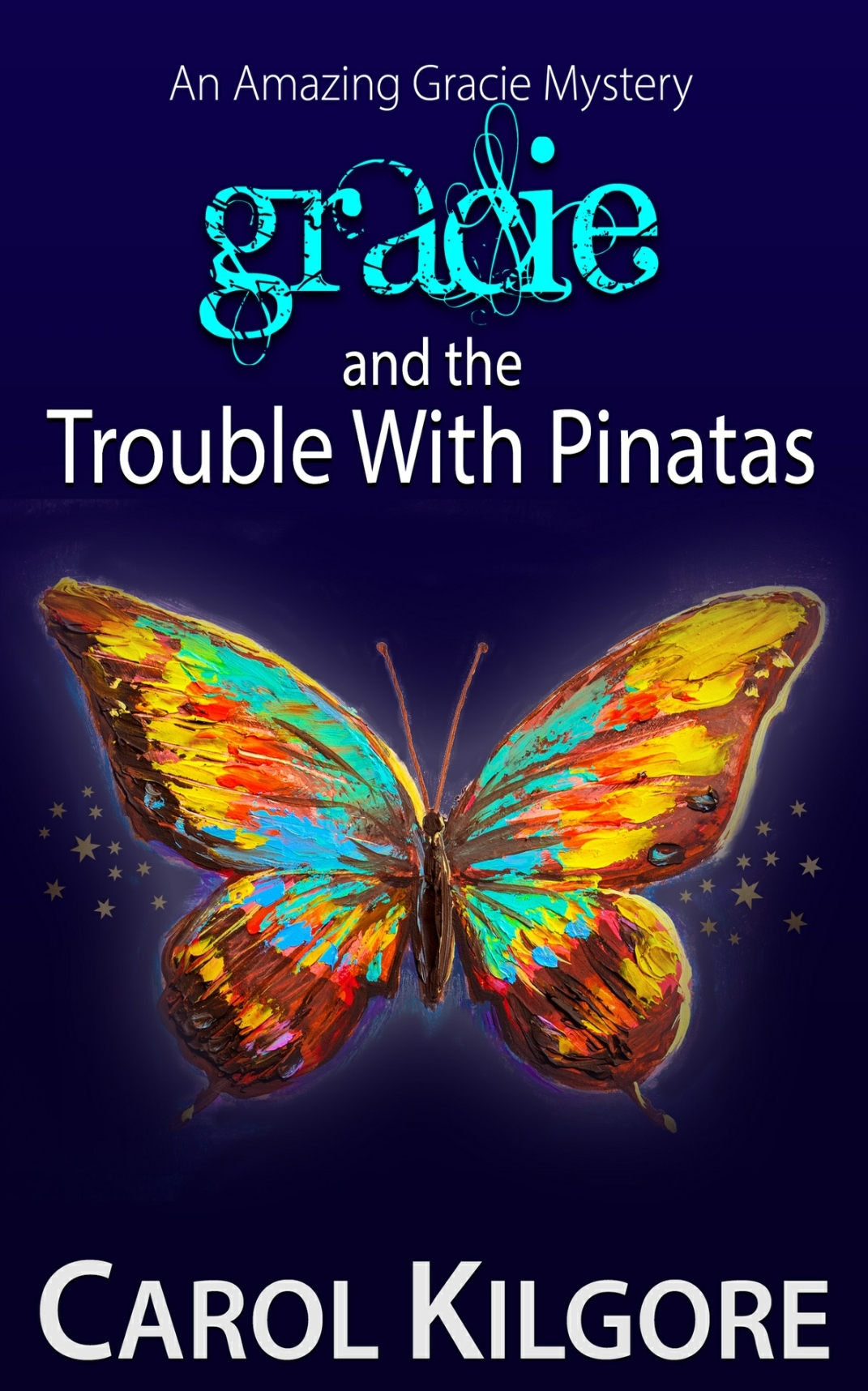
From Amazon: What you see is not always what you get. In fact, what you see may be nothing at all.
Finding a woman attacked and left for dead in her driveway hadn’t been anywhere near San Antonio law enforcement consultant Gracie Hofner’s cold January plans. She immediately jumps into action and soon discovers a link to what appears to be a benign local research institution. Of course, what seems to be often isn’t, and it takes a series of explosive illusions that rock a small slice of the city before Gracie and her coworkers understand the fuller picture: a rogue relationship between the research group and a corrupt faction inside the Pentagon. The shadow elements responsible for the explosions must be stopped before illusion becomes reality and mind-created objects become real and tangible… and deadly.
Gracie Hofner is back on a new assignment in her first standalone Amazing Gracie Mystery. Get your copy today and see why readers love Gracie. She’s amazing!
My Review:
This was a very awesome read that is scifi plus love, persons who had special abilities, like cloaking to make one invisible, with a few clones along the way. It was nice to see Bastion and feds work together to bring the crimes to conclusion and have a happy ending.
True…
As an indie author, you are responsible for the entire publishing process – writing, editing, proofreading, publishing, and marketing. But that doesn’t mean that you should do it all yourself. Even if you are working with a low or almost non-existent budget, make sure that you get someone else to participate in the editing process – someone that has editing experience and who won’t be shy about pointing out problems in your manuscript. Your editor can be a paid professional editor or a qualified and capable friend. You should never unleash your masterpiece on the world without having it properly edited.
Before you submit your work to your editor, make every effort to weed out as many of the errors in your manuscript as possible. Eliminating simple typos, extra spaces, and so on, will make it easier for your editor to focus on the story flow, the wording, and the important stuff that you simply don’t see because you are…
View original post 845 more words

Media Kit
Book Title: The Yanks Are Starving: A Novel of the Bonus Army
Author: Glen Craney
Publication Date: January, 2014
Publisher: Brigid’s Fire Press
Page Length: 561
Genre: Historical Fiction
Twitter Handle: @glencraney @cathiedunn
Instagram Handle: @thecoffeepotbookclub (please use hashtag #GlenCraney)
Hashtags: #historicalfiction #BlogTour #TheCoffeePotBookClub
Tour Schedule Page: https://thecoffeepotbookclub.blogspot.com/2022/11/blog-tour-the-yanks-are-starving.html
Title and Author:
THE YANKS ARE STARVING: A Novel of the Bonus Army
Glen Craney
Blurb:
Two armies. One flag. No honor.
The most shocking day in American history.
Former political journalist Glen Craney brings to life the little-known story of the Bonus March of 1932, which culminates in a bloody clash between homeless World War I veterans and U.S. Army regulars on the streets of Washington, D.C.
Mired in the Great Depression and on the brink of revolution, the nation holds its collective breath as a rail-riding hobo named Walter Waters leads 40,000 destitute men and their families to the steps of the U.S. Capitol on a desperate quest for economic justice.
This timely epic evokes the historical novels of Jeff Sharra as it sweeps across three decades following eight Americans who survive the fighting in France and come together fourteen years later to determine the fate of a country threatened by communism and fascism.
From the Boxer Rebellion in China to the Plain of West Point, from the persecution of conscientious objectors to the horrors of the Marne, from the Hoovervilles of the heartland to the pitiful Anacostia encampment, here is an unforgettable portrayal of the political intrigue and government betrayal that ignited the only violent conflict between two American armies.
Foreword Magazine Book-of-the-Year Finalist
Chaucer Award Book-of-the-Year Finalist
indieBRAG Medallion Honoree

THE BONUS MARCH OF THE GREAT DEPRESSION
by Glen Craney
American soldiers denied their service bonuses. Protesters stage sit-ins to expose the greed of big banks. Homeless veterans huddle in tents. Rising anger against politicians sparks a populist movement.
Headlines ripped from recent front pages—and from newspapers published eighty-five years ago.
History doesn’t repeat itself, Mark Twain warned, but it often rhymes. And during the Great Depression, similar stories of woe and outrage held the nation’s alarmed attention. Long before Occupy Wall Street, there was Occupy Washington.
In my historical novel, The Yanks Are Starving, I tell the story of eight Americans who survived the fighting in France during World War I and came together fourteen years later to determine the fate of a nation on the brink of upheaval. Culminating with what became known as the Bonus March of unemployed war veterans, the novel is a sweeping epic of the government betrayal that sparked the only violent clash between two American armies under the same flag.

I became interested in the history of the Bonus March while covering Congress as a Washington, D.C. reporter. After moving to Los Angeles to write movie scripts, I turned my research into one of those screenplays that Hollywood executives say would make a great movie, if only the timing were right. Legendary screenwriter Harry Essex, a mentor and friend, begged me to “shake out” the script into a novel, so I did. As a boy growing up in Brooklyn, Harry remembered the Bonus Marchers, and he told his UCLA writing class that my screenplay was the best he had read in years. I dedicated the novel to him.
Had the Bonus Army tragedy not happened, most would dismiss it as too improbable for fiction. Yet in 1932, a charismatic but troubled Oregon hobo decided he’d had enough of eating slumgullion stew and begging for work. Ignoring scoffs that he was a crackpot dreamer, Walter W. Waters jumped onto a boxcar in Portland and led two hundred of his fellow homeless war veterans on a rolling invasion bound for Washington. He was determined to tell President Herbert Hoover of his plight in person.
Reports of this pied-piper quest quickly spread across the country, and within weeks 40,000 veterans and their families, all hungry and desperate, surrounded the U.S. Capitol. This threadbare band of veterans camped in the city for three months and vowed to stay until Congress voted to pay their service annuities early.
Their hopes for government salvation, however, were soon dashed.
On July 28 of that tense summer, Army Chief-of-Staff Douglas MacArthur donned his uniform and took to the field for the first time since 1918. Convinced that the protesting veterans were a mob of slackers and Communists, the general ordered his tanks, cavalry, and regular infantry to drive the veterans from the city and burn their pitiful shacks. Within minutes, Pennsylvania Avenue was a scene of mayhem with flying tear-gas canisters, coughing onlookers, and flashing bayonets. After the despairing veterans scattered back across the country, shocked Americans blamed Hoover for the debacle and voted him out of office during the presidential election that November.

Today, too many of us have a short memory regarding our country’s treatment of returning veterans. I hope the novel serves as a cautionary tale for those who may think that homelessness, joblessness, and psychological adjustment to civilian life are unique challenges for our Iraq and Afghanistan veterans. According to the National Alliance to End Homelessness, nearly 50,000 veterans were homeless in 2014, almost one of every nine. There is, thankfully, more assistance for returning servicemen and women now than in 1932, but effort to eradicate this scourge continues.
For information:
Images, public domain:
3. Burning Veterans Camp (1932)
Public Domain
https://en.wikipedia.org/wiki/Bonus_Army#/media/File:Evictbonusarmy.jpg
4. Bonus Army Fight (1932)
Public Domain
https://en.wikipedia.org/wiki/Bonus_Army#/media/File:Evictbonusarmy.jpg
Praise for The Yanks are Starving:
“[A] wonderful source of historical fact wrapped in a compelling novel.” — Historical Novel Society Reviews
“[A] vivid picture of not only men being deprived of their veterans’ rights, but of their human rights as well.…Craney performs a valuable service by chronicling it in this admirable book.” — Military Writers Society of America
Buy Links:
Universal Link: https://books2read.com/Yanks
Amazon US: http://www.amazon.com/Yanks-Are-Starving-Novel-Bonus-ebook/dp/B00G8OZ3MM
Amazon UK: https://www.amazon.co.uk/dp/B00G8OZ3MM
Amazon CA: https://www.amazon.ca/dp/B00G8OZ3MM
Amazon AU: https://www.amazon.com.au/dp/B00G8OZ3MM
Barnes and Noble: http://www.barnesandnoble.com/w/the-yanks-are-starving-glen-craney/1117253154
Kobo: https://store.kobobooks.com/en-US/ebook/the-yanks-are-starving
iBooks: https://itunes.apple.com/us/book/the-yanks-are-starving/id726771775
Author Bio:
Glen Craney
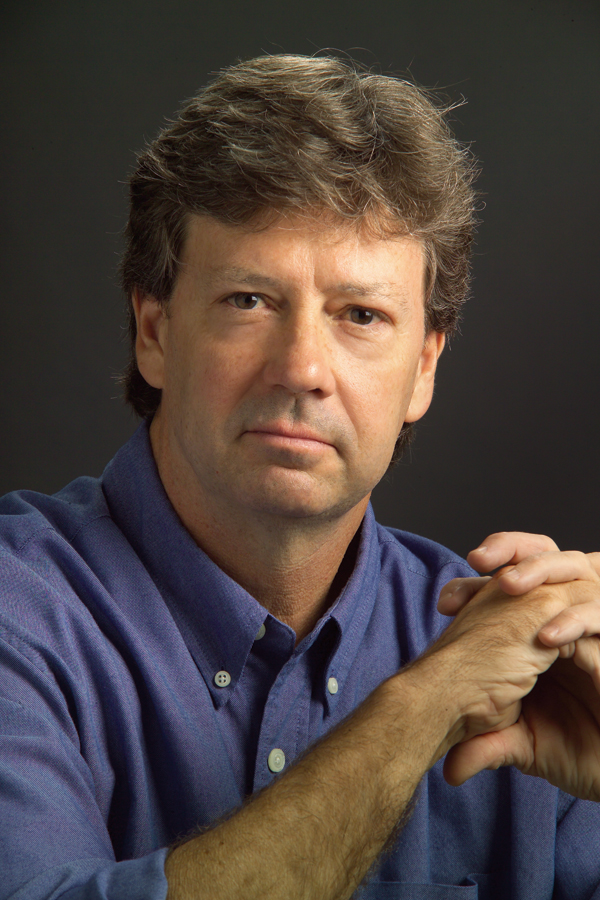
Glen Craney is an author, screenwriter, journalist, and lawyer. A graduate of Indiana University Law School and Columbia University Graduate School of Journalism, he is the recipient of the Nicholl Fellowship Prize from the Academy of Motion Pictures and the Chaucer and Laramie First-Place Awards for historical fiction. He is also a four-time indieBRAG Medallion winner, a Military Writers Society of America Gold Medalist, a four-time Foreword Magazine Book-of-the-Year Award Finalist, and an Historical Novel Society Reviews Editor’s Choice honoree. He lives in Malibu and has served as the president of the Southern California Chapter of the HNS.
Social Media Links:
Website: www.glencraney.com
Twitter: www.twitter.com/glencraney
Facebook: www.facebook.com/GlenCraneyAuthor
Book Bub: https://www.bookbub.com/authors/glen-craney
Amazon Author Page: https://www.amazon.com/Glen-Craney/e/B002C1VQZ8
Goodreads: www.goodreads.com/author/show/1516207.Glen_Craney

Alibis, Crying Eyes, and Mental Health Awareness That’s what Good Authors Are Made Of!. With Best Selling Author
@MaryLSchmidt You can listen to it on Goodpods (where you can also follow me to see my other favorites).

https://goodpods.app.link/jSfJpdrucxb #USA #MentalHealthAwareness #childloss #bullies
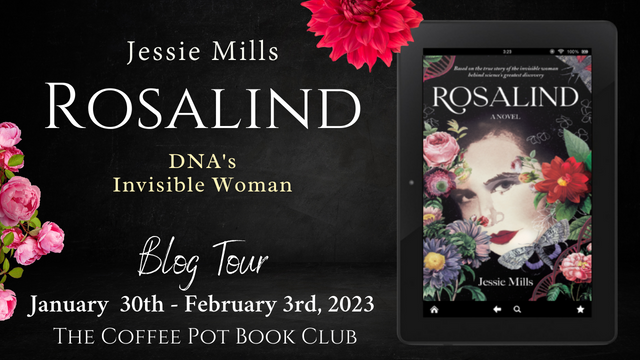
Book Title: ROSALIND: DNA’s Invisible Woman
Author: Jessie Mills
Publication Date: 15 March 2022 (print), 18 February 2022 (digital)
Publisher: Ingram Spark/Alpha Helix Publishing
Page Length: 310 pages
Genre: Historical fiction / narrative non-fiction
Twitter Handle: @byjessiemills @cathiedunn
Hashtags: #rosalindfranklin #invisiblewomen #BlogTour #TheCoffeePotBookClub
Blog Tour Schedule page: https://thecoffeepotbookclub.blogspot.com/2022/12/blog-tour-rosalind-dnas-invisible-woman.html
Book Title and Author Name:
ROSALIND by Jessie Mills
Blurb:
‘A luminous, pin-sharp portrait of a true trailblazer. Mills’s writing simply glows.’ Zoë Howe, Author, Artist and RLF Writing Fellow at Newnham College, University of Cambridge
Rosalind: DNA’s Invisible Woman tells the true story of the woman who discovered the structure of DNA, whose work was co-opted by three men who won a Nobel prize for the discovery.
Her story is one of hope, perseverance, love and betrayal.
Driven by her faith in science, Rosalind Franklin persisted with her education in the face of formidable obstacles, including the de-reservation of women from war science.
In Norway at the start of World War II, her place at Cambridge’s first women’s college was thrown into jeopardy.
A decade later, she fled Paris upon the news that the research director at the State Chemicals Lab was having an affair. They continued to write to each other in secret.
Rosalind knew when embarking on science, a gentleman’s profession, that the odds would be stacked against a woman’s success. But she did not foresee that her pay would later be cut on account of her age and gender, that she would be burned by the plagiarism rife among her male contemporaries or face her own battle with cancer.
When she took a research post at King’s College London, the head of the physics department switched her subject to DNA at the last minute.
She was tasked with discovering its structure using X-ray crystallography. Could she become the first scientist to map the DNA molecule and would the discovery ultimately be worth it?
When two researchers at Cambridge University, her alma mater, built a three-chain model of DNA weeks after seeing her lecture, she knew that it was wrong.
Scientists at each of the three labs competing in the race to find DNA’s structure had guessed that the molecule had three chains. Her evidence proved them wrong. But would anybody listen?
This is the story of DNA that you won’t find in the history books…
The woman behind science’s greatest discovery has been variously referred to as ‘an obsessive woman’, ‘difficult’, and ‘the dark lady of DNA’. Why was she called these names, and were they justified?
Written by journalist and former Wall Street Journal (PRO) editor Jessica Mills Davies, following nearly three years of intensive archival research, the novel aims to give Rosalind Franklin a voice for the first time in history. Her story is the most well-documented account of ‘the Matilda effect’ and its corollary ‘the Matthew Effect’, whereby women’s contributions to science and other professions are often ignored or misappropriated.
The Exeter Novel Prize-longlisted novel is peppered with copies of original correspondence between her and her contemporaries, illustrating how three men got away with the biggest heist in scientific history.

Extract from ROSALIND: DNA’s INVISIBLE WOMAN, Prologue
The chance of making a major scientific discovery is minuscule. Nearly half are by accident. Serendipity, or mishap by another name, pulls scientists from the clutches of flat Earths and illusory sirens. Controlled experiments frame those fallacies and rescript the world’s truths. At King’s College London, we were specks of dust in the gargantuan cosmos, investigating the very secrets of life. Progress was not a lightning-bolt moment, it was hours of toil, in a basement that smelled of mothballs. If you had asked me then if I knew we would find the structure of DNA, I would have said, simply, that the data speaks for itself. Its voice is audible for those who listen.
The mysteries of the universe reside in the simplest of shapes. The twisted loop of a figure of eight was visible in my X-ray photographs. Two strands of the genetic code entwined together beneath the glass, intersected at the centre, and flecked with atomic dots. I traced their smooth lines, back and forth, back, eight, back. The meandering curve of the infinity sign hides an eternity of secrets.
Rosalind Franklin
Buy Links:
Universal Link: Rosalind: DNA’s Invisible Woman | Universal Book Links Help You Find Books at Your Favorite Store! (books2read.com)
Amazon UK: Rosalind: DNA’s Invisible Woman: Amazon.co.uk: Mills: 9781399918978: Books
Amazon US: Rosalind: DNA’s Invisible Woman: Mills: 9781399918978: Amazon.com: Books
Amazon CA: Rosalind: DNA’s Invisible Woman: Mills: 9781399918978: Books – Amazon.ca
Amazon AU: Rosalind: DNA’s Invisible Woman : Mills: Amazon.com.au: Books
Barnes and Noble: Rosalind: DNA’s Invisible Woman by Mills, Paperback | Barnes & Noble® (barnesandnoble.com)
Waterstones: Rosalind by Mills | Waterstones
Kobo: Rosalind: DNA’s Invisible Woman eBook by Jessie Mills – EPUB | Rakuten Kobo United Kingdom
Blackwell’s: Rosalind: DNA’s Invisible Woman : Mills : 9781399918978 : Blackwell’s (blackwells.co.uk)
(Also available on APPLE BOOKS)

Author Bio:
Jessie Mills
Jessica is a journalist and author. She has written for publications such as The Independent, The Wall Street Journal and Business Insider, where she investigated the use of flammable cladding in hospital intensive care units in 2020.
Before that she was a member of the steering committee for Women at Dow Jones, where she spent several years as an editor and led the team that uncovered the misuse of funds at Abraaj.
Her debut novel tells the true story of Rosalind Franklin, the invisible woman behind the discovery of DNA’s double helix. It was longlisted for the Exeter Novel Prize 2020.
Social Media Links:
Website: Jessie Mills Davies (jessiemillsauthor.com)
Twitter: Jessica J. Mills Davies 💙 (@Byjessiemills) / Twitter
Facebook: Rosalind Franklin and the pay gap – Home | Facebook
LinkedIn: LinkedIn
Instagram: Jessie Mills (@jessiemillsauthor) • Instagram photos and videos
Pinterest: www.pinterest.co.uk/jessiemillsdavies/
Amazon Author Page: Amazon.co.uk: Jessie Mills: Books, Biography, Blogs, Audiobooks, Kindle
Goodreads: Jessie Mills (Author of Rosalind) (goodreads.com)
Extract from ROSALIND: DNA’s INVISIBLE WOMAN, Part XI, chapter 37 (Song of Songs | Shīr Hashīrīm)
Cambridge, 1957
‘How did you get the poliovirus past immigration?’ Francis asks from the hallway.
‘With a bit of ingenuity,’ I say, putting my book down.
‘You will tell me if you put it in the fridge, won’t you Rosy?’ Francis says. ‘So, you’re sure you won’t be joining us at the Eagle tonight?’
‘Not tonight, Francis, Odile and I have catching-up to do,’ I reply.
Odile laughs.
‘Ne t’inquiète pas pour eux,’ she says.
Odile grew up in Norfolk, but her French mother wanted her to be bilingual. She honoured her mother’s wish each time she spoke the language. She has given me the recipe for her mother’s French onion tart, who prescribes stock for that singular umami flavour. For breakfast, we have coffee with croissants and cheese. Odile’s accent is crisp, like glass. It is recognisably Germanic, a hangover from her time translating German to crack enemy code during the war. If anything, it is a Parisian accent, rather than textbook French.
‘I don’t like how they speak about you behind your back,’ she says once Francis has gone.
‘They don’t know you like I do.’
‘Scientists are in the business of asking questions,’ I say, adjusting the red patterned scarf around my head in the mirror over the fireplace.
Although the cancer has gone into remission, I cover my head with a scarf. It’s just until my hair grows back.
Odile pours us coffee from the cafetière.
I came to stay with the Cricks when Don was seconded to Cambridge so that we would have a chance of seeing each other again. From up high in the mountains during our trip to the Alps, the wings of my imagination could finally spread unencumbered.
At that moment, I didn’t need God. I just needed myself. My cancer went into remission the following year. So I travelled to Cambridge, where Don works, to live in the Cricks’ townhouse in Portugal Place. It has been a year since my diagnosis and even though my womb is gone, my mother still cannot accept the idea of me sharing a room with a man.
‘When you’re not married? Come on Rosalind, please!’ she said.
I packed my bags, promising not to stay with my parents for a moment longer than was necessary.
‘Scientists do indeed ask a lot of questions. It’s like that time Francis and Jim asked Dr Perutz if they could see your data,’ Odile says.
‘What?’ I respond.
‘Didn’t they tell you?’ Odile asks.
‘Tell me what?’ I say.
‘Well, I don’t like to interfere,’ Odile says, putting down her coffee cup.
‘Jim tried to describe your photograph to Francis, but you know what he’s like.’
‘What photograph?’
‘You know, the one Maurice showed him. The one that was in the Medical Research Council report,’ Odile says.
‘Those reports are meant to be confidential.’

From Amazon:
My name is Willow Erwin, and I hate summer. My mother always said hate is a strong word, but in this case, it’s the right one. I haven’t found one good thing about the season. Most people tell me since I’m a teacher that reason alone should make it my favorite season, but that couldn’t be further from the truth. For me, summer brings everything I abhor; bugs, heat, sweating, and painful memories of a woman I will never see again.
Then, in the wink of one very beautiful blue eye, all of that changed. This is the story of Summer and how she taught me to love her. It’s about her quiet, and sometimes fearful, way of teaching me to embrace the moment, and to live recklessly. It’s about how both of us learned to forgive, to hope, to pray, and to love, even after summer ends.
My Review:
Mettner has written a compelling love story about two young women. Being gay and coming out are two things. Being comfortable around others as you fear you won’t be accepted for who you are, not what parts of society dictates. Love is love, end of story. The sweetness outshines the trials thrust upon two women from a deluded man filled with hate. Love can overcome hate!
Author site of S. Jackson & A. Raymond
The greatest WordPress.com site in all the land!
Island tourist spot
SHORTS, NOVELS, AND OTHER THINGS
Author Website
Author
read the book of the love fairy,🌷🌷🌷💖💖💝
Share What I love...
Writer and Poet
POETRY RANDOM THOUGHTS AND STUFF LIKE THAT...
~ multi genre writer ~
What are the differences between men and women?
Ideas on writing and baking
The musings of a Londoner, now living in Norfolk
~ Communicator, WordSmith, Artist, Guide, Mentor, Muse ~
Helping You Take as Good Care of Yourself as You Do Others
Life on Molly is a travel and lifestyle blog. I am a normal girl with many passions. I am an explorer of new places, a learner of new languages, creator of my ambitions, blogger, and a good pal. This blog is my little corner of the world where I am able to share my adventures with you and inspire you to live a life full of purpose.
Writings from the heart - for the heart

 When Angels Fly
